Table of Contents
- Why Masking Sprays Fail and Neutralization Works
- Step 1: Strip the Cabin and Vacuum Every Surface
- Step 2: Use Baking Soda for Car Smells That Linger
- Step 3: How to Clean Car Upholstery Naturally Without Damage
- Step 4: How to Remove Smoke Smell From Car Interiors
- Step 5: Replace the Cabin Air Filter and Clear the Vents
- Step 6: Target the Source, Not the Smell
- Step 7: Keep Car Odors Naturally at Bay Long Term
- Frequently Asked Questions
Last Updated: October 2, 2026
Why Masking Sprays Fail and Neutralization Works
Most air fresheners hide bad smells for an hour, then the problem returns because they coat the air with fragrance instead of dealing with the source. Learning how to neutralize bad car odors naturally means breaking down the smell molecules, not covering them up.
Masking adds scent on top of odor; neutralization attacks the organic matter, dampness and residue that produce the smell.
Car cabins trap smells because they are small, sealed spaces. Heat speeds up the release of volatile organic compounds from plastics, spilled food and pet dander.
So the fix is a process, not a product. Here are the seven steps that work.
Step 1: Strip the Cabin and Vacuum Every Surface
Remove everything not fixed to the car. Floor mats, boot clutter, empty cups and forgotten food all hold odor.
Vacuuming is the foundation of any deep clean. Dirt, crumbs and pet dander sit deep in carpet fibres and feed the musty smell you notice on warm days.
Work through the cabin in this order:
- Pull out mats and beat them outside
- Vacuum seats, carpets and the boot floor
- Use a crevice tool along seat rails and the handbrake
- Wipe hard surfaces with a damp cloth
- Empty the door pockets and glovebox
Do not skip the boot. A single spilled milk carton can scent a whole car for weeks.
Step 2: Use Baking Soda for Car Smells That Linger
Baking soda is the cheapest odor absorber you can buy, and it works: a natural absorbent that pulls odor molecules out of fabric rather than covering them.
Sprinkle a generous layer over carpets and seats, leave it, then vacuum it up. For cup holders and ashtrays, leave a small open dish overnight.
A common mistake is using too little. You want a visible layer, not a dusting.
How Long to Leave Baking Soda on Carpet and Seats
Leave baking soda on carpet and seats for at least 8 hours, ideally overnight. Shorter times only treat the surface; the longer it sits, the more odor it pulls from the foam beneath.
For a strong smell, repeat the process twice over two days.
Step 3: How to Clean Car Upholstery Naturally Without Damage
Natural cleaners work well on upholstery, but only if you match the solution to the material. The wrong mix can leave water marks or lift dye.
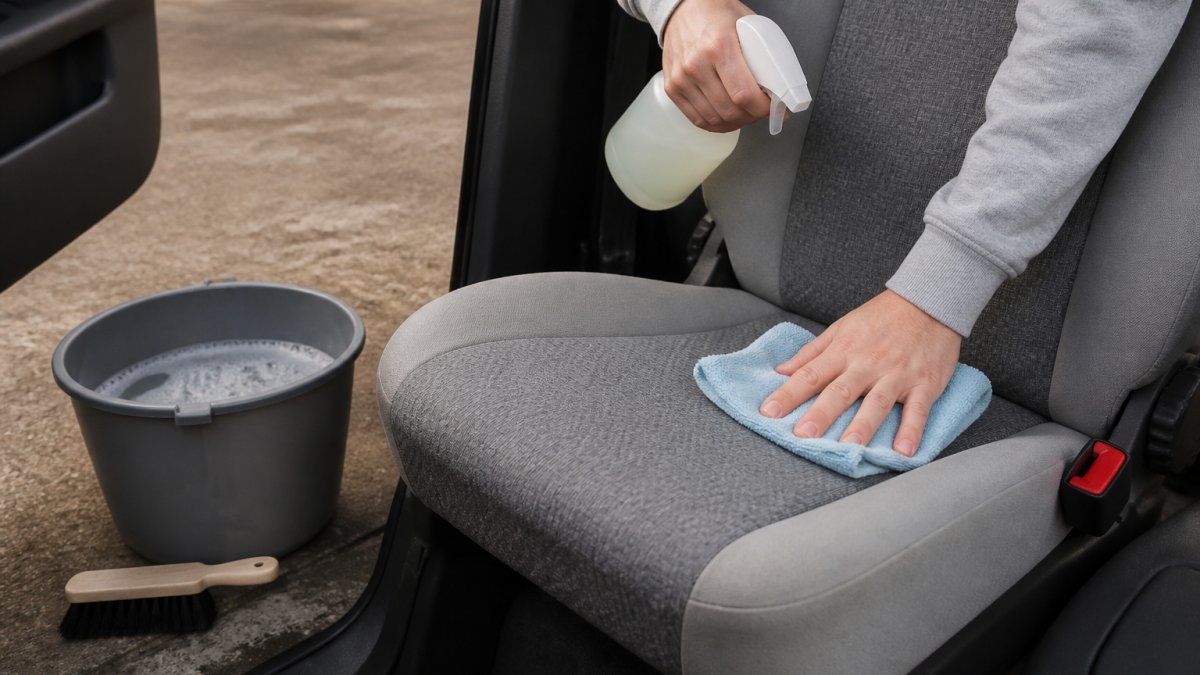
Test every solution on a hidden patch first. Wait ten minutes and check for colour lift.
Distilled White Vinegar Solutions by Material
Distilled white vinegar neutralises many odor compounds and kills the mildew that causes damp, musty smells.
| Material | Solution | Method |
|---|---|---|
| Fabric seats | 1 part vinegar to 3 parts water | Spray, blot, air dry |
| Leather | 1 part vinegar to 5 parts water | Wipe, then condition |
| Headliner | 1 part vinegar to 5 parts water | Damp cloth only, no soaking |
| Carpets | 1 part vinegar to 3 parts water | Brush in, vacuum when dry |
Never soak a headliner. The glue behind it will fail and the fabric will sag.
Step 4: How to Remove Smoke Smell From Car Interiors
Smoke is the hardest odor to shift because the residue coats every surface, soaking into fabric, foam and the headliner and releasing smell for months.
Removing smoke smell takes repeat treatment, not one deep clean, expect to treat surfaces two or three times.
Start with these steps:
- Wipe every hard surface with a vinegar solution
- Wash fabric with a mild soap and water mix
- Leave bowls of activated charcoal on the seats for several days
- Run the air conditioning on recirculate with the windows down
Activated charcoal is a strong absorbent that pulls smoke residue from the air without adding scent.
Swizzels Turbo Can Spray - Cherry Cola →
Tackling Smoke Residue in the Headliner and Vents
The headliner and vents hold the most residue. Use a barely damp microfibre cloth on the headliner, working in small sections.
For vents, spray a vinegar solution into the intake while the fan runs on low. Then let the system dry fully with the windows open.
Step 5: Replace the Cabin Air Filter and Clear the Vents
A clogged cabin air filter pushes stale, damp air into the cabin every time you drive. If your car smells musty when the fans start, the filter is the likely cause.
Replacing it is a simple job on most models. The filter usually sits behind the glovebox.
While you are there, check for leaves and damp debris in the intake. Mold spores and mildew grow fast in trapped organic matter.
Step 6: Target the Source, Not the Smell
Every odour has a source, and finding it saves time. A smell that returns after cleaning means you missed something, this is the step most guides skip and the one that actually solves the problem.
How to Locate the Source
Work by elimination rather than by nose alone:
- Isolate the zone. Close the doors and sit in the car with the engine and fans off for a few minutes. Note whether the smell is strongest at head height, seat level or footwell level. Head height points to the headliner or vents; footwell level points to carpet, underlay or a leak.
- Run the system. Start the engine and turn the fans on with recirculation off. If the smell surges through the vents, the source is in the HVAC path, the cabin filter, the intake or the evaporator drain.
- Check the boot and spare wheel well. Lift the boot floor and the spare wheel cover. A blocked drain or a damp spare wheel well is a common hidden source, especially after a wet winter.
- Sniff test the soft trim. Press a clean microfibre cloth into the seat base, the carpet under the mats and the boot carpet, then smell the cloth. Fabric holds odour longer than hard trim, so a positive result narrows the search quickly.
- Look for the tell-tale signs. Water staining on the headliner, a damp patch under a floor mat, white or green residue around a drain, or a sticky film on the windscreen all point to moisture rather than a spill.
Source-Specific Protocols
Once you know the source, the treatment changes.
Milk, juice and other protein spills. These are the worst offenders because the residue keeps breaking down.
Pet accidents. Urine soaks through fabric into foam and underlay, releasing ammonia as it breaks down.
Mould and mildew. This is a moisture problem, not a cleaning problem.
Fuel, solvent and chemical smells. These are a safety matter, not a cleaning matter.
Once the source is gone, the smell fades on its own. Treat the source first, then clean the surrounding trim, then ventilate.
Step 7: Keep Car Odors Naturally at Bay Long Term
Prevention is easier than removal. A few habits and a simple schedule stop odour building up between deep cleans.
A Simple Maintenance Schedule
| Frequency | Task | Why it matters |
|---|---|---|
| Weekly | Air the cabin for ten minutes with the windows cracked | Clears trapped moisture and volatile compounds before they settle into fabric |
| Weekly | Remove rubbish, cups and food wrappers | Removes the food source that feeds bacteria and mould |
| Monthly | Vacuum carpets, seats and the boot floor | Lifts the dander and crumbs that hold odour |
| Monthly | Wipe hard surfaces with a damp microfibre cloth | Stops residue building up on plastics and trim |
| Quarterly | Check and clean the cabin air filter | Keeps the HVAC path from pushing stale air back into the cabin |
| Twice a year | Full interior deep clean | Resets the cabin before seasonal damp or heat |
| Annually | Inspect door seals, sunroof drains and the air-conditioning evaporator drain | Catches the leaks that cause musty smells |
Material-Specific Care
Match the method to the material to avoid damage while you prevent odour.
- Fabric and cloth seats. Vacuum monthly and treat spills the same day. A diluted distilled white vinegar solution is safe on most fabrics, but test on a hidden patch first. Avoid over-wetting, which drives moisture into the foam and creates the damp smell you are trying to prevent.
- Leather and Nappa leather. Wipe with a barely damp cloth and follow with a dedicated leather conditioner. Leather is porous and dries out, and a dry, cracked surface traps odour more readily than a conditioned one. Avoid vinegar on a frequent basis, as repeated acid contact can dull the finish over time.
- Alcantara and suede-like trim. These are the most delicate interiors. Use a soft brush and a dedicated Alcantara cleaner, work in small sections and let the material dry naturally. Never soak the trim and never scrub hard, as both can flatten the nap permanently.
- Headliners. Damp cloth only, no soaking. The adhesive behind the fabric fails when wet and the headliner sags.
- Sensitive electronics and screens. Never spray liquid directly onto a screen, a touch panel or around buttons. Spray onto a microfibre cloth first and wring it out, then wipe. Moisture in the electronics is a common cause of musty smells around the dashboard.
- Hard plastics and trim. A damp cloth is enough for routine care. Avoid abrasive cleaners that scratch the surface and leave a texture that traps dust.
Habits That Keep Odour Away
- Deal with spills the same day, not the same month, protein and sugar residues break down and release odour.
- Run the air-conditioning a few minutes before switching off so the evaporator dries out and does not grow mould.
- Skip eating and smoking in the car where you can; both leave residue that coats every surface.
- Keep an open dish of bicarbonate of soda or a bag of activated charcoal in the cabin between deep cleans.
- Replace the cabin air filter on schedule and write the date on the new filter.
For everyday freshness, a quality scent product finishes the job. The La Guilt 3 Pack Car Air Freshener Bundle uses odour elimination technology rather than masking, with a spray, tin and wood diffuser in one set. If you prefer something lighter for a small cabin, the Swizzels Turbo Can Spray gives a quick refresh with no wet residue.


Frequently Asked Questions
Does baking soda actually remove car smells or just mask them?
Baking soda absorbs odour molecules rather than covering them with fragrance, so it genuinely reduces smells instead of hiding them. Sprinkle it over dry carpet and seats, leave it for several hours or overnight, then vacuum thoroughly. It works best on mild organic smells like dampness, food spills and pet dander. For smoke residue or mildew, pair it with vinegar treatment and a cabin air filter change, because the source sits deeper in the fabric and ventilation system.
What is the most effective natural odour eliminator for upholstery?
Distilled white vinegar diluted with equal parts water is the most reliable natural option for fabric upholstery. Spray a light mist, let it sit for a few minutes, then blot with a clean microfibre cloth. Vinegar neutralises odour-causing compounds and discourages mildew growth. Test on a hidden patch first, especially on leather, where you should use a dedicated leather conditioner instead. Steam cleaning after vacuuming lifts residue that surface sprays cannot reach.
How do I stop bad car odours coming back after cleaning?
Odours return when the source survives the clean. Check for damp floor mats, spilled food under seats, and a clogged cabin air filter, which traps mould spores and airborne particles. Run the air conditioning on recirculate for ten minutes with the windows down to dry the ventilation system. Empty bins and remove wet items weekly, and avoid leaving dampness in the boot. A long-term prevention routine matters more than any single deep clean.
Are natural odour removal methods safe on leather seats?
Baking soda is safe on leather if you vacuum it off rather than scrubbing it in. Vinegar is not, because its acidity dulls the finish over time. For leather, wipe with a damp cloth, dry immediately, then apply a leather conditioner to keep the surface supple. Activated charcoal placed in a container under the seat absorbs odours without touching the material at all, which makes it the safest option for leather and alcantara interiors.
Bad car odors rarely come from one place, and masking sprays only buy you a day. The fix is a proper deep clean, the right natural treatments and a scent product built to eliminate rather than hide. Flava Car Scents offers designer-inspired fragrances with odour elimination technology, long-lasting performance and a 100% satisfaction guarantee. Get started with Flava Car Scents and give every drive a showroom-fresh finish.


Leave a comment
This site is protected by hCaptcha and the hCaptcha Privacy Policy and Terms of Service apply.