
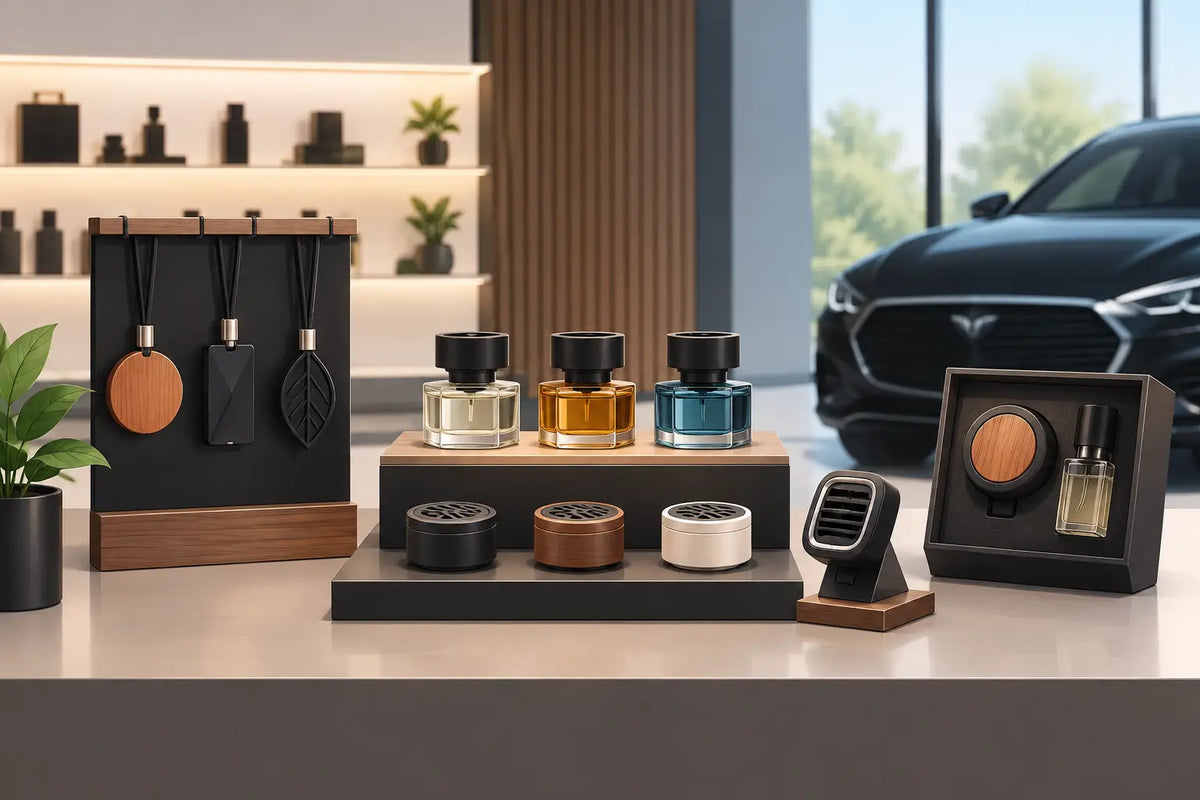
A strong retail display example does more than hold products. It gives shoppers a reason to stop, smell, compare, and picture the upgrade in their own vehicle. For premium car scents, that moment matters. Your display has to make a driver feel that their cabin can smell as considered as their outfit, interior, or next destination.
Generic air fresheners are often sold like an afterthought near the register. Premium fragrance deserves a different approach. The best retail displays make scent feel like a lifestyle choice, while still making it easy to choose the right format, fragrance profile, and refill option in seconds.
What Makes a Retail Display Example Work
The most effective display is built around a simple shopping behavior: people want to understand what the scent will be like before they commit. Unlike a phone charger or a bottle of windshield fluid, fragrance is personal. A shopper needs a clear visual cue, a quick explanation, and ideally a safe way to experience the scent.
That means a display should lead with fragrance identity rather than packing every product into the smallest possible space. Designer-perfume-inspired scent names, clean color blocking, and premium packaging can create instant interest. Then product format answers the practical question: Do they want a vent clip, wood diffuser, scent tin, spray, or refill?
A display also needs to feel intentional from a distance. If it looks overcrowded, shoppers read it as low value. If it is too minimal, they may not realize there are multiple scent options or replenishment products available. The right balance depends on the fixture size, store traffic, and how much time customers are likely to spend browsing.
A Countertop Display for Quick Add-On Sales
A countertop fixture is one of the strongest retail display examples for car fragrance because it catches shoppers at the point where impulse purchases happen. It works particularly well in auto accessory shops, convenience stores, detailing businesses, barbershops, and independent gift retailers.
Keep the hero range tight. Feature a small selection of best-selling vent clips, car diffusers, or scent tins in the front, with clear fragrance names facing outward. A customer should not need to pick up every unit to understand the range. Use a concise header that frames the product as a premium upgrade, such as “Elevate Your Drive” or “Premium Scents for Every Ride.”
This format should not try to carry every SKU. A countertop has limited space, so too many fragrances can turn choice into hesitation. Start with a focused assortment that covers distinct scent families: fresh and clean, warm and woody, sweet, and designer-inspired. If refills are part of the range, place them beside the compatible diffuser rather than in a separate, overlooked section.
The trade-off is inventory depth. Countertop displays sell quickly when they are easy to shop, but they may require frequent replenishment. That is usually worth it for products with a giftable price point and repeat-purchase potential.
Make the Scent Story Easy to Scan
Fragrance copy needs to work fast. Instead of long descriptions, use short scent cues shoppers recognize immediately. Think “fresh citrus,” “warm amber,” “clean musk,” or “sweet vanilla.” These descriptions do not replace a full product story, but they reduce uncertainty for a shopper who has only a few seconds to decide.
Where store policies allow it, include a tester or scent card. One tester can do more for conversion than a page of fragrance notes. Keep it tidy, clearly labeled, and refreshed often. A stale tester undermines the premium promise.
Build a Shelf Display Around Format and Refill
For stores with more space, a shelf display can create a stronger destination for fragrance shoppers. This is where format variety becomes an advantage rather than a source of clutter. Drivers have different routines: a daily commuter may want a discreet vent clip, an enthusiast may prefer a wood diffuser, and a rideshare driver may want a quick-refresh spray between trips.
Organize the display in a way that matches how people shop. One approach is to group by format, with diffusers together, sprays together, and scent tins together. This works best when customers already know what kind of product they want.
Another approach is to organize by scent family, showing multiple formats beneath each fragrance. This is more effective when the scent itself is the main draw. A shopper who loves a rich, designer-inspired profile can choose the delivery method that suits their vehicle and routine.
For many retailers, a hybrid layout is the most practical choice. Use clear format blocks, then place the most popular fragrance options within each block. Refill sticks should always sit beside the reusable system they fit. The visual connection signals value: buy the diffuser once, then keep your car smelling fresh through easy replenishment.
Use Packaging and Color to Create a Premium Fixture
Premium displays do not need excessive decoration. In fact, too many props can distract from the product. Clean shelving, coordinated packaging, and a confident header often create a more polished result than a fixture covered in signs.
Choose one primary visual message. It might be luxury car fragrance, designer-inspired scents, or a refined gift for drivers. Everything else should support that message. Dark neutrals, metallic accents, or crisp white space can all work, provided they reflect the packaging and store environment.
Color can also help shoppers navigate quickly. Use one color cue for fresh scents, another for warm scents, and a third for bold or sweet profiles. Keep the system consistent on shelf talkers, tester labels, and replenishment sections. This makes a display easier to shop without making it look busy.
Avoid presenting premium car scents beside damaged, dusty, or mismatched packaging. Fragrance is tied to perception. A clean, full display tells customers the product inside is worth choosing for their car.
Give Shoppers a Reason to Buy More Than One
Car fragrance naturally lends itself to bundles. Drivers rotate scents with seasons, moods, vehicles, and passengers. A display can make that behavior feel normal and appealing rather than accidental.
Place multi-packs and gift-ready options at eye level or near the front of the fixture. Use simple messaging that makes the use case obvious: keep one for your car, gift one, or stock up on refills. This is especially useful around holidays, graduations, new-car purchases, and detailing appointments.
Do not discount every product just to move volume. Premium positioning can suffer when a display feels permanently promotional. Instead, use bundles to show added value. A diffuser paired with refill sticks, or a selection of complementary scents, encourages a larger basket while protecting the brand’s elevated feel.
Flava Car Scents can be merchandised this way to highlight both first-time discovery and the repeat-purchase rhythm created by refillable formats. The customer is not simply buying an air freshener. They are choosing a scent wardrobe for the road.
Place the Display Where the Need Feels Immediate
Location changes how a display performs. Near car care products, the scent purchase feels like part of maintaining a clean, polished vehicle. Near checkout, it feels like an easy upgrade or last-minute gift. In a detailing shop, it becomes the finishing touch after a freshly cleaned interior.
There is no single correct placement. A premium display near low-cost utility products may gain traffic but lose some of its luxury appeal. A dedicated lifestyle area may support stronger brand perception but receive fewer spontaneous visits. Test placement based on the store’s customer flow rather than relying on assumptions.
If the retailer can support two locations, use a smaller counter unit for impulse sales and a fuller shelf fixture for range discovery. The counter display introduces the product. The shelf display gives scent-focused shoppers room to compare options and choose refills or bundles.
Keep the Fixture Fresh After Launch
A display is not finished when it arrives in store. Car scent products are visual, seasonal, and replenishable, so the fixture needs regular attention. Empty facings, outdated testers, and mixed-up scent labels make even a premium range feel neglected.
Check stock levels often and replenish best sellers before they disappear. Watch which scent families get picked up most, not only which ones sell. If customers repeatedly handle a fragrance but do not purchase, the issue may be unclear scent description, pricing, or a missing tester rather than lack of interest.
Rotate a small part of the display by season while keeping core best sellers in place. Fresh, bright fragrances may earn more attention in warmer months, while deeper woods, amber, and sweet profiles can feel right when the weather turns. The goal is to give regular customers a reason to look again without making the display unfamiliar.
The best display leaves shoppers with a clear feeling: their car deserves better than a basic scent hanging from the mirror. Make the choice easy, keep the presentation polished, and let the fragrance do what it does best - turn an everyday drive into a more personal space.

Leave a comment
This site is protected by hCaptcha and the hCaptcha Privacy Policy and Terms of Service apply.