That lingering takeaway smell doesn’t disappear just because the rubbish has. Removing takeaway odour from car interiors starts with finding what’s still there: a greasy mark, crumbs in a seat seam or a spill soaked into the mat. A burst of fragrance might change the cabin’s scent for a moment, but it won’t remove the source.
If you’ve cleared the wrappers and still catch a whiff on every drive, food residue may be hiding on a surface or in the upholstery. Using the wrong cleaning method can spread the mess or leave the material too wet.
This step-by-step guide shows you how to search for the source, remove debris and clean affected areas using a method suited to each surface. Once the source is gone and the cabin is clean and dry, you can add fragrance. Choose from formats such as vent clips, sprays, wood diffusers or gel hanging fresheners. Clean first, scent second: that’s how to freshen the cabin without simply covering up the takeaway smell.
Key Takeaways
- Removing takeaway odour from car interiors starts with a careful search for hidden food, grease and crumbs, not a quick spray of fragrance.
- Match your cleaning approach to the surface, with separate care for removable mats, fabric upholstery, leather and hard surfaces.
- Follow a practical order: clear debris, inspect, vacuum, clean, let everything dry and reassess the cabin.
- Check common hiding places so you can target the affected areas instead of simply covering the odour.
- Choose a car fragrance format as the finishing touch, once the source has been removed and surfaces are clean and dry.
Removing takeaway odour from your car starts with finding the source
To start removing takeaway odour from car interiors, take away leftover food, packaging and visible residue before adding fragrance. A lingering smell often points to something missed during the first clear-out: a chip under a seat, sauce on a mat or a drink that seeped into fabric. Find the source first so you know what needs cleaning.
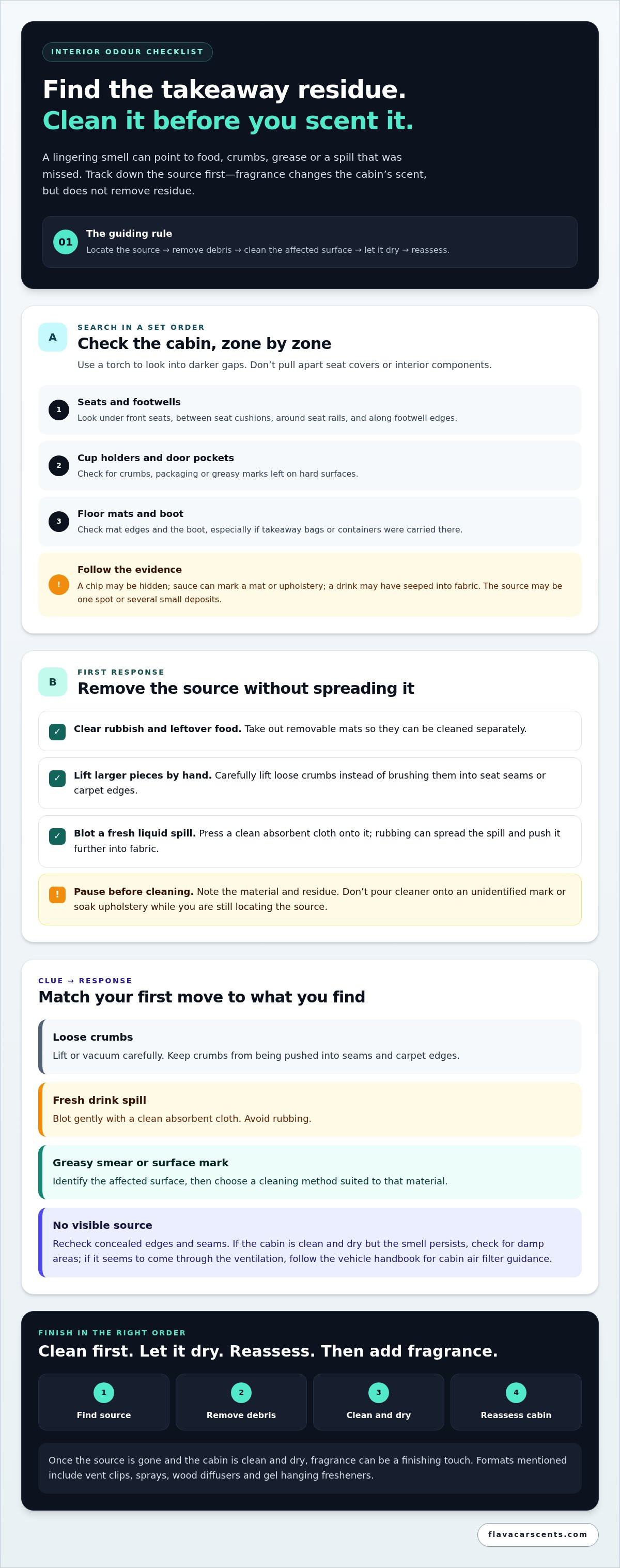
Work through the cabin in a set order to avoid missing small spaces. Start with the seats and footwells, then check cup holders and door pockets. Finish with the boot, especially if you carried takeaway bags or containers there. Use a torch to see into darker gaps, but don’t pull apart seat covers or interior components.
Where takeaway smells hide inside a car
Look under the front seats and between seat cushions, where crumbs can slip out of sight. Check around seat rails, inside cup holders and along the edges of floor mats. Packaging can lodge in door pockets or the boot, while sauce or a drink may leave a mark on carpet or upholstery. For broader context on interior-cleaning practices, see this overview of car detailing techniques.
Pay attention to what you find as well as where it is. Lift or vacuum loose crumbs; clean greasy smears from the surface they’re on; and blot fresh drink spills carefully. These clues help you avoid spreading residue or using a method that doesn’t suit the material.
What to do as soon as you find the source
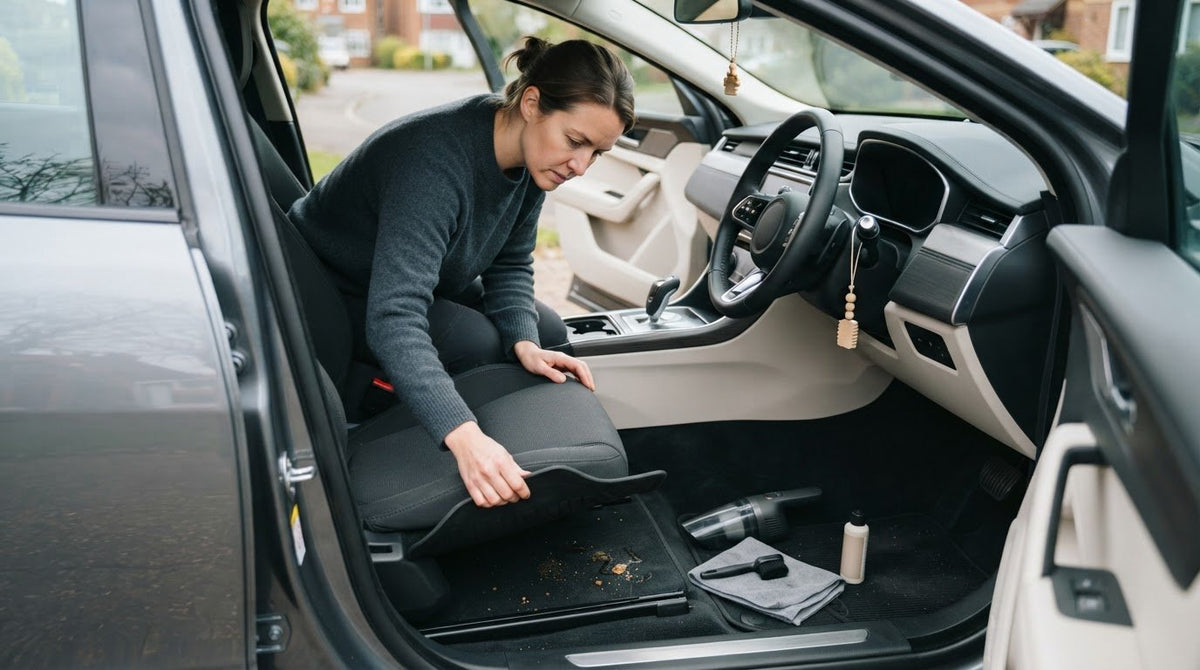
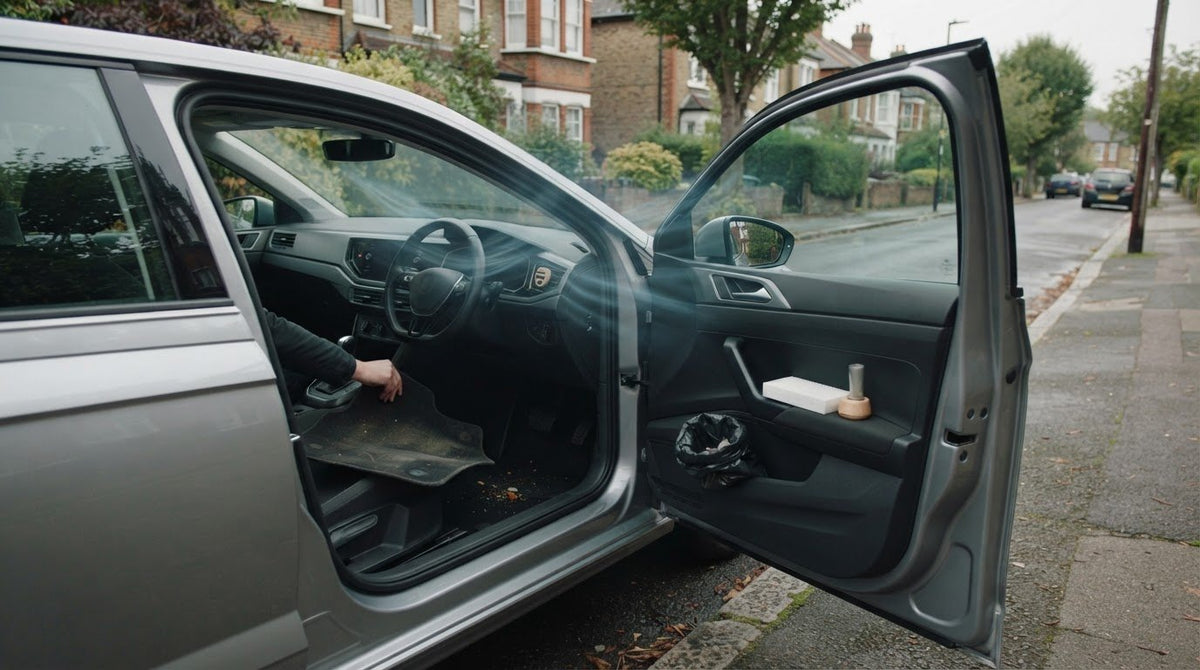
Remove rubbish and leftover food promptly, and take out removable mats so you can clean them separately. Pick up larger pieces by hand, then lift loose crumbs carefully rather than brushing them into seat seams or carpet edges. If liquid is fresh, press a clean absorbent cloth onto it to blot. Rubbing can spread the spill and work it further into the fabric.
Keep the first response simple. Don’t pour cleaner onto an unidentified mark or soak upholstery while you’re still locating the source. Note the material and residue you’ve found, then match the cleaning method to that surface.
Removing food and residue tackles the source of the smell; adding fragrance only changes the cabin’s scent and doesn’t clean what’s left behind. Keep that distinction in mind as you work. A fresher-smelling cabin comes after the food, crumbs and spills have been dealt with.
Quick first-response checklist:
- Remove takeaway rubbish and leftover food.
- Check seats, footwells, cup holders, door pockets and the boot.
- Lift loose crumbs without pushing them into gaps.
- Remove mats for separate cleaning.
- Blot fresh liquid gently and note any greasy residue.
Once the visible source is gone, you’ll have a clearer view of what needs attention. That’s the time for a surface-specific clean, not for covering the smell with fragrance.
Why takeaway odour lingers in car fabrics and surfaces
Lingering takeaway odour is the smell that remains after the obvious food and packaging have been removed. The cabin may look clear, yet a trace of sauce on a seat, a crumb trapped in a seam or residue on a cup holder may still need attention. Treat the smell as a clue to investigate, not proof that every surface needs the same treatment.
Different materials hold or show residue in different ways. Fabric seats and carpet can absorb a spill, while crumbs may settle into seams or beneath a removable mat. Hard surfaces such as plastic trim and cup holders can collect greasy marks that remain visible. The cause could be one spot, several small deposits or something elsewhere in the cabin.
How crumbs, spills and packaging affect the cabin
Small food particles can slip between seat cushions, into footwell edges or under mats. Packaging can also leave a crumb or smear when moved. A dry crumb needs careful removal; a greasy mark or drink spill needs cleaning suited to the affected material. Spraying fragrance over residue won’t remove it, and using the same cleaning method everywhere may spread a mark or leave fabric too wet.
Look at the area around a stain, not just its centre. A spill can spread beyond the most visible patch, while residue on a hard surface may be easier to spot than anything absorbed into cloth. Check the material’s care guidance before applying a cleaner, and test a suitable product on an inconspicuous area if its instructions recommend it.
When the smell may be coming from somewhere else
If the interior has been cleaned and dried but the odour persists, widen your search. Check for damp areas as a separate possibility rather than assuming moisture is part of the takeaway spill. If the smell seems to come through the ventilation or remains despite a clean cabin, inspect the vents and cabin air filter. Follow the vehicle handbook for filter access and replacement guidance; don’t pull apart dashboard components to investigate.
A smell with no visible food source calls for another careful check. Revisit concealed edges and seams, and notice whether the odour is strongest near a particular seat, footwell or vent. Persistent dampness also needs attention, since adding scent won’t address the underlying issue.
Find and clean the source first: masking a smell changes the cabin’s scent, but it doesn’t remove the residue causing the odour. That distinction is central to removing takeaway odour from car interiors. Once the affected area is clean and dry, fragrance can be a finishing touch rather than a cover-up. Explore car fragrance options for adding a chosen scent after cleaning.
Compare cleaning methods for takeaway odour by car interior surface
The right cleaning method depends on where the takeaway residue landed. A removable mat, fabric seat, leather trim and plastic cup holder all need different care. Match the approach to the material, follow the vehicle and cleaner manufacturers’ instructions, and test the cleaner discreetly where appropriate. More product or water isn’t a shortcut: never mix cleaning chemicals or saturate upholstery.
| Surface | First action | Suitable method | Care point |
|---|---|---|---|
| Removable mats | Take them out and remove loose crumbs. | Clean separately using a method suited to the mat material. | Check care instructions before using water or cleaner; let mats dry fully before refitting. |
| Fabric upholstery and carpet | Lift crumbs and blot fresh liquid. | Spot-treat with an appropriate upholstery cleaner and a clean cloth. | Test discreetly first; use a small amount and avoid soaking the fabric. |
| Leather | Gently lift loose food without scraping. | Use a product specifically suitable for automotive leather, following its directions. | Avoid general-purpose cleaners unless the care instructions say they’re suitable. |
| Hard surfaces | Pick up food and wipe away loose residue. | Use an interior-safe cleaner on a clean cloth. | Keep liquid away from screens, electrical controls and openings. |
Choose the right approach for mats, carpet and upholstery
Removable mats are easier to handle outside the car, but materials vary, so use only a cleaning approach allowed by their care instructions. For fabric seats or carpet, treat the marked area rather than wetting a wide section. Apply cleaner as directed, work gently with a clean cloth, and avoid hard rubbing, which can spread residue or disturb the fabric. Let the area dry before deciding whether another pass is needed.
Leather needs a different approach. Choose a cleaner labelled as suitable for automotive leather and follow the product directions. Don’t assume a method that works on fabric is safe for leather trim.
Clean hard surfaces and treat ventilation areas carefully
For suitable hard surfaces, apply an interior-safe cleaner to a cloth rather than spraying directly near buttons, screens or openings. Wipe away the residue, then use a clean part of the cloth as needed. If the smell remains after the cabin has been cleaned and dried, and seems strongest near the vents, inspecting the cabin air filter may be relevant. Use the vehicle handbook for guidance rather than reaching into the ventilation system.
When removing takeaway odour from car interiors, precision beats a one-product-for-everything approach. Clean only the affected material with a compatible method, control moisture and follow the product label. This helps tackle the residue behind the lingering smell while taking care of the cabin surfaces.
How to remove takeaway odour from your car step by step
A focused clean beats a fragrance-first fix. Work in order so crumbs don’t get pushed into fabric and damp cleaning doesn’t trap dry debris underneath. The right method depends on the material, so follow the vehicle’s care guidance and the cleaner’s label at every stage.
Follow a simple cleanup sequence
Start by clearing the cabin, then tackle dry debris before any wet cleaning. Keep removable mats separate and use a cleaner suited to the affected surface. A small sauce mark on fabric needs a different approach from crumbs in a cup holder. Take your time, use clean cloths, and don’t mix products or apply more liquid than the material needs.
- Remove food and packaging. Clear takeaway waste and loose items so you can reach the affected areas.
- Inspect the cabin. Check the original spill area and nearby seams, footwell edges and under removable mats.
- Vacuum dry crumbs. Use a suitable vacuum attachment on carpet and fabric before applying any cleaner. Don’t grind crumbs into the surface.
- Clean the residue. Spot-treat fabric with a suitable upholstery cleaner, use automotive-leather cleaner on leather, and wipe appropriate hard surfaces with an interior-safe cleaner on a cloth.
- Dry the area. Follow product and vehicle-care directions, and don’t refit a removable mat until it’s dry.
- Reassess the cabin. Check the original spot once dry before deciding whether another treatment is needed.
Dry, reassess and respond to lingering odour
Drying is part of the clean, not an afterthought. Let treated fabric and carpet dry fully, following the cleaner’s instructions and the vehicle’s care guidance. Then revisit the exact area you treated. If residue remains visible, follow the product directions before repeating the treatment. Don’t layer cleaners or soak the material in an attempt to speed things up.
If the smell persists despite a clean, dry surface, widen your search rather than adding more cleaner. Recheck overlooked cabin areas and consider whether the odour may be coming from a vent or another source. A lingering smell is a reason to investigate further, not a cue to cover it up.
In short: remove food and packaging, inspect, vacuum dry crumbs, clean the affected surface, let it dry fully, then reassess. This sequence keeps removing takeaway odour from car interiors focused on the source and the material, not on masking the smell.
Once the cabin is clean and dry, finish the reset with a fragrance format that suits your preference, such as a vent clip, spray, wood diffuser or gel hanging freshener. Choose a car fragrance for your cabin as the final touch, not as a substitute for cleaning.
Keep your car fresh after cleaning without masking the takeaway smell
A clean cabin comes first. Flava Car Scents car fragrances add fragrance; they don’t clean food residue or remove the source of takeaway odour. Use one only after leftover food is gone and affected surfaces have been cleaned and dried. That keeps the reset simple: clean first, scent second.
Once the source is dealt with, choose a fragrance format that fits how you use the car and where you’d like the scent in the cabin. Vent clips, sprays, wood diffusers and gel hanging fresheners give you different formats to consider. Think about the setup you prefer rather than expecting fragrance to do the work of cleaning.
Choose a car fragrance format for your routine
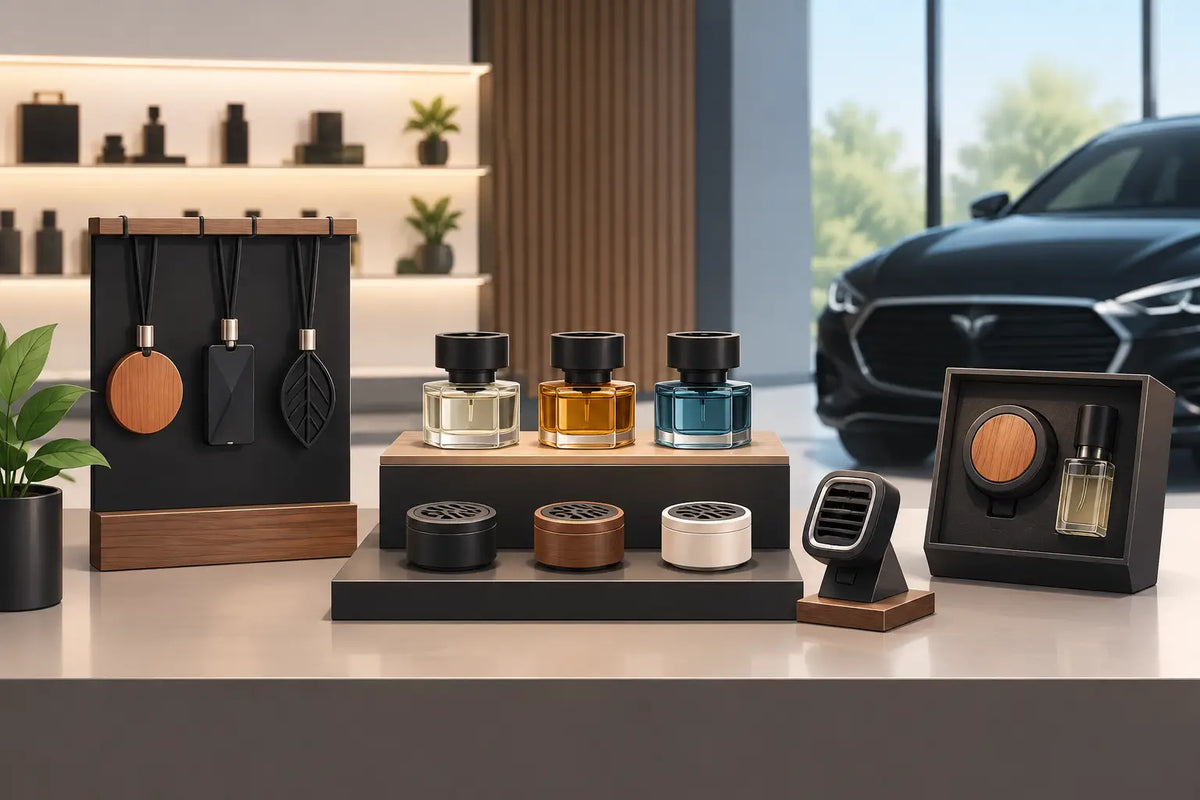
A vent clip places fragrance at a vent, while a spray gives you a separate format to use in the cabin. Wood diffusers and gel hanging fresheners are other options. Consider where you’d prefer the fragrance and which format suits your routine. Follow the product’s directions for use, and don’t apply fragrance to a surface as a way to treat a food stain.
Keep the goal clear. Fragrance can shape the cabin’s scent after cleaning, but if the takeaway smell is still noticeable, pause before adding more. Recheck the original area, nearby seams and any place where packaging or a spill could have left residue. Fragrance should finish the clean, not compete with a smell that still needs investigating.
Make a clean cabin part of your regular routine
Small habits help keep the interior ready for the next drive. Remove takeaway packaging promptly rather than leaving it in a door pocket or the boot. After eating on the go, check the seats, cup holders and footwells for crumbs. If a drink or sauce spills, follow the care guidance for that surface and clean it promptly, taking care not to spread the mark or over-wet fabric.
When your clean, dry cabin is ready for fragrance, browse Flava Car Scents car fragrance options and choose a format that suits your preference. Keep the order simple: clear food, clean residue, let surfaces dry, then add fragrance.
Removing takeaway odour from car interiors is about tackling what’s causing the smell before choosing what you want the cabin to smell like. A considered fragrance is the finishing touch for a cabin that’s already clean.
Make your next drive feel like a fresh start
Let a clean cabin set the tone for every journey. If takeaway odour returns, treat it as a cue to check for residue or another source, not a reason to pile on fragrance. The principle behind removing takeaway odour from car interiors is simple: clean what’s causing the smell, then choose the scent you want to enjoy.
Once the cabin is clean and dry, make the finishing touch your own. Flava offers car fragrance formats including vent clips, sprays and wood diffusers, so you can choose an option that suits your cabin and routine. These add fragrance; they don’t clean surfaces or remove food residue.
Ready to give your freshly cleaned cabin a new atmosphere? Explore Flava car fragrances and choose a scent format for your next drive. Clean slate, chosen scent, better journeys ahead.
Frequently Asked Questions
How do you get takeaway smell out of a car quickly?
For a quick practical reset, remove food waste, air the car while it’s parked safely, and deal with visible crumbs or spills straight away. Blot liquid rather than rubbing it, then clean the affected surface using a method suited to its material. Let it dry before judging the result. Spraying fragrance first may change the cabin’s scent, but it won’t remove leftover food residue.
Can an air freshener remove takeaway odour from a car?
No. An air freshener adds fragrance rather than cleaning food residue or removing its source. If a greasy mark or spill remains, the smell may still be noticeable beneath the added scent. Clean and dry the affected area first, then use a car fragrance if you’d like to refresh the cabin. Fragrance is the finishing touch, not a cleaning method.
How do you remove a food spill smell from car upholstery?
Blot a fresh spill with a clean absorbent cloth, pressing gently to lift liquid without spreading it. Once loose debris is gone, use an upholstery cleaner suitable for the seat fabric and follow its label. Test it on a discreet patch if instructed, and avoid soaking the seat. Let the area dry fully before using the car or deciding whether another careful treatment is needed.
What absorbs food smells in a car?
An activated-charcoal bag can passively absorb odours from the cabin air, but it won’t clean a spill or remove crumbs trapped in upholstery. Use it as a supporting step after cleaning, not as a substitute. Keep the bag positioned securely and follow its instructions. If the smell comes from residue in a seat seam or carpet, an absorbent product alone won’t reach and remove that source.
Can takeaway odour get into a car’s air vents?
Odours can be carried through the cabin airflow, particularly if the smell remains after the interior surfaces have been cleaned. If it’s strongest when the fan is running, check the vehicle handbook for cabin air-filter inspection guidance. Don’t pour cleaner or fragrance into vents, as liquid can reach areas not intended for it. First make sure the smell isn’t coming from a damp or overlooked cabin spot.
How do you get chip or fast-food smell out of car seats?
Start by checking seat gaps, seams and the area beneath the seat for crumbs or dropped food. Vacuum dry particles with a suitable attachment, taking care not to press them deeper into the fabric. For a mark, use a cleaner appropriate to the seat material and follow its directions. Leather needs a product made for automotive leather; fabric seats need a suitable upholstery cleaner.
Why does my car still smell after I have removed the food?
The visible food may be gone while a crumb, greasy trace or absorbed spill remains in a seam, carpet edge or beneath a mat. Check nearby surfaces and any place a container or bag rested. If the cabin is clean and dry but the smell persists, notice whether it’s strongest near a vent or a damp area. This can help distinguish leftover food residue from another source.

Leave a comment
This site is protected by hCaptcha and the hCaptcha Privacy Policy and Terms of Service apply.