
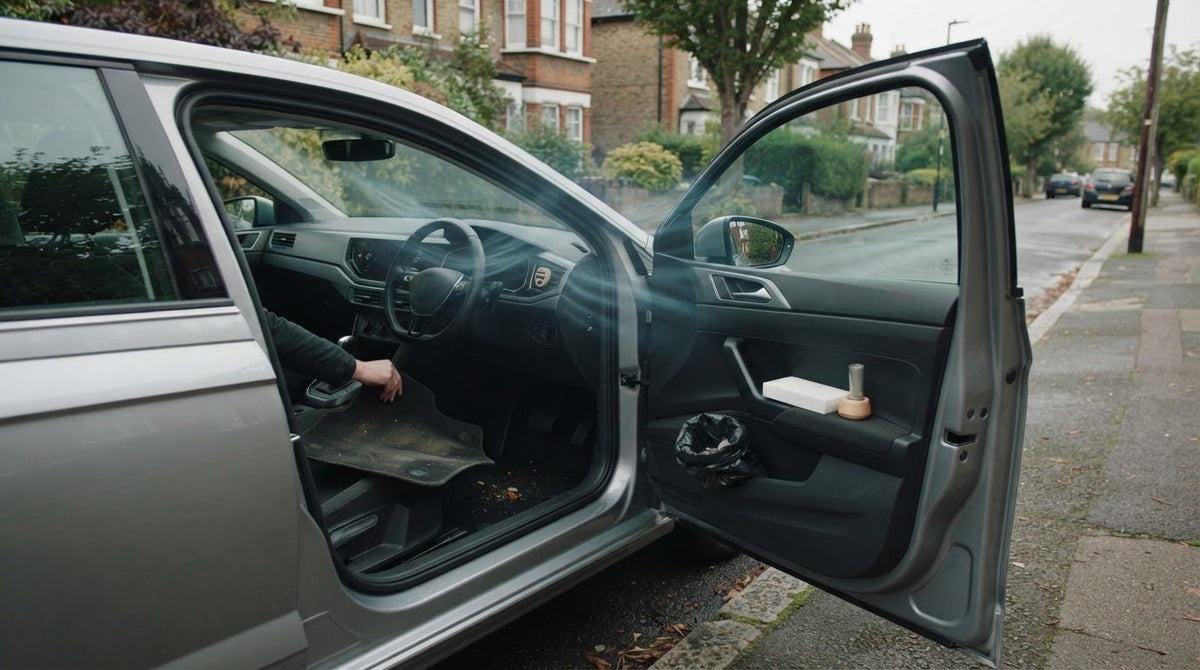
A fragrance can change the mood of stale car air, but it won’t remove the source. If you’re searching for how to get rid of stale air in car, start by noting when the smell appears and checking for simple causes such as damp mats, food remnants or rubbish.
A stale or musty smell can come from the cabin, the ventilation system, or both. It isn’t always obvious whether you’re dealing with trapped moisture, a dirty cabin air filter, everyday clutter or an issue linked to air conditioning. Masking the smell may seem like a quick fix, but a fresher cabin starts with clean surfaces and clear airflow.
This guide helps you narrow down likely causes, follow a practical cabin reset and recognise when a recurring smell needs more attention. Once you’ve addressed the source, finish with a car fragrance that suits your drive, from a vent clip to a wood diffuser.
Key Takeaways
- Notice whether the stale feeling is present before the fan starts or appears mainly when you use the ventilation or air conditioning.
- Inspect the cabin before treating an odour as proof of a ventilation problem. Damp items, food and rubbish can all contribute.
- To learn how to get rid of stale air in car, remove rubbish and damp items first, then check the filter and ventilation guidance in your vehicle handbook.
- If mustiness persists or returns with the air conditioning, investigate the source rather than relying on fragrance to cover it.
- Keep the cabin fresher with simple cleaning and airing habits, then choose a vent clip or wood diffuser as a personal finishing touch.
What does stale air in a car feel like, and where should you look first?
Stale air isn’t one specific smell or diagnosis. The cabin may feel stuffy, flat or persistently musty, as if it needs a reset. Pay attention to when you notice it. A general stale feeling before the fan starts points you towards the cabin itself. An odour that appears mainly when the ventilation or air conditioning is running gives you another clue to investigate.
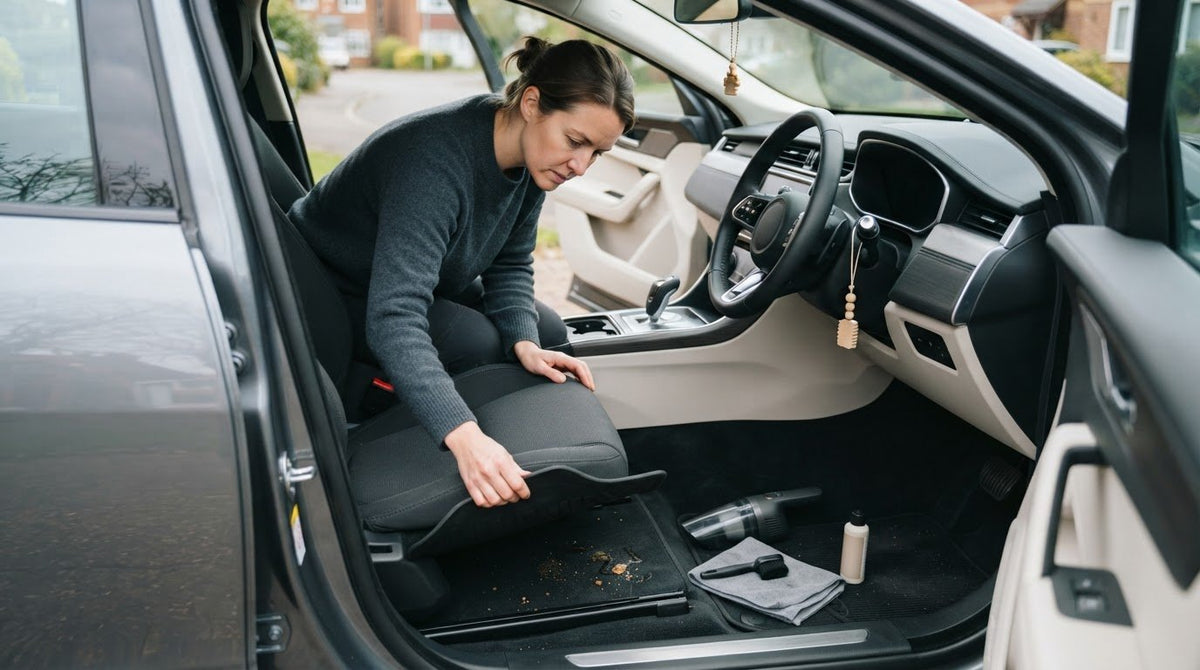
Start with a visual scan. Check for rubbish, food remnants, damp clothing or bags, and floor mats that are dirty or holding moisture. Look around the seats and footwells, and check the boot for items left behind. Small everyday sources can linger in a closed car, particularly when the cabin has little chance to air out.
Is the stale feeling inside the cabin or coming through the vents?
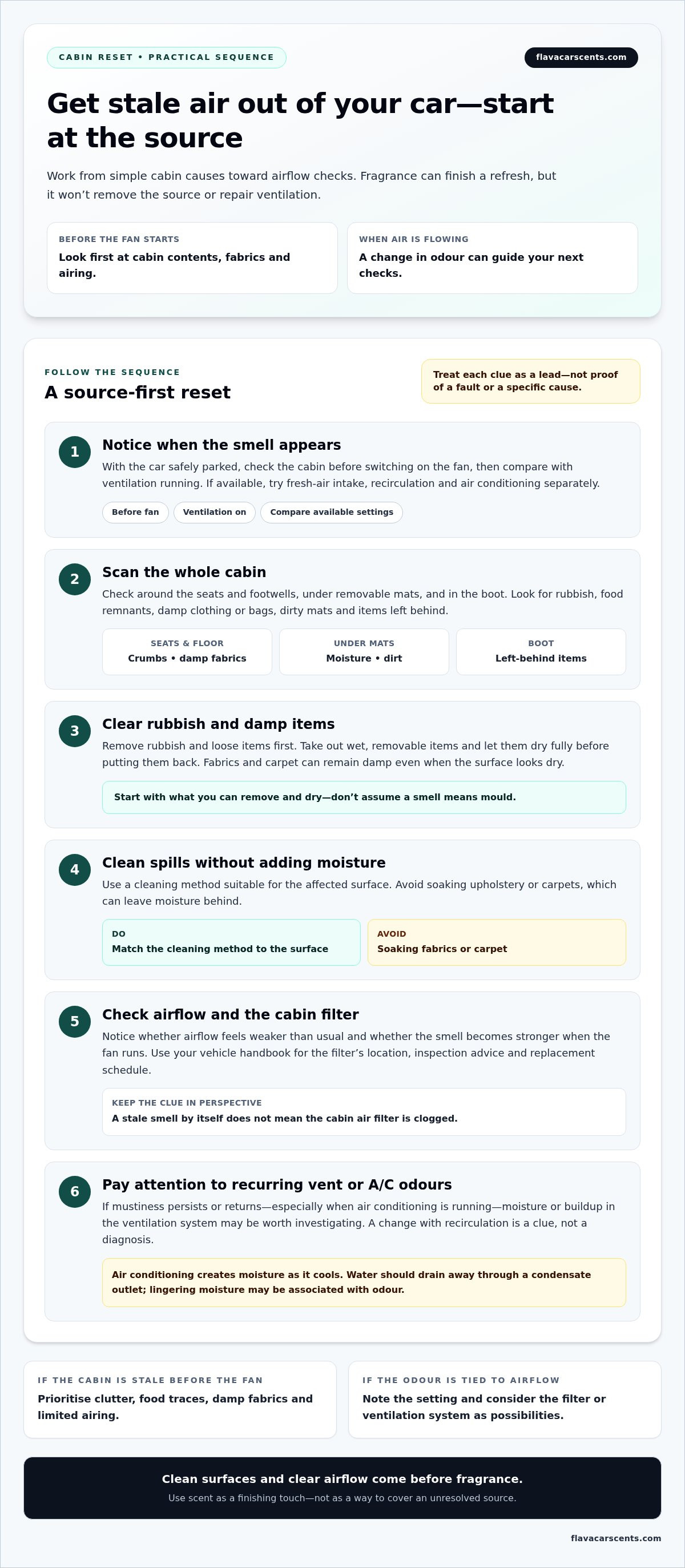
With the car safely parked, notice the cabin’s smell before switching on the fan. Then compare it with the ventilation running. If your vehicle has these settings, try fresh-air intake, recirculation and air conditioning separately. Note which setting changes the smell, whether it fades when the system is off and whether airflow feels weaker than usual. These observations help narrow down where to look, but they don’t diagnose a fault or prove a particular source.
Cabin feels stuffy before the fan starts: Look for clutter, food traces, damp fabrics and limited airing.
Odour becomes more noticeable when the fan runs: Note the change, then consider the cabin filter and ventilation system as possibilities.
Mustiness is stronger with air conditioning: Record when it happens. Moisture or buildup in the system may be worth investigating.
Smell changes with recirculation: Compare the settings, but don’t treat that change alone as proof of a cause.
What can make car air feel stuffy?
Everyday use leaves traces. Crumbs, packaging, muddy footwear, wet coats and damp floor mats can all affect how the cabin feels. If the car stays shut for long stretches, those odours may become more noticeable. A cabin air filter is another possible contributor, particularly if airflow seems reduced. A stale smell by itself, however, doesn’t mean the filter is clogged.
Persistent mustiness can also make moisture or buildup in the ventilation system worth considering, especially if the odour appears mainly when air comes through the vents. Similar smells can have different sources, so treat each clue as a lead, not a verdict. For a focused start on how to get rid of stale air in car, note what you see in the cabin and when the smell changes. That gives your next checks a direction without jumping to conclusions.
Why does stale air build up in a car?
Stale air can have more than one cause. Everyday cabin odours and moisture in fabrics may feel much like an issue connected to the vents, so a smell alone isn’t proof of a particular problem. If the cabin smells off before the fan is on, start with its contents and surfaces. If the odour becomes noticeable mainly when air flows through the vents, the filter or air conditioning may also be worth considering.
This distinction keeps your checks practical. A sensible approach to how to get rid of stale air in car starts by identifying plausible sources, rather than treating every musty smell as mould or a serious fault. The EPA guide to indoor air quality explains how sources of pollutants can affect indoor air. It offers general context, though it isn’t specific to vehicles.
How can dampness and everyday cabin use affect air?
Wet clothing, a drink spill, damp mats or food scraps can leave lingering smells, especially in a closed cabin. Check beyond the obvious: lift removable mats and look beneath them, then inspect boot storage where wet shoes, sports kit or shopping may have been left. Rubbish and accumulated crumbs can contribute too. These are straightforward possibilities to rule out first, not signs that the car must have mould or a serious problem.
Fabric and carpet can stay damp after the surface looks dry. Remove wet, removable items and let them dry fully before putting them back. If you find a spill, use a cleaning method suitable for that surface and avoid soaking upholstery or carpets. If a smell remains after you have addressed these cabin sources, check other possibilities rather than assuming you have found the cause.
Could the cabin air filter or air conditioning be involved?
A dirty or overdue cabin air filter may restrict airflow or contribute to unpleasant odours, but it won’t explain every stale cabin. Check the vehicle handbook for the filter’s location, inspection advice and replacement schedule. If airflow has weakened or the smell is strongest with ventilation running, those details can guide your next check.
Air conditioning creates moisture as it cools the air. Water can form on the cold evaporator and should drain away through a condensate outlet. If moisture lingers around the system, persistent odour may be associated with buildup there. That possibility doesn’t establish what is happening in your car. Recurring smells linked to air conditioning may need closer attention.
Once you’ve addressed likely sources, fragrance can add a personal finishing touch, but it won’t clean the cabin or repair ventilation. Explore car fragrance options to give a refreshed drive an atmosphere that feels like yours.
How to get rid of stale air in your car: a practical reset
A proper refresh starts at the source, not with a stronger scent. Work through this sequence, from clearing the cabin to checking airflow. Follow your vehicle handbook and any cleaning product instructions for your model and interior materials.
- Remove rubbish and loose items. Take out wrappers, food containers and anything else that could be holding odours. Check seat creases, footwells, boot storage and beneath removable mats. Clearing the source comes before freshening the air.
- Take out damp removable items. Remove wet mats or other suitable items and let them dry fully before putting them back. Check beneath the mats too. Returning damp fabric to a closed cabin can keep the interior feeling musty.
- Clean suitable hard surfaces. Wipe appropriate interior surfaces with a product suited to the material. Follow the product label and your vehicle guidance, and avoid soaking fabrics or applying a cleaner to surfaces it isn’t designed for.
- Air the cabin safely. Park somewhere safe, switch off the vehicle and open the doors or windows when conditions allow. Consider the weather, your surroundings and vehicle security. Give the interior time to air before returning items.
- Check the cabin air filter. Use the handbook to find the filter and learn how it should be inspected or replaced. Change it if it’s due, following the vehicle’s instructions. Don’t assume a new filter will resolve an odour from another source.
- Refresh the airflow. Where appropriate, select fresh-air intake rather than leaving recirculation on continuously. Compare how the cabin feels and note whether an odour appears when the fan or air conditioning runs.
Keep liquids out of the vents. Don’t spray cleaners or other liquids into vents unless the product instructions specifically direct you to do so. For any filter check or system-cleaning product, follow both the vehicle handbook and product directions. Improvised treatments may conflict with the guidance for your car or the product you’re using.
If an odour linked to the air conditioning persists after the cabin reset, don’t keep layering on treatments or fragrance. The source may need closer attention, and guessing at a system repair can make matters worse. Get the cabin fresh first. Once you’ve tackled likely causes, browse car fragrance options for a finishing touch that suits the atmosphere you want for the drive.
Why does the stale smell keep coming back?
A cabin can smell fresh briefly, then turn musty again. That doesn’t automatically mean you’ve missed a serious fault. The odour may be returning from a source that wasn’t fully removed, such as damp material, or it may be linked to airflow or air conditioning. The pattern matters more than the smell itself: note when it returns and what was running at the time.
When is an air freshener not the solution?
Fragrance changes the cabin’s scent. It doesn’t remove dirt, dry a damp mat or fix a ventilation system issue. If you add a scent before addressing the source, the original odour may remain underneath it and reappear. That’s masking, not a reset.
Complete the source-first clean before adding fragrance. Clear anything that could be holding odours, deal with damp removable items and air the cabin when conditions allow. Then a vent clip or wood diffuser can bring a personal finishing touch to the drive. Fragrance shapes the atmosphere; it doesn’t deodorise, disinfect or repair the car.
When should you investigate the ventilation system further?
Take a closer look if mustiness returns quickly after you’ve cleaned the cabin, or if the odour appears mainly when the fan or air conditioning is on. These clues don’t identify a specific fault. A smell alone can’t confirm mould, blocked drainage or a mechanical problem, so avoid treating a guess as a diagnosis.
Check your vehicle handbook for cabin filter inspection and replacement guidance. If the filter is due, follow the vehicle’s instructions. For an odour that keeps returning with air conditioning, consult the handbook or seek help from a suitably qualified automotive professional rather than repeatedly trying system treatments. Describe when the smell appears, which settings you were using and whether it persists after cleaning the cabin. Those details can help guide a closer assessment without assuming the cause.
Keep track of what changes. Does the smell return after the car has been parked, after a wet journey or only when ventilation starts? If a simple cabin refresh helps but the odour repeatedly comes back, investigate further rather than layering on fragrance. A source-first approach to how to get rid of stale air in car means recognising when routine cleaning has reached its limit.
Once the source has been addressed, choose a scent to suit your drive. Explore car fragrances and give the cabin a more personal atmosphere, without expecting fragrance to do the work of cleaning or ventilation.
How to keep your car fresh and make fragrance the finishing touch
A fresh-feeling cabin comes from small habits, not one big reset. Keep dampness and everyday clutter from settling in, follow the vehicle’s recommended filter care and air the interior when conditions allow. Once you’ve dealt with the source of stale air, fragrance can add a final personal note.
Small habits that help prevent stale cabin air
Make a quick clear-out part of finishing a journey. Remove food wrappers, takeaway packaging and other rubbish before they linger in the car. If mats or belongings get wet, take removable items out to dry when practical and safe. Check beneath the mats if they feel damp, and wait until they’re dry before returning them.
Air the cabin when the weather, surroundings and vehicle security allow. Use ventilation thoughtfully, and follow your vehicle handbook for cabin filter inspection and replacement intervals. These routines can help prevent ordinary cabin smells and moisture from building up unnoticed, though they won’t rule out every cause of odour. Small, regular resets keep the interior ready for the next drive.
Choose a fragrance format for your drive
Once you’ve addressed what made the air stale, choose a format that fits your preference and how you want the fragrance placed in the cabin. Vent clip car air fresheners attach at a vent, while wood diffuser car air fresheners offer a different format. Gel hanging fresheners and turbo can sprays are other options. Follow each product’s instructions for placement and use.
Think about the atmosphere you want, too. A personal touch can make the cabin feel more like yours, whether you prefer a vent-mounted format, a hanging freshener or a wood diffuser. Flava Car Scents offers everyday fragrances inspired by designer fragrances for men and women, alongside these different car fragrance categories. Choose by format and scent preference, not as a substitute for cleaning, ventilation or investigating a recurring odour.
If you’re still deciding, compare the formats and consider which one suits your cabin and routine. The right finishing touch is the one that feels right for your drive, after you’ve addressed the source. Keep the air fresh at its source, then set the mood with a scent that’s yours.
Explore Flava Car Scents and find a fragrance format to finish your refreshed cabin.
Make your next drive feel like a fresh start
A fresher cabin isn’t just about the moment you clean it. Notice how the air feels on your next few drives. If an unpleasant odour returns, treat that as a cue to look for its source rather than covering it up. That’s a more useful way to approach how to get rid of stale air in car and keep the interior feeling comfortable over time.
Once the cabin is fresh, give it a finishing touch that reflects your style. Flava’s car fragrance formats include vent clips, wood diffusers and turbo can sprays, with designer-inspired fragrances for men and women. Choose the format and scent that suit the atmosphere you want, while letting ventilation and cleaning do their own job.
Explore Flava car scents and find a personal finishing touch for your refreshed cabin. A little care, followed by a scent you love, can make every journey feel more inviting.
Frequently Asked Questions
How do I get rid of stale air in my car quickly?
If you’re wondering how to get rid of stale air in car quickly, begin with a simple cabin reset: remove rubbish, check for damp belongings, then air the car safely while it’s parked. If conditions allow, use the ventilation on a fresh-air setting. This can improve how the cabin feels, but a recurring musty smell may need more attention. Use your vehicle handbook for filter or air conditioning checks instead of guessing at a repair.
Can a dirty cabin air filter make a car smell stale?
Yes, a dirty or overdue cabin air filter can be one possible contributor to reduced airflow or unwanted smells, though it isn’t the only explanation. Check your vehicle handbook to find the filter and follow its recommended inspection and replacement schedule. If the smell remains after appropriate filter maintenance, look for other possible sources in the cabin or ventilation system rather than assuming the filter was the whole problem.
Why does my car smell musty when I turn on the air conditioning?
Moisture or buildup in the air conditioning system may contribute to a musty smell when the AC starts, but odour alone can’t confirm the cause. Notice whether the smell continues after the system has been running, and check your handbook for cabin filter guidance. If the AC-related odour keeps returning, seek advice from a suitably qualified automotive professional rather than relying on a scent or assuming a particular fault.
Does recirculating air make a car feel stale?
It can in some situations. Recirculation reuses air already inside the cabin, so relying on it continuously may leave the interior feeling less refreshed. Use fresh-air ventilation when appropriate, and follow your vehicle guidance, especially when demisting the windows. Recirculation can still be useful in certain conditions; using it doesn’t, by itself, mean there’s a fault. If the cabin stays stuffy, consider other possible causes too.
Will a car air freshener get rid of stale air?
A car air freshener adds fragrance, but it doesn’t remove the source of a stale smell or repair the ventilation system. First clean the cabin, dry damp items and follow your vehicle handbook for filter guidance. Once the cabin feels refreshed, a vent clip, wood diffuser, gel hanging freshener or spray can add a scent you enjoy. Think of fragrance as the finishing touch, not the fix.
When should I get a stale car smell checked?
Investigate further if the smell keeps returning, appears mainly when the air conditioning runs or remains after routine cabin cleaning. Check your vehicle handbook for relevant filter and ventilation guidance. For a persistent odour linked to the ventilation system, seek help from a suitably qualified automotive professional. A smell alone can’t identify the cause, so don’t assume it proves mould or a specific mechanical problem, and don’t use fragrance as a repair.


Leave a comment
This site is protected by hCaptcha and the hCaptcha Privacy Policy and Terms of Service apply.