
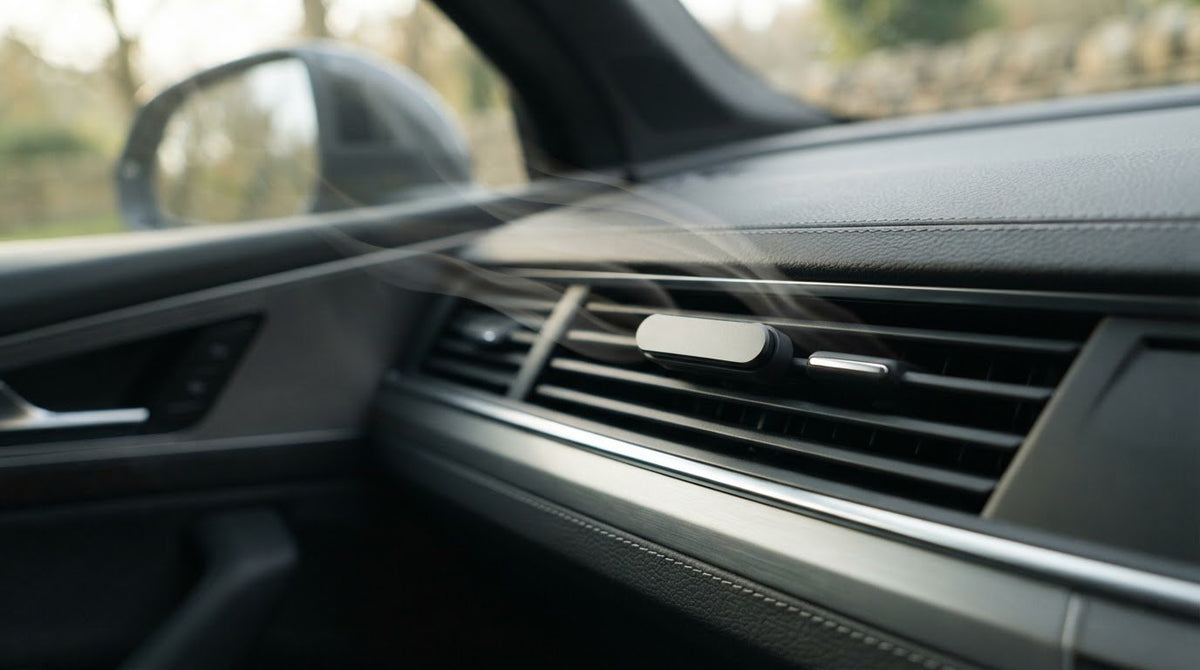
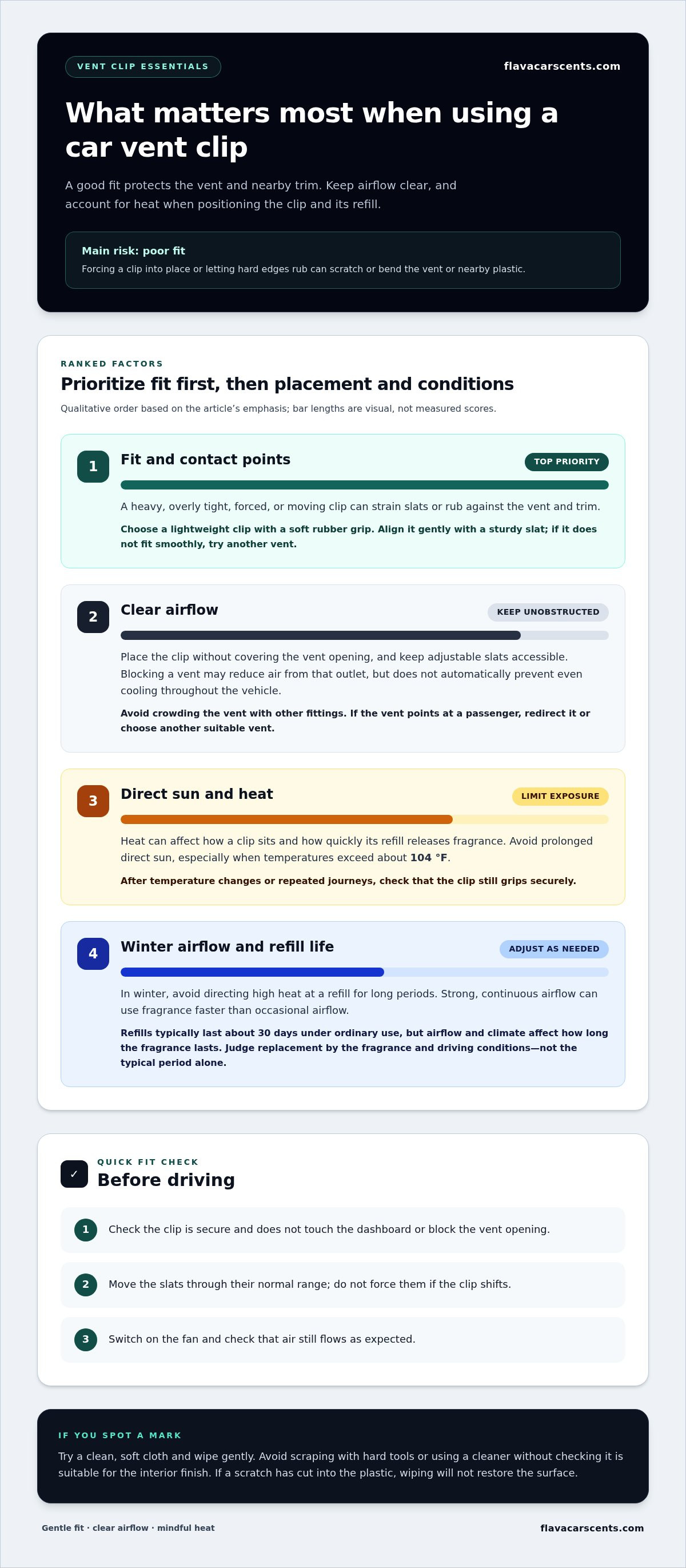
Vent clips aren’t inherently bad for car plastics. The main risk is a poor fit: forcing a clip into place or letting hard edges rub against the vent can scratch or bend it. Choose a lightweight clip with a soft rubber grip, fit it gently and keep the vent unobstructed.
It’s reasonable to wonder whether a clip could affect airflow or be damaged by changing weather. Heat and cold can affect clips and refills, while a badly positioned clip can obstruct air from the vent.
This guide explains how vent clips affect airflow and car plastics, and how to fit one carefully. You’ll also learn how hot sun, warm air and winter conditions can affect the clip and its refill, so you can keep your cabin fresh while protecting its finish.
Key Takeaways
- Position a vent clip so it doesn’t obstruct airflow, and consider how the vent directs air around your cabin.
- Fit a lightweight clip gently; forcing it can put pressure on vent slats.
- Hot sun and prolonged direct heat can affect clips and refills, so placement and airflow matter.
- Choose a clip with a soft rubber grip to help reduce the risk of scratches or bending.
1. Effect on airflow and air conditioning
A vent clip uses a dashboard air vent to release fragrance into the cabin. Position it on a central dashboard vent, where moving air can carry the scent, without covering the vent opening. Keeping the airflow path clear helps prevent the clip from interfering with air reaching the cabin. Make sure the vent’s adjustable slats remain accessible so you can still direct the air.
Covering part of one vent doesn’t automatically stop the air conditioning from cooling the whole vehicle evenly. Blocking half the airflow from a single vent is not described as preventing even cooling throughout the car. Still, the air coming from that vent may be reduced, which can affect comfort for someone sitting nearby. If that vent is aimed at a passenger, adjust its direction or choose another suitable vent.
Take care with accessories that occupy several vents. Using multiple vent-mounted phone holders can restrict airflow and make cooling take longer. A practical approach is to reserve one vent for a phone holder rather than obstructing several outlets. A fragrance clip also needs room, so avoid crowding it with other fittings.
Some vehicles let you point their vents towards the windows. A Volvo XC40 forum participant recalled the manual recommending this, offering one example of how vent direction can be adjusted. Rather than aiming air straight at a phone or clip, angle the slats away if repeated hot or cold airflow is a concern.
Before driving, make three quick checks: confirm the clip isn’t blocking the vent, move the slats through their normal range and switch on the fan. Check that air still flows as expected. If the clip shifts when you adjust the vent, reposition it instead of forcing the slats. Keep the vent working freely so airflow can carry fragrance through the cabin.
2. Will a vent clip damage my car’s vents?
A vent clip can damage slats if it’s too heavy, grips tightly or is forced into place. Thin, movable slats and the surrounding vent trim are especially vulnerable to pressure that can bend, scratch or loosen them. A lightweight clip and gentle fitting reduce the risk.
Magnetic and adhesive mounts aren’t automatically safer than clip-on mounts. Magnetic mounts still need a secure attachment point, while adhesive mounts touch the surface directly and may leave residue when removed. A clip avoids adhesive contact but puts pressure on the vent slats, so the safer option depends on its design and attachment point.
Marks or residue can appear if a clip rubs against the vent, traps dust or stays pressed against one spot. Discolouration is a separate concern: a mark may be surface residue, while a lasting colour change can mean the finish has been affected. Check the contact area after removing the clip.
Fit and remove a clip without force. First, inspect the vent slats for cracks or looseness. Align the clip with a sturdy slat, then press it gently into position without twisting or spreading the slats. If it doesn’t fit smoothly, remove it and try another suitable vent rather than pushing harder. To remove it, support the slat and ease the clip away in the direction it came from.
To remove residue, start with a clean, soft cloth and gently wipe the affected vent surface. Avoid scraping with keys or hard tools, which can turn a mark into a scratch. Don’t apply a cleaner or solvent without checking that it’s suitable for your car’s interior finish. If a scratch has cut into the plastic, wiping won’t restore the surface, so stop rubbing and avoid adding pressure.
Before refitting, look for a soft rubber grip and check that the clip sits securely without squeezing the slat. A loose fit can rub as the car moves, while an overly tight one can strain the vent. Gentle handling protects the trim and keeps the vent moving freely.
3. Effects of heat and cold on clips and refills
Heat can change how a vent clip sits and how quickly its refill releases fragrance. Avoid leaving a clip in prolonged direct sun, especially when temperatures exceed about 104 °F. A parked car can expose dashboard fittings to intense sunlight, so move the clip out of direct sun when practical. Check that it still grips securely before driving.
Material affects how a clip handles heat and vibration. Wood, metal and silicone clips with a solid grip are described as more resistant than thin plastic clips. However, durability also depends on the design and fit. Check the grip and attachment point for looseness after temperature changes or repeated journeys.
Warm airflow can also affect a fragrance refill. Vent clip refills typically last about 30 days under ordinary use, but airflow and climate influence how long the fragrance lasts. Strong, continuous airflow may use the scent faster than a vent that runs occasionally. Refillable vent fresheners use refill sticks, giving you a way to replace the scented insert when it fades.
Cold weather brings a different concern. In winter, don’t direct high heat at a vent clip refill for long periods. Adjust the vent direction or fan setting so the refill isn’t exposed to a sustained stream of hot air. This avoids unnecessary exposure while keeping the cabin comfortable.
Use a simple seasonal check: look for a secure grip, keep the clip away from prolonged direct sun, and redirect strong heat in winter. If the clip feels loose after the car’s temperature changes, remove and refit it gently. For refill sticks, judge replacement by the fragrance and your driving conditions, not the typical 30-day period alone.
4. Can car vent clips damage or scratch dashboard plastics?
Yes, a vent clip can scratch nearby dashboard plastic if its hard edges rub against the surface. The risk increases when the clip rests against the dashboard instead of gripping only the vent. A loose fit may shift during a journey, while forcing a tight clip can press it against surrounding trim. Check the contact points before driving.
Soft rubber grips help protect car vents from scratches and bending. They create a gentler barrier between the clip and the vent’s finish. Look for a grip that covers the areas touching the slats, rather than a bare, narrow edge. A secure fit matters too: even a light clip can cause repeated rubbing if it moves.
Placement matters. Choose a vent where the clip can sit without touching the dashboard, screen surround or decorative trim. If the clip’s body rests against a glossy panel, move it to another suitable vent. Keep it clear of adjustable controls and check that the vent slats still move freely after fitting.
Fit the clip carefully: line it up with a sturdy slat, then ease it on without twisting. Stop if the slat flexes or the clip scrapes nearby plastic. If you notice a new mark, remove the clip gently and inspect the grip and contact area before refitting. Repeated rubbing means the position or fit needs changing.
For a clean dashboard finish, include the contact area in your regular cabin checks. Look for dust trapped between the clip and trim, as grit can act like an abrasive while the car moves. Wipe loose dust away before fitting, then make sure the clip stays clear of the dashboard. Soft rubber contact points and gentle handling help protect the finish.
Flava Car Scents: SWIZZELS TURBO CAN SPRAYS
Flava Car Scents offers SWIZZELS TURBO CAN SPRAYS for drivers who’d rather choose a car fragrance without fitting a vent clip. If you prefer a vent-mounted format, VENT CLIP CAR AIR FRESHENERS are another option, while WOOD DIFFUSER CAR AIR FRESHENERS offer a different style for your cabin. Choose the format that suits your interior and how you want to enjoy fragrance on the road. A vent clip still needs careful placement and a gentle fit, as the earlier guidance explains. For drivers concerned about contact with vent slats, a spray offers an alternative to attaching a clip there. Explore the available car fragrance options at Flava Car Scents, and visit the website to find your preferred format.
Choose the fragrance format that suits your drive
If you’re still wondering whether vent clips are bad for car plastics, let your interior and preferred setup guide your choice. A vent clip isn’t the only way to add fragrance to your car. Consider whether you’d rather avoid attaching anything to the vents or choose a fragrance format designed to sit elsewhere in the cabin.
Flava Car Scents offers SWIZZELS TURBO CAN SPRAYS and TURBO CAN SPRAYS, as well as WOOD DIFFUSER CAR AIR FRESHENERS. Each gives you a different way to add fragrance to your car without relying on the same fitting style. Choose the option that suits your everyday journeys and your cabin’s look.
Ready to explore your options? Contact Flava Car Scents today and find a fresh direction for your next drive.
Frequently Asked Questions
How Do Freshener Vent Clips Actually Work?
A vent clip uses air moving through the dashboard vent to disperse fragrance into the cabin. As the fan runs, airflow passes around or through the scented material, carrying its aroma beyond the vent. The fragrance may spread more noticeably when the fan is on than when the car is parked. The clip doesn’t power the air conditioning or change how the system cools.
Why Choose a Vent Clip Air Freshener?
A vent clip is a practical choice if you want fragrance placed directly in the path of cabin airflow. It attaches to a vent rather than hanging elsewhere, which can suit drivers who prefer a compact, visible option. It may not suit you if you don’t want anything attached to the vents. In that case, consider another car fragrance format, such as a spray or wood diffuser.
Will a vent clip damage my car’s vents?
Vent clips aren’t inherently bad for car plastics, but a poor fit or forceful installation can damage a vent. Slats may scratch, bend or loosen if the clip grips too tightly or shifts against them. Stop if fitting the clip makes a slat flex. Choose a lightweight design and remove it gently if it doesn’t sit securely.
Can vent clips break or loosen car air vent slats?
Yes, a clip can strain a slat if it’s heavy, tightly fitted or repeatedly knocked. A loosened slat may no longer hold its chosen direction, while a cracked slat can affect how you position the vent. Don’t attach a clip to a visibly damaged vent. If a slat moves unusually or makes a cracking sound, remove the clip rather than adjusting it further.
Do heat, sunlight or cold make vent clip damage more likely?
Temperature changes can affect a clip’s grip and how its refill releases fragrance, so inspect the fitting after strong sun or seasonal temperature shifts. If the clip feels loose after a hot day, remove it before driving and check it for changes. In cold weather, avoid directing sustained hot airflow at the refill, which may shorten its useful fragrance life.
Do car manufacturers warn against using vent clips on air vents?
There isn’t one warning that applies to every car, because vent designs and manufacturer guidance differ by model. Read your vehicle handbook for instructions about accessories around the dashboard vents. If it cautions against attachments, follow that advice. Also avoid any clip that blocks a control, interferes with vent adjustment or obstructs your clear view of the road.



Leave a comment
This site is protected by hCaptcha and the hCaptcha Privacy Policy and Terms of Service apply.