

Fragrance alone isn’t a fix for a sweaty car. A post-workout car odour solution starts by tackling the cause, not covering it up. After a hard session, warmth can make lingering smells more noticeable, while damp clothes, towels or gym bags can transfer odours to seats and other areas of the cabin.
A fresh scent can make the cabin smell different, but on its own it won’t remove the source. A better approach is a quick, repeatable routine: remove damp kit, air the cabin, then clean and dry affected surfaces using methods suitable for the material. This helps prevent the same gym-session smell from returning.
In this guide, you’ll learn how to find common odour sources, refresh seats and upholstery with care, and stop sweat and moisture lingering after a workout. Once you’ve dealt with the source, finish with a cabin scent that suits your style. Flava’s car fragrance formats include sprays, vent clips and wood diffusers, so you can choose how you like to add fragrance to the drive.
Key Takeaways
- A reliable post-workout car odour solution starts with finding and removing damp items that may be transferring smells to the cabin.
- Check your vehicle handbook and upholstery care instructions before cleaning seats or other affected surfaces.
- Compare practical options such as washable seat barriers, secure gear storage and ventilation, and understand what each can and can’t do.
- Use a simple before, during and after-drive reset to limit how long sweaty kit stays in contact with upholstery.
- Once affected surfaces are clean and dry, choose a Flava car fragrance format that suits how you like to scent your cabin.
Why does your car smell after a workout? Find the source before adding fragrance
That gym-session smell doesn’t always come from one obvious place. Post-workout car odour can build when sweat, damp clothes, towels or training gear spend time in the cabin. Moisture and close contact can leave lingering smells on upholstery and other fabric surfaces. A quick spritz of fragrance may change what you notice without addressing the cause.
Sweat can develop an odour as skin bacteria break it down into smelly compounds. This overview explains how bacteria cause body odour. In a car, odour can travel with damp kit or linger where clothing has pressed against a seat. Trace the source, remove it from the cabin and let affected areas dry.
Where can gym-session odour linger in a car?
Start with the places your workout gear touches. Check beyond the seat itself: a damp item tucked out of sight can keep the cabin smelling stale, particularly when the car stays warm and closed up.
- Seats and seat covers: Check for damp patches where sweaty clothing has rested.
- Floor mats: Inspect areas where wet trainers, kit or a towel may have been placed.
- Towels and clothing: Remove them from the cabin, even if they seem only slightly damp.
- Gym bags and kit: Check pockets and compartments for used clothing or moisture.
If the smell becomes stronger after the car has been parked in warm conditions, take it as a reason to inspect again, not to add more scent. Finding the contact point helps you choose the right next step.
Is a car air freshener enough to remove sweat odour?
No. A car fragrance changes the cabin’s perceived scent; it shouldn’t replace removing damp gear, addressing affected surfaces and letting them dry. Masking the smell first can make it harder to tell whether the original source is still there. The best post-workout car odour solution puts source control first and fragrance last.
Once the cabin is clean and dry, choose a scent as the finishing touch. For a broader look at available formats and how to choose between them, explore The Ultimate Guide to Car Air Fresheners. Next, learn how to clean carefully while keeping your vehicle handbook and upholstery care guidance in mind.
How to clean post-workout car odour without risking the interior
A careful clean starts with the source, not a strong product or a soaked seat. The right approach depends on whether the smell is on a removable item, a floor mat or the vehicle’s upholstery. Sweat odour involves compounds produced as bacteria break down sweat; the American Society for Microbiology explains more about the bacteria that cause odour. For your interior, the priority is to remove damp items and treat affected materials gently.
- Remove the damp kit. Take out gym clothes, towels, trainers and bags. Check inside pockets and compartments, too.
- Ventilate the cabin. Air the car in a suitable, safe place. Give damp surfaces time to dry before closing it up.
- Find the affected area. Check the seat, seat cover, mats and any fabric item that was in direct contact with sweaty clothing or wet gear.
- Clean only as appropriate. Check your vehicle handbook and upholstery care instructions first. Use a cleaner suitable for that specific material, test it on a hidden spot and follow its label directions.
Keep moisture under control. Don’t saturate a seat or carpet: excess liquid can soak into layers that are harder to dry, leaving the interior damp for longer. Use only the amount and method permitted by the cleaner’s directions, then allow the area to dry fully before closing the car. If the smell remains, look for another damp item or contact point rather than repeatedly applying more product.
What should you do first when the car smells sweaty?
Take out gym clothes, towels and kit as soon as you can, then check whether the odour seems strongest on a seat, mat or stored item. Ventilate the car where it’s safe to do so and let any damp surface dry. This quick check helps you distinguish a removable source from an area that may need material-appropriate cleaning.
Which household odour remedies are safe for car upholstery?
Bicarbonate of soda, vinegar and other DIY remedies aren’t universal fixes. A method that seems suitable for one surface may be unsuitable for another, so follow the vehicle maker’s and material manufacturer’s care instructions. Don’t mix cleaning products or apply unverified liquids to upholstery. If you can’t confirm compatibility, avoid experimenting and seek advice from a suitable vehicle-interior professional.
Once the source has been removed and the cabin is dry, fragrance can be the finishing touch, not the clean-up step. If you’re choosing a scent for that final refresh, explore Flava car fragrance options.
Seat covers, cleaning, or car fragrance: compare post-workout odour solutions
Each option has a different job. Cleaning targets an existing source; barriers, storage and ventilation help limit future transfer; fragrance changes the cabin’s scent after the underlying issue is handled. A practical post-workout car odour solution may use more than one option, in the right order.
| Option | Role and best use | Limitations and care |
|---|---|---|
| Source removal and cleaning | Remove damp items, then clean an affected surface using a method suitable for its material. | Won’t prevent new transfer. Check vehicle and upholstery care guidance before applying cleaner. |
| Washable seat barrier | Helps protect the seat from direct contact with sweaty clothing during regular gym trips. | Doesn’t clean odour already on upholstery. Check cover fit and vehicle safety guidance, and wash it according to its care instructions. |
| Gear storage | Keep used kit contained and away from seats and carpets, then remove it from the car promptly. | A bag can still hold damp, odorous items. Empty and care for it as directed. |
| Ventilation | Air the cabin after removing kit or cleaning, where it’s safe and suitable to do so. | Fresh air alone won’t remove the source. Allow damp areas to dry, and follow vehicle guidance. |
| Car fragrance | Finishes the refresh once damp gear is out and affected areas are clean and dry. | Changes the cabin’s perceived scent; it isn’t a substitute for source removal. Follow product instructions and avoid unsuitable contact with interior materials. |
When is a seat cover or clothing change the smarter fix?
If you regularly drive straight from training, freshening up and changing into clean, dry clothes alongside using a washable seat cover can significantly reduce sweat transfer. If you prefer to wash up right after training before heading home, visit Daily Miles Beard & Soap Co for natural soaps and grooming products formulated specifically for runners and athletes. A 2017 personal account described changing clothes and using a washable cover, but that experience isn’t proof that the approach works for every car or material. Check cover fit and vehicle safety guidance before use, and keep the cover clean and dry.
When should fragrance enter the post-workout routine?
Make fragrance the final move: remove damp items, address affected surfaces, then air and dry the cabin. Vent clips, sprays and wood diffusers offer different ways to scent the car, so choose by preferred format rather than assuming one performs best. For more on diffuser formats, see Car Diffuser Guide 2026.
Ready to choose a finishing scent? Explore Flava car fragrance options after you’ve handled the source.
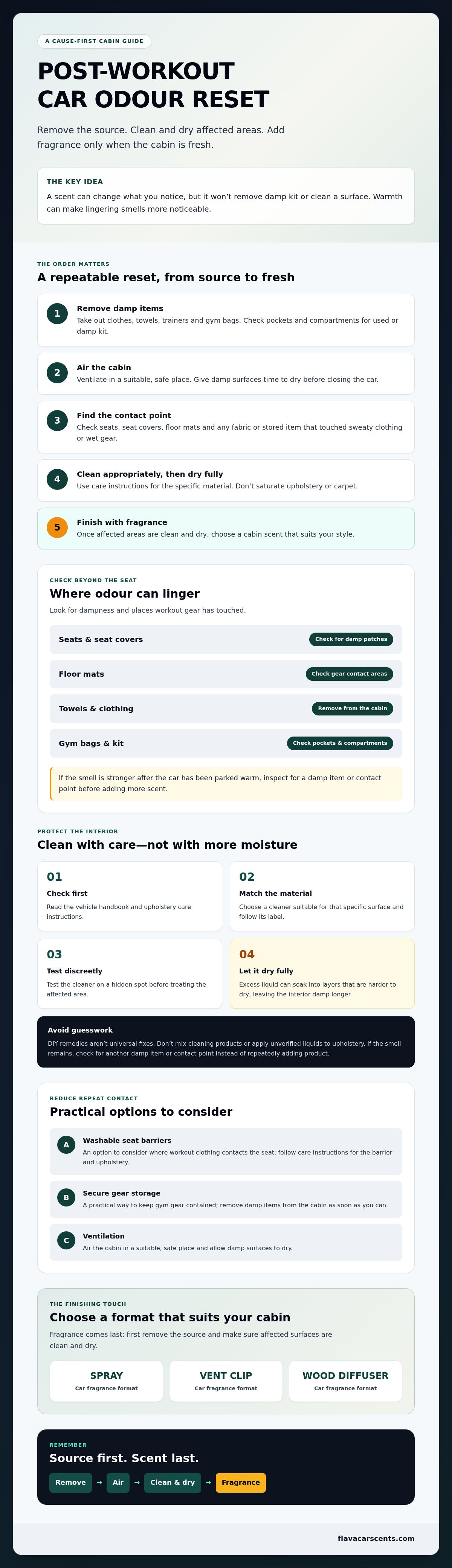
A five-minute post-workout car reset to stop the smell returning
A repeatable reset is more useful than waiting until the cabin smells stale. Keep damp kit off the upholstery, remove it at the end of the journey, and check that wet surfaces have dried properly. Use this checklist after each session. Cleaning and drying may take longer than five minutes if a seat or mat is damp.
Before driving away
- Change into dry clothing when practical. This helps limit direct contact between sweaty clothes and the seat.
- Contain used kit. Put damp clothes and towels in a separate bag or container that you can take out when you arrive. Don’t leave kit loose on the seat or floor.
- Use a washable barrier only if suitable. Check that a seat cover fits the vehicle seat and is compatible with the vehicle’s safety guidance. A cover can help prevent transfer, but it won’t clean odour that’s already on the seat.
During the journey
- Keep damp items contained and away from upholstery. Secure them so they don’t spill or shift into contact with seats or mats.
- Ventilate when practical and safe. Follow your vehicle’s guidance, and don’t let fresh air become a distraction while driving.
Once you’re home
- Remove towels, clothes and gym kit. Don’t leave them stored in the car between workouts.
- Check for damp patches. Inspect the seat, mats and any washable cover, then allow affected areas to dry fully before closing the car.
- Care for removable items properly. Clean mats and seat covers according to their labels and the vehicle’s care guidance. Check them regularly, especially after wet-weather journeys or sessions where kit has been especially damp.
If odour keeps returning after you’ve removed the kit and cared for affected surfaces, look for another source rather than simply adding fragrance. The cabin may need a more thorough inspection. Fragrance can finish the reset, but it won’t replace finding and addressing persistent dampness or odour.
For more ideas on maintaining a fresh cabin, read How to Add a Nice Smell to the Car. Once the source is under control and the interior is dry, explore Flava car fragrances as the finishing touch.
Finish the post-workout reset with a Flava car fragrance
The order matters. Remove damp gear, care for affected surfaces using a method suitable for the material, then ventilate and let the cabin dry. Add fragrance only after that. It’s the finishing move, not a stand-in for cleaning. A reliable post-workout car odour solution handles the source first, then sets the mood for the drive.
Which Flava car fragrance format suits your drive?
Choose by how you’d like to add fragrance to your cabin, not by an assumed odour-removal claim. Flava Car Scents' confirmed formats offer a few different ways to finish the reset:
- Vent clip car air fresheners: Add fragrance at your vehicle’s air vent. Follow the product instructions for placement.
- Car fragrance sprays: An alternative if you prefer to apply fragrance yourself. Use as directed and take care around interior materials.
- Wood diffuser car air fresheners: Another option if you prefer a diffuser format. Follow the supplied instructions for use and placement.
- Refill sticks: An option for refillable vent car air fresheners. Check the product instructions to ensure the refill is suitable for your format.
There’s no need to rank one format above another. Consider where you want the fragrance, how you prefer to use it and what feels right for your everyday drive. For more detail on choosing a diffuser style, explore Car Diffuser Guide 2026.
How do you choose a scent after a workout?
Think about the cabin as a compact space. Choose a scent profile you’ll be comfortable with in an enclosed car, whether you prefer something fresh, bold or inspired by designer perfumes and aftershaves. Flava Car Scents offers fragrance options in that inspired-by category, but the right choice is personal. Check the product description and instructions before use.
Apply fragrance as directed. Don’t add more to cover an odour that’s still present. If a damp towel is tucked in the boot or a seat is still wet, deal with that first. A clean, dry cabin gives your chosen scent a better starting point.
Source handled. Cabin refreshed. Now choose the finishing detail that fits your drive. Explore Flava Car Scents.
Make every post-workout drive feel fresh
A dependable post-workout car odour solution follows a simple order: remove damp kit, check and care for affected surfaces, then ventilate and let the cabin dry. Seat covers and changing into dry clothes can help limit future transfer, while fragrance is the finishing touch, not a substitute for tackling the source.
Once your interior is clean and dry, choose a cabin scent in the format that suits your routine. Flava offers vent clips, sprays and wood diffusers, plus refill sticks for refillable vent car air fresheners. Follow the product instructions and choose a scent profile you’ll enjoy in your car.
Ready to bring that final note to your drive? Explore Flava car scents and find a fragrance format that fits your style. Keep the post-workout reset consistent for a fresher-feeling cabin after each session.
Frequently Asked Questions
How do I get post-workout sweat smell out of my car?
Remove damp clothes, towels and gym kit first, then check seats, covers and mats for dampness or odour. Clean affected surfaces only with a method suitable for the material, following your vehicle handbook and cleaner instructions. Test the product on a hidden area and avoid soaking upholstery. Ventilate the cabin where safe and let everything dry fully. This source-first routine is the foundation of a post-workout car odour solution.
Can a car air freshener get rid of gym sweat odour?
A car air freshener adds fragrance, but it shouldn’t be treated as a way to remove the source of sweat odour. Damp kit or affected upholstery can continue to smell beneath a new scent. Take out used clothing and towels, inspect surfaces and clean them appropriately before adding fragrance. Once the cabin is dry, choose a format and scent you enjoy, and follow its instructions for use.
What is the quickest way to stop my car smelling after the gym?
Remove or contain sweaty kit straight away, then check the seat and floor mat for damp patches. Air the cabin when it’s safe and practical, and let affected surfaces dry. If cleaning is needed, first check the material-care guidance and use a suitable method. This quick reset can help limit lingering smells, but a wet seat or a spill may need longer to dry properly.
Does a seat cover stop sweat smell in a car?
A washable seat cover can help reduce direct contact between sweaty clothing and the seat, especially if you drive straight from training. It won’t clean odour already on the upholstery, and a damp or unwashed cover can itself hold smells. Choose a cover that’s compatible with your vehicle seat and safety guidance, and follow its care label for washing. Changing into dry clothes can also help limit transfer.
Can I use bicarbonate of soda or vinegar on car seats?
Don’t assume bicarbonate of soda, vinegar or another household remedy is safe for every car seat. Upholstery materials differ, and an unsuitable substance or cleaning method could affect the surface. Check your vehicle handbook and the upholstery-care instructions first. If you use a cleaner, confirm it’s suitable, test it on a hidden area and follow the label. Don’t mix cleaning products or apply unverified liquids.
Why does my car smell worse after a workout in warm weather?
Warm, closed-up conditions can make an existing cabin smell more noticeable. Sweat, damp clothing and towels may leave odour on seats, mats or other fabric items, especially after prolonged contact. A gym bag or used kit left inside can also keep the source in the cabin. Remove damp belongings, inspect likely contact points and ventilate where safe, then allow affected surfaces to dry before closing the car.
Should I use a car fragrance before or after cleaning?
Use fragrance after removing damp gear, addressing affected surfaces and letting the cabin dry. Adding scent first may change the cabin’s perceived smell without dealing with the cause. Once the source is handled, choose a car fragrance format that suits how you prefer to scent your cabin, and follow its instructions. Keep application measured, especially in an enclosed space, and don’t rely on fragrance to replace cleaning.


Leave a comment
This site is protected by hCaptcha and the hCaptcha Privacy Policy and Terms of Service apply.