
Table of Contents
- How to Make Your Car Smell Like Luxury Perfume: A Step-by-Step Guide
- Step 1: Diagnose and Eliminate Odor Sources Before You Add Fragrance
- Step 2: How to Choose a Luxury Car Scent That Suits Your Space
- Step 3: Pick the Right Diffuser Technology for Your Car
- Step 4: Scent Layering Techniques for a Sophisticated Aroma Profile
- Step 5: Long-Lasting Car Perfume Tips for Weeks of Freshness
- Best Affordable Car Fragrance Refills for Luxury Scent Holders
- Material Safety and Air Quality: What to Know Before You Diffuse
- Frequently Asked Questions
Last Updated: October 7, 2026
How to Make Your Car Smell Like Luxury Perfume: A Step-by-Step Guide
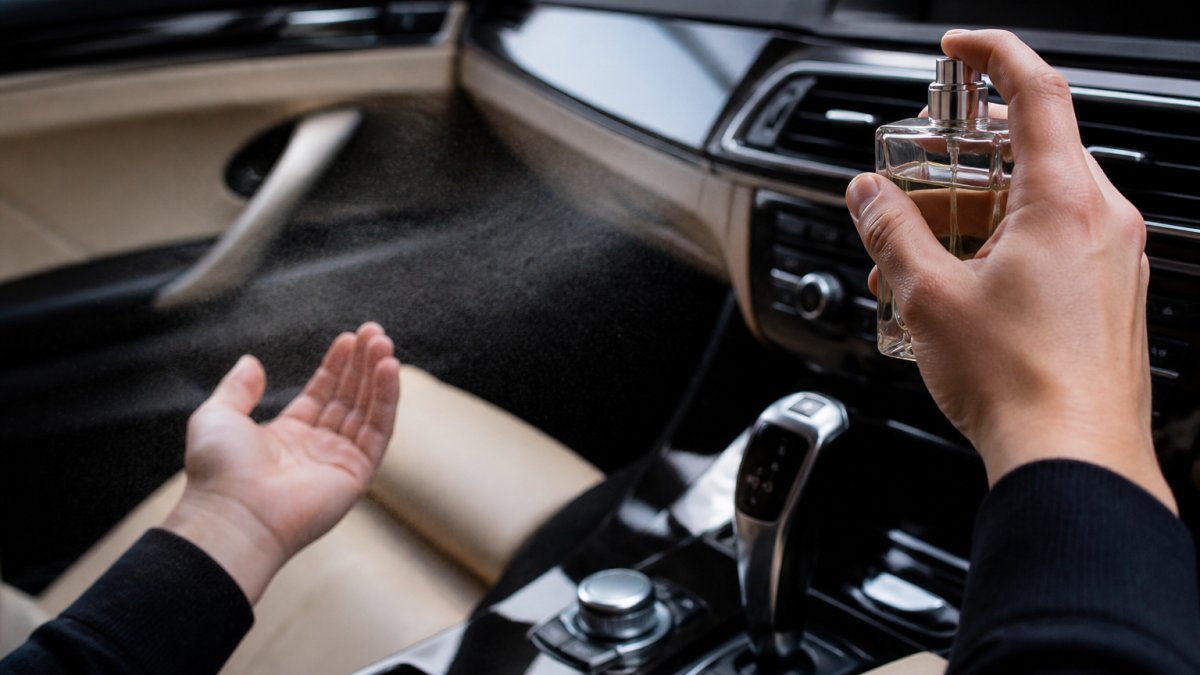
Learning how to make car smell like luxury perfume comes down to five steps: strip out the odour sources, choose a scent that suits your cabin, fit the right diffuser, layer your notes, and keep it topped up.
A luxury cabin scent is not a cover-up. It is a clean base, a considered aroma profile, and slow, even release. Get those three right and your car smells like a boutique, not a taxi.
Step 1: Diagnose and Eliminate Odor Sources Before You Add Fragrance
You cannot layer fine fragrance over a stale cabin. Find the odour source, remove it, then add scent. Common culprits:
- Upholstery and carpets: spilled drinks, damp, pet hair trapped in fabric
- Air vents: dust and mildew build-up in the evaporator and ducting
- Boot and under seats: forgotten food, gym kit, wet umbrellas
- Ashtrays and cup holders: old residue that reactivates in warm weather
- Cabin filter: a clogged filter pushes stale air back into the cabin
Start with a proper interior detail: vacuum every seam, wipe hard surfaces, and air the car out. If a smell survives, replace the cabin filter and check for damp under the mats.
Step 2: How to Choose a Luxury Car Scent That Suits Your Space
Match the fragrance to your cabin size and daily mood, not to what looks best on a shelf. Small cabins concentrate scent: a bold oud in a tiny hatchback feels heavy within minutes, while light citrus or floral suits a compact car, and larger cabins and vans carry deeper, warmer profiles well. A fresh citrus lifts a morning commute; a warm jasmine, rose and vanilla blend feels calmer at night.
Understanding Fragrance Notes: Top, Heart, and Base
Fragrance notes describe how a scent unfolds.
- Top notes: the first impression, usually citrus or light fruit. They fade fastest.
- Heart notes: the main character, often floral or spice, appearing once the top settles.
- Base notes: the lasting foundation, such as vanilla, wood or musk.
A well-built fragrance moves through all three, that progression separates a designer-inspired scent from a flat air freshener.

Step 3: Pick the Right Diffuser Technology for Your Car
Diffuser technology decides how evenly and how long your fragrance releases. Three formats cover almost every car.
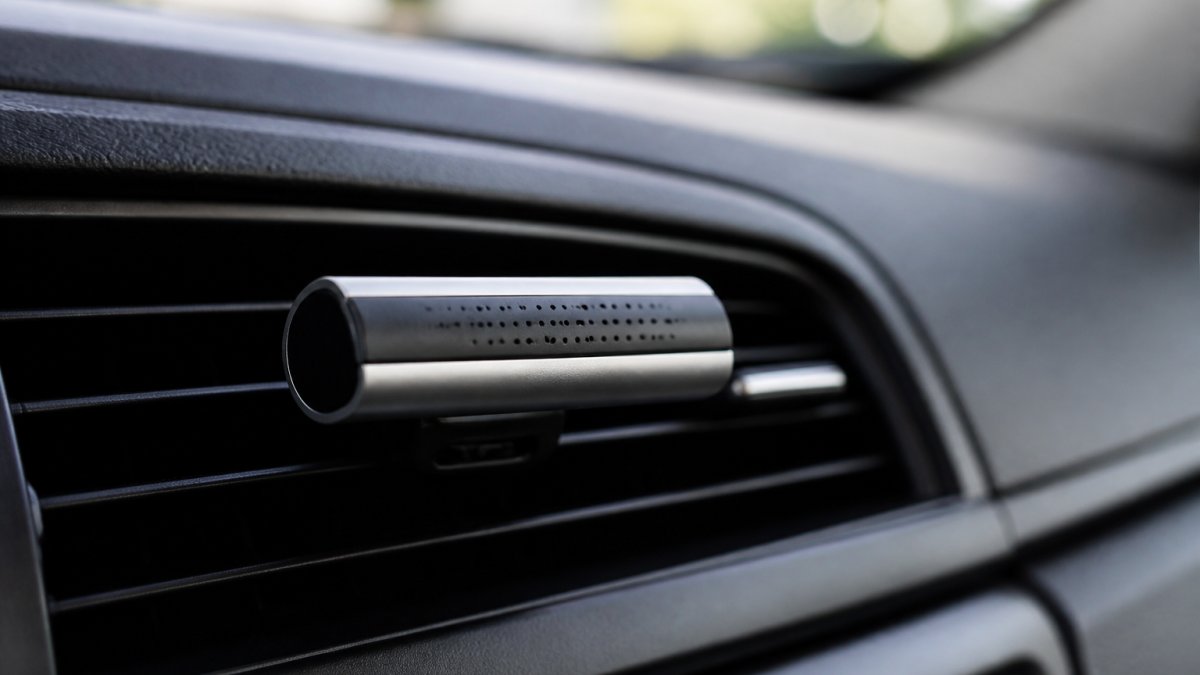
Vent-mounted bars use your car's airflow to push scent around the cabin, discreet, refillable, steady.
Wood diffusers soak a wooden cap in scented oil and release fragrance through natural evaporation.
Our Adore Fragrance Bar clips onto your vent, uses natural airflow, and gives up to 30 days of freshness.

Step 4: Scent Layering Techniques for a Sophisticated Aroma Profile
Scent layering means building a fragrance in the cabin the way a perfumer builds one in a bottle: a top note for first impression, a heart note for character, a base note for staying power. Most air fresheners give one flat chord; layering gives a composition.
How the Three Notes Actually Behave in a Car
A car cabin is hostile to fragrance: heat accelerates evaporation, airflow strips scent from the air, and a small air volume means concentration builds fast. That changes how each note behaves:
- Top notes (citrus, bergamot, light fruit) flash off within minutes in a warm cabin, the opening, not the performance.
- Heart notes (jasmine, rose, lavender, spice) define what passengers notice on a 20-minute drive.
- Base notes (vanilla, cedar, sandalwood, musk, amber) cling to surfaces and fabric and are what you smell the next morning.
The Layering Rule That Actually Works
Keep every layer in the same olfactory family, and let each do one job:
- Base layer: a slow-release format, a scent tin under the seat or a wood diffuser on the mirror.
- Heart layer: a vent-mounted bar, with airflow pushing the heart note around the cabin while you drive.
- Top layer: a single re-soak of a wood cap, or a brief spritz on a fabric mat, used sparingly for a lift.
Three layers is the ceiling in a small cabin, four competing scents smell like a department store perfume hall, not a composition.

Pairings That Work and Pairings That Fight
| Base layer | Heart layer | Result |
|---|---|---|
| Vanilla | Jasmine or rose | Warm, classic, evening-appropriate |
| Cedar or sandalwood | Lavender or bergamot | Clean, unisex, morning-appropriate |
| Musk | Light citrus | Fresh but grounded |
| Amber | Spice (cardamom, pink pepper) | Rich, cold-weather cabin |
Pairings that fight: heavy oud next to sharp citrus, or two strong florals together. They cancel rather than combine, and the cabin ends up smelling muddled.
DIY Luxury Scent Blending: Combining Essential Oils Safely
If you blend your own rather than buy a finished accord, the safety rules matter more than the recipe.
Never apply neat essential oil to any car surface. Essential oils are concentrated and many are phototoxic or corrosive to trim.
A simple three-note blend to try:
- Base: 4 drops vanilla absolute or benzoin in carrier
- Heart: 3 drops jasmine or lavender
- Top: 2 drops bergamot or sweet orange
Mix in a small glass bottle, not plastic, citrus oils degrade plastic. Let the blend rest 24 hours so the notes marry.
Step 5: Long-Lasting Car Perfume Tips for Weeks of Freshness
Long-lasting car perfume comes down to placement, airflow and rotation. Small habits add weeks to every refill.
- Position matters: keep diffusers out of direct sun, which burns through oil faster
- Use airflow: vent-mounted units release more when the fan is on
- Rotate, do not overload: one active diffuser per small cabin is usually enough
- Re-soak wood caps: a few seconds upside down restores the scent
- Keep the cabin clean: dust and crumbs hold old odours that dull fresh fragrance
Scent intensity fades for you before it fades in the car, olfactory fatigue is why you stop noticing a scent passengers still can. Before adding more, step out for a minute and smell again.
Best Affordable Car Fragrance Refills for Luxury Scent Holders
Affordable refills keep a luxury scent going without rebuying the whole unit. Refillable holders are the cheapest way to run a premium fragrance long term.
The Adore Fragrance Bar is refillable and reusable, and it ships with one fragrance refill stick at £7.99. The Flava Couture Scent Tin - Adore costs £4.99 and lasts up to 60 days.
| Product | Price | Format | Lasts |
|---|---|---|---|
| Adore Fragrance Bar | £7.99 | Vent-mounted bar | Up to 30 days |
| Flava Couture Scent Tin - Adore | £4.99 | Cup holder tin | Up to 60 days |
| Flava Couture Wood Diffuser - Adore | £6.99 | Wood diffuser | Re-soakable |
If you want the same Adore character on you rather than in the cabin, the Flava Spritz Fragrance For Women - Adore is a 100ml eau de parfum at £19.99, applied to pulse points.
Material Safety and Air Quality: What to Know Before You Diffuse
Most guides tell you to 'be careful' with fragrance in a car without explaining what is at risk. If you own a car with leather, soft-touch plastic or a lacquered dashboard, the wrong product will cost far more than the refill.
Why Alcohol-Based Perfume Damages Car Interiors
- Ethanol is a solvent. It strips the plasticiser and protective coating from soft-touch dashboard plastics, leaving a dull, chalky patch that cannot be polished back.
- It attacks leather finishes. Modern car leather is pigment-coated; alcohol lifts the topcoat, showing first as a light patch and later as cracking.
- It marks lacquered and piano-black trim. The clear coat on gloss trim is thin; repeated alcohol contact clouds it.
- It reacts with screen coatings. Anti-glare and anti-fingerprint layers on infotainment screens are easily damaged by solvent contact.
Materials Ranked by Risk
| Material | Risk from fragrance | Why |
|---|---|---|
| Uncoated leather | High | Absorbs oil, stains, dries out |
| Coated leather | High | Alcohol lifts the pigment topcoat |
| Soft-touch plastic | High | Solvent strips the matte finish |
| Gloss / piano-black trim | Medium-high | Clear coat clouds and scratches |
| Infotainment screens | Medium-high | Anti-glare coating degrades |
| Fabric upholstery | Medium | Oil stains; scent lingers unevenly |
| Hard painted metal | Low | Resists most fragrance oils |
| Glass | Low | No absorption, easy to clean |
VOCs and Air Quality in a Sealed Cabin
Volatile organic compounds are carbon-based chemicals that evaporate at room temperature. Fragrance, natural or synthetic, is made of them. In an open room, concentrations stay low. In a sealed car cabin of roughly 3 cubic metres, they build up quickly, especially in summer when interior temperatures can exceed 50°C.
A few practical rules:
- Vent before you drive. Open a window for the first minute after fitting a new diffuser or refill. This clears the initial spike of VOCs.
- One unit per small cabin. Two or three diffusers in a hatchback multiply concentration, not sophistication.
- Avoid direct sun on the diffuser. Heat drives off fragrance faster and raises VOC levels in the air.
- Choose refillable, purpose-built car products. They are formulated for the cabin environment; generic home sprays and plug-ins are not.
- If you are sensitive, start light. Citrus and light floral accords are generally better tolerated than heavy oud, musk or spice. Start with one unit and see how you react over a week.
- Watch for symptoms. Headaches, nausea or irritated eyes on a long drive are a signal to reduce concentration, not to add more scent.
Where to Check the Detail
The UK government publishes guidance on indoor air quality and volatile organic compounds if you want the underlying science. For anyone comparing synthetic and natural options, the Cosmetic, Toiletry and Perfumery Association explains how fragrance ingredients are assessed for safety before they reach a consumer product.
A luxury cabin scent should never come at the cost of your interior or your air quality. Keep one unit per small cabin, and vent the car after every refill. That is how you get the boutique smell without the bill for a new dashboard. ::: Selecting the right fragrance oil requires a discerning nose, as identifying quality perfumes remains the most effective way to ensure that your chosen aroma lingers elegantly without introducing harsh synthetic additives into your vehicle.
Frequently Asked Questions
How do I get my car to smell like my perfume?
Start by eliminating odor sources through interior detailing, then choose a car-specific diffuser that matches your perfume's fragrance notes. Vent-mounted bars and wood diffusers release scent gradually without overwhelming the cabin. For the closest match, look for perfume-inspired options that share your signature notes, such as jasmine, rose, or vanilla. Avoid spraying perfume directly onto upholstery, as alcohol can damage fabrics and the scent fades quickly.
How long do luxury car scent refills typically last?
Longevity depends on the diffuser type and fragrance concentration. Scent tins with odour eliminator technology can last up to 60 days, while vent-mounted fragrance bars typically provide up to 30 days of freshness. Wood diffusers release fragrance through natural evaporation and can be re-soaked for an instant burst. Factors like cabin size, air circulation, and temperature affect how long a refill lasts, so adjust placement and intensity to suit your driving habits.
Are designer-inspired car fragrance refills worth the investment?
They can be, especially if you want a consistent luxury scent without reapplying daily. Refillable systems reduce long-term costs compared to disposable hanging fresheners. The key is choosing refills compatible with your existing holder and suited to your preferred aroma profile. Affordable refills that still deliver premium ingredients offer the best balance of cost and quality.
What notes should I look for in a high-end car fragrance?
Top notes like citrus or bergamot create an immediate fresh impression, heart notes such as jasmine or rose define the character, and base notes like vanilla, oud, or musk provide depth and staying power. For a luxury feel, look for fragrances with a balanced pyramid rather than single-note scents. Base notes matter most for longevity in a car, as they evaporate slowly and keep the scent present throughout your commute.


Leave a comment
This site is protected by hCaptcha and the hCaptcha Privacy Policy and Terms of Service apply.