
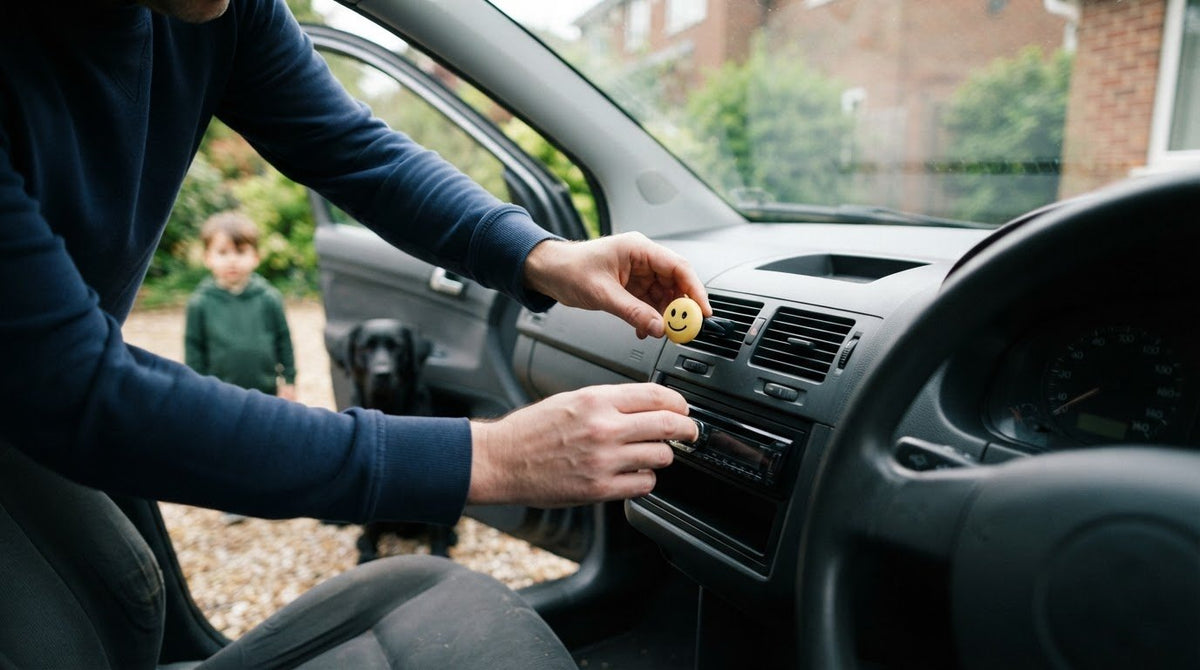
The quickest way to air out a car with strong perfume is to park somewhere safe and dry, then open the doors and windows. Set the air system to bring in fresh air, not recirculate the cabin’s scented air. Keep children and pets out of the car while you ventilate it.
A fragrance that seems pleasant at first can feel overpowering in a small space, particularly if someone is already uncomfortable or has a headache. Fresh airflow, cabin temperature and the comfort of your passengers all matter. This guide explains how to clear the smell, clean perfume from upholstery and avoid an overpowering scent next time.
Key Takeaways
- Air the car in a safe, dry place with its doors and windows open, and use the air system to bring in fresh air.
- Clean spills and treat perfume on upholstery promptly to help prevent stains and lingering, mixed odours.
- Keep the scent subtle for passengers: start with less fragrance, and avoid combining different perfumes.
- Park out of direct sunlight and keep fragrance away from hot surfaces so heat doesn’t intensify its release.
Cleaning the car and preventing unwanted odours
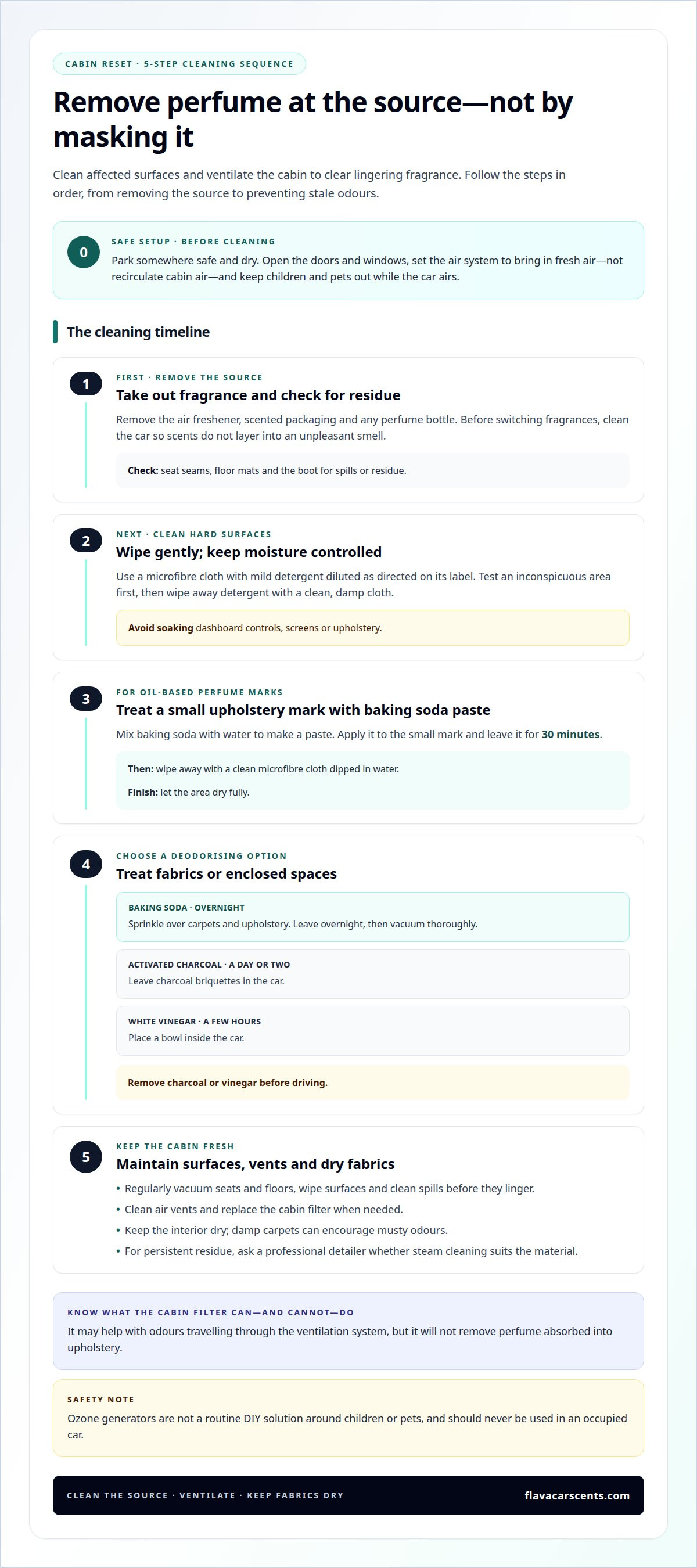
The cabin air filter may help with odours travelling through the ventilation system, but it won’t remove perfume absorbed into upholstery. Ozone generators aren’t a routine DIY solution around children or pets, and should never be used in an occupied car. To remove perfume rather than mask it, clean affected surfaces and ventilate the cabin.
- Remove the source first. Take out the air freshener, scented packaging and any perfume bottle. Clean the car before switching fragrances, since layering scents can create an unpleasant car smell. Check seat seams, floor mats and the boot for spills or residue.
- Clean surfaces gently. Wipe hard surfaces with a microfibre cloth and mild detergent diluted as directed on its label. Test an inconspicuous area first, then wipe away detergent with a clean, damp cloth. Avoid soaking dashboard controls, screens or upholstery.
- Treat oil-based perfume marks. Perfume can stain upholstery because it contains oil. For a small mark, mix baking soda with water into a paste, apply it, and leave it for 30 minutes. Wipe it away using a clean microfibre cloth dipped in water, then let the area dry fully.
- Deodorise fabric and enclosed spaces. Sprinkle baking soda over carpets and upholstery, leave it overnight, then vacuum thoroughly. Alternatively, leave activated charcoal briquettes in the car for a day or two, or place a bowl of white vinegar inside for a few hours. Remove each before driving.
- Clean the ventilation system and prevent stale smells. Regularly vacuum seats and floors, wipe surfaces, and clean spills before they linger. Clean air vents and replace the cabin filter when needed; a filter holding odour won’t clear perfume soaked into fabric. For persistent residue, ask a professional detailer whether steam cleaning suits the affected material. Keep the car interior dry, since damp carpets can encourage musty odours and undermine a clean fragrance.
Passenger comfort, allergies and scent intensity
Ventilate the car and stop using fragrance if a passenger feels uncomfortable or notices irritation. With good airflow, the scent may become less intense within a day or so.
-
Ventilate the Car Safely
Park somewhere safe and dry, then open the doors and windows to clear the cabin. Set the ventilation system to bring in fresh air, and keep children and pets outside while the car airs. Check the scent before anyone gets back in. If a passenger still feels unwell, continue ventilating instead of adding another fragrance.
-
Reduce an Overpowering Scent
Remove the freshener or move it away from the centre of the cabin, for example, closer to a vent or window. Start with a small amount of fragrance and add more only if needed. If someone develops a headache, nausea or irritation, stop using the scent and air out the cabin again before driving.
- Keep scent profiles separate. Don’t combine different scents to cover an overpowering one. A sweet hanging freshener alongside a sharp vent fragrance can create a confusing smell, not a balanced one. Remove the existing product first, then reassess the car smell after ventilation.
- Revive a diffuser carefully. For a wooden-lid diffuser, turn the bottle upside down for 3-5 seconds so the lid absorbs fragrance oil. Return it upright before driving, and avoid repeating the step if its scent already feels strong. Warm summer conditions can make fragrance release more noticeable.
- Choose a scent with passengers in mind. Prefer a lighter, familiar fragrance if children, pets or scent-sensitive passengers regularly travel in the vehicle. Notice how the intensity changes during a journey, and keep the freshener’s position and amount comfortable for everyone. A clean, restrained scent should never compete with conversation or driving.
Keep different car perfumes separate to avoid an unpleasant or confusing blend. Start with a small amount and add more only if needed. Move fixed fresheners away from the centre of the cabin, closer to a vent or window.
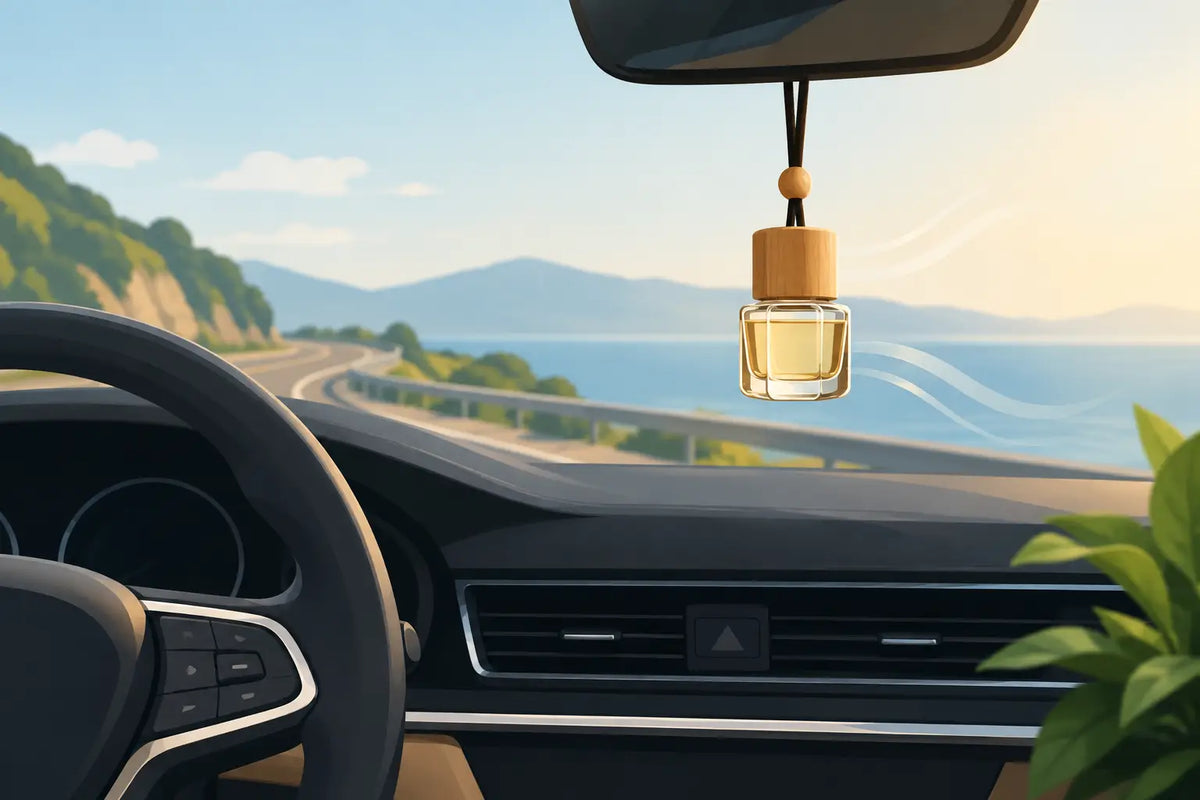
Avoiding direct sunlight and heat
Heat can make an air freshener release its fragrance faster, making a car interior feel overpowering. These steps can help you manage the freshener’s position and protect the scent.
- Choose a shaded parking spot. When parking, prefer shade over a space exposed to direct sunlight. Heat can accelerate fragrance release, so a freshener left in a sunlit cabin may smell stronger when you return. If shade isn’t available, remove the freshener before leaving the car, particularly if its scent already feels intense.
- Keep spare perfume outside the car. Store fragrance in a cool place rather than inside the vehicle. A bottle left in a warm car could have its fragrance ruined, while a sunny dashboard can become especially hot. Take the bottle with you after use, rather than leaving it in the glove compartment or door pocket.
- Position the freshener for airflow, not heat. Choose a spot where fragrance can disperse through the cabin, but where the product won’t fall or sit in direct sunlight. For example, avoid placing an air freshener on a sunlit dashboard. Check its position before driving, and move it if sunlight reaches it during the day.
- Reassess the scent after a warm spell. If the car smells stronger after sitting in the sun, remove the freshener and let the interior air out before using it again. Don’t add another fragrance to counter the increased intensity; that can create a muddled scent. Once the cabin feels comfortable, return the freshener to a cooler position that still allows it to disperse.
Make the freshener’s location part of your parking routine. Before leaving, consider whether sunlight will fall on it and choose a shaded spot whenever possible. This reduces exposure to heat, which can speed up fragrance release. If the car may get warm, take the product out rather than leave it in the cabin.
For car perfume, choose a stable, cool position where the scent can still disperse. Avoid placing it on a dashboard in direct sunlight: the surface can get very hot, potentially affecting the fragrance. Keep spare perfume in a cool place outside the car rather than relying on the cabin to protect it.
How to ventilate a car safely to get rid of perfume odour
When deciding how to air out a car with strong perfume, use fresh outside air instead of layering another scent over it. Keep children and pets out of the vehicle while it airs.
- Choose a safe, dry place to park. Keep the car stationary while opening its doors and windows. Avoid places where passing traffic, poor visibility or wet ground could make airing the cabin unsafe. A driveway or suitable parking space lets you open the car without exposing passengers to traffic.
- Remove the perfume source. Take out the freshener, perfume bottle or scented item responsible for the odour. Check the front and rear of the cabin, including door pockets and storage spaces. If the source stays inside, it can continue releasing fragrance while fresh air moves through.
- Open doors and windows to create airflow. Opening windows on different sides gives stale, scented air a route out as fresh air enters. If the car is parked somewhere exposed, move it to a safer location first. Keep children and pets outside until the fragrance has eased.
- Set the air system to bring in outside air. Choose the fresh-air setting instead of recirculating perfume-scented cabin air. Direct airflow through the vehicle, then assess the smell before closing the windows. For anyone asking how to air out a car with strong perfume, this step helps clear the scent rather than disguising it.
- Assess the cabin before travelling. Close the doors and pause, then notice whether the smell still feels overpowering. If it does, repeat the ventilation process with the freshener removed. This gives you a clearer sense of whether perfume remains in the car or the source is still present.
Once the cabin smells fresh, explore car air freshener options for a considered finishing touch.
Flava Car Scents: SWIZZELS TURBO CAN SPRAYS
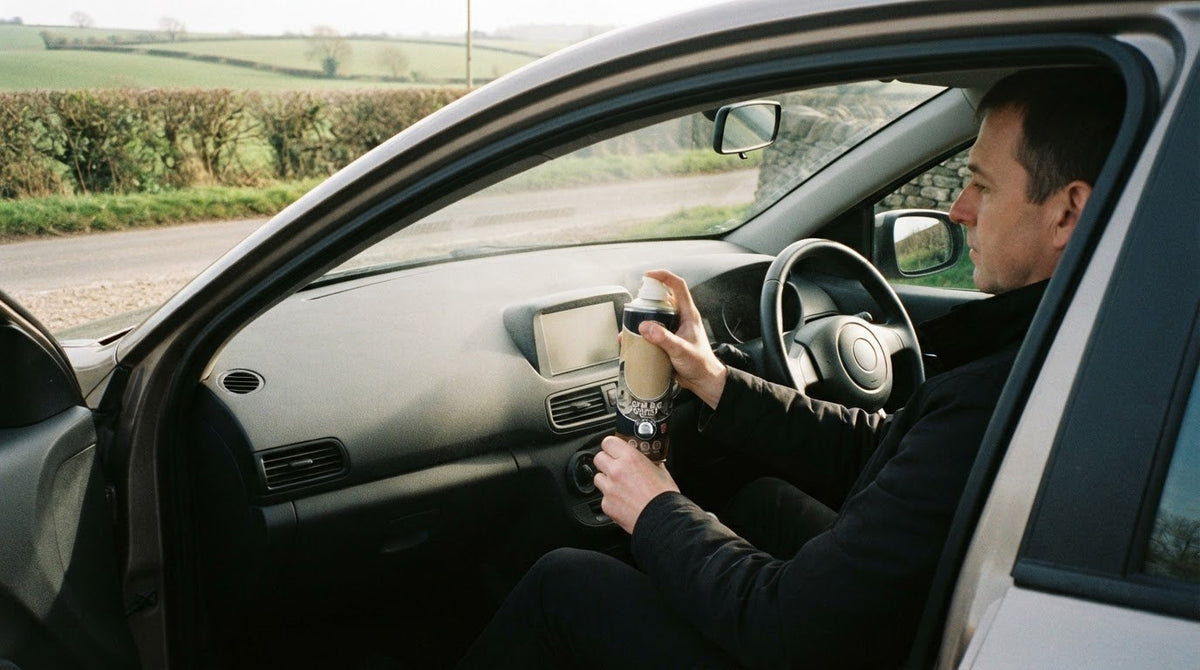
Once you’ve cleared an overpowering smell, Flava Car Scents offers SWIZZELS TURBO CAN SPRAYS for drivers looking to add a fresh fragrance. Air out and clean the car first, then introduce a new scent on its own rather than layering it over lingering perfume. This helps keep the cabin’s fragrance intentional, not muddled.
Prefer another format? Explore TURBO CAN SPRAYS, WOOD DIFFUSER CAR AIR FRESHENERS and VENT CLIP CAR AIR FRESHENERS. Choose a style that suits your car and the atmosphere you want, then use fragrance sparingly, especially when children, pets or scent-sensitive passengers travel with you. A freshener should complement the drive, not dominate it.
Visit flavacarscents.com to explore the range.
Make the next drive feel like yours
A fresh cabin is an opportunity to reset the atmosphere, not rush into another strong scent. Consider who travels with you, what feels comfortable and whether you want the fragrance to be subtle or barely noticeable. A little thought can make everyday journeys more comfortable for children, pets and other passengers.
Knowing how to air out a car with strong perfume gives you a practical reset before choosing what comes next. Let the cabin feel neutral first, then decide whether to add fragrance. There’s no need to cover one scent with another. Choose deliberately, consider passenger comfort and let the drive set the mood.
For tailored scent advice, contact Flava Car Scents. A calmer cabin starts with a choice that feels right for you and your passengers.
Frequently Asked Questions
Can strong car perfume cause headaches?
Yes. Strong fragrances can cause discomfort or headaches for some passengers, though reactions vary. For example, a child might complain that the smell feels overwhelming during a journey. Remove the fragrance source and don’t add another scent. If someone feels unwell, stop the journey when safe and let them get fresh air away from the car.
How do you remove a strong perfume smell from a car quickly?
Remove the scented item and anything it has spilled onto, such as a removable floor mat. Use fresh-air ventilation and clean the affected surface instead of spraying another fragrance over it. If the smell returns after the car is closed, check fabric seams and storage pockets. Perfume residue there can continue releasing scent into the cabin.
Does baking soda or activated charcoal absorb perfume odours in a car?
Both can help absorb lingering odours. Baking soda is practical for carpets and upholstery, while activated charcoal briquettes can be placed in the cabin to absorb smells. Keep either material contained and out of children’s and pets’ reach. Vacuum up the baking soda completely before anyone uses the car, and remove the charcoal before driving.
Can strong fragrance in a car cause headaches or breathing problems?
A strong fragrance can bother some people, who may experience a headache or breathing discomfort. Sensitivity varies, so don’t assume everyone in the car will react in the same way. Stop using the scent and reduce exposure if someone feels affected. If breathing discomfort is severe or continues, seek appropriate medical help.

Leave a comment
This site is protected by hCaptcha and the hCaptcha Privacy Policy and Terms of Service apply.