
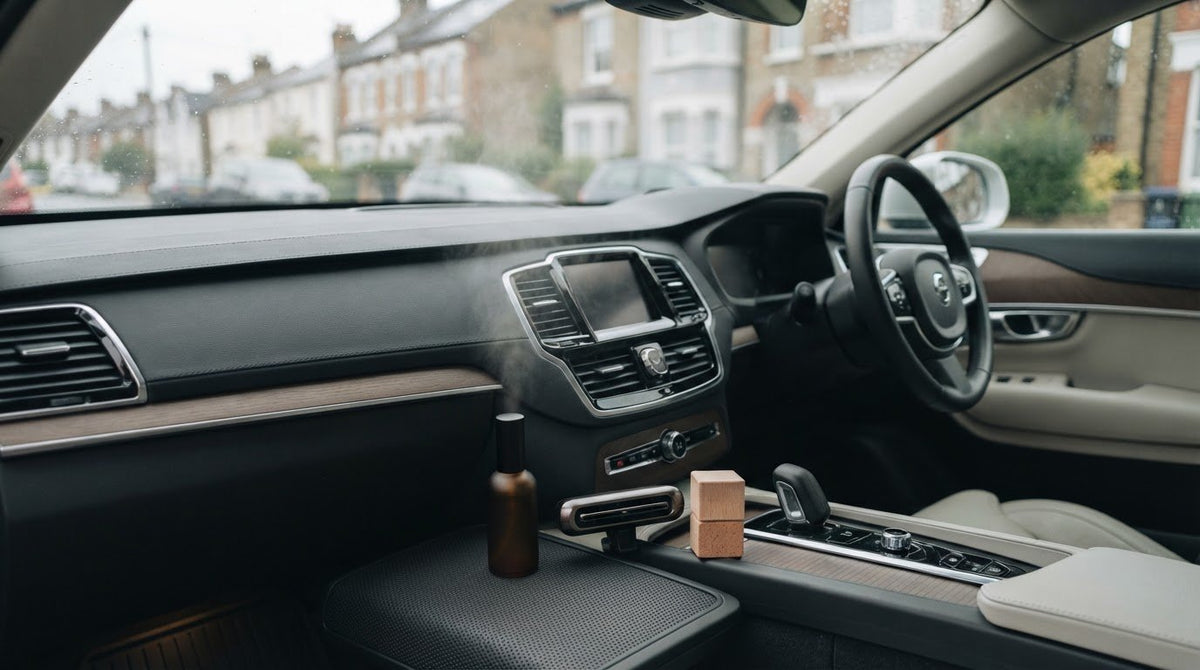
A room spray can make a living room feel fresher, but in a car it may leave marks, create an overpowering scent or introduce a safety concern. So, can I use room spray in my car? Only if the product label allows it. The formula, application method and directions all matter.
It’s understandable to reach for a fragrance you already own when the cabin needs a refresh. But a car is a small, enclosed space, and its interior surfaces may be sensitive to sprays. Before using one, check the label, avoid spraying directly onto plastics or leather unless the directions allow it, and take extra care with aerosol products around heat or ignition sources.
This guide explains what to check before you spritz and how to reduce mess and exposure if the product permits car use. You’ll also find car-focused alternatives, including Turbo Can Sprays, vent clip car air fresheners and wood diffuser car air fresheners, for fragrance formats intended for a vehicle.
Key Takeaways
- Whether you can use room spray in your car depends on the product label and its stated intended use.
- Room sprays, car sprays, vent clips and wood diffusers use different formats. Compare how each is applied before choosing.
- Follow the product directions, including any restrictions on where to spray and how to ventilate the cabin.
- Choose a car-focused fragrance format that fits how you prefer to scent your drive.
- Explore Turbo Can Sprays, vent clip car air fresheners and wood diffuser car air fresheners as alternatives.
Can I Use Room Spray in My Car? The Short Answer
It depends on the product label and its intended use. A room spray is made and labelled for the uses its manufacturer specifies. Don’t assume it is a car fragrance simply because it adds scent to the air. If the directions don’t clearly permit use in a vehicle, don’t use it in your car.
Fragrance describes a product’s purpose, not permission to use it in every setting or on every surface. A general overview of air fresheners covers different types and uses, but it can’t establish whether a particular room spray is suitable for a particular vehicle. The product’s own directions are what count.
Why there is no universal yes-or-no answer
Products differ in their formulas, spray mechanisms and instructions. Guidance for one brand or bottle doesn’t necessarily apply to another. Even if a manufacturer describes one product as suitable for a car, that is product-specific guidance, not blanket approval for other formulas. A fragrance’s scent and a product’s permitted use in a vehicle are separate questions.
What to check before using any spray
Read the label before bringing the bottle into the cabin. Check the intended setting, application method and restrictions. Don’t assume upholstery, dashboard trim or other interior materials are approved spray surfaces. A direction to freshen a room doesn’t automatically permit use inside a vehicle or application to car surfaces.
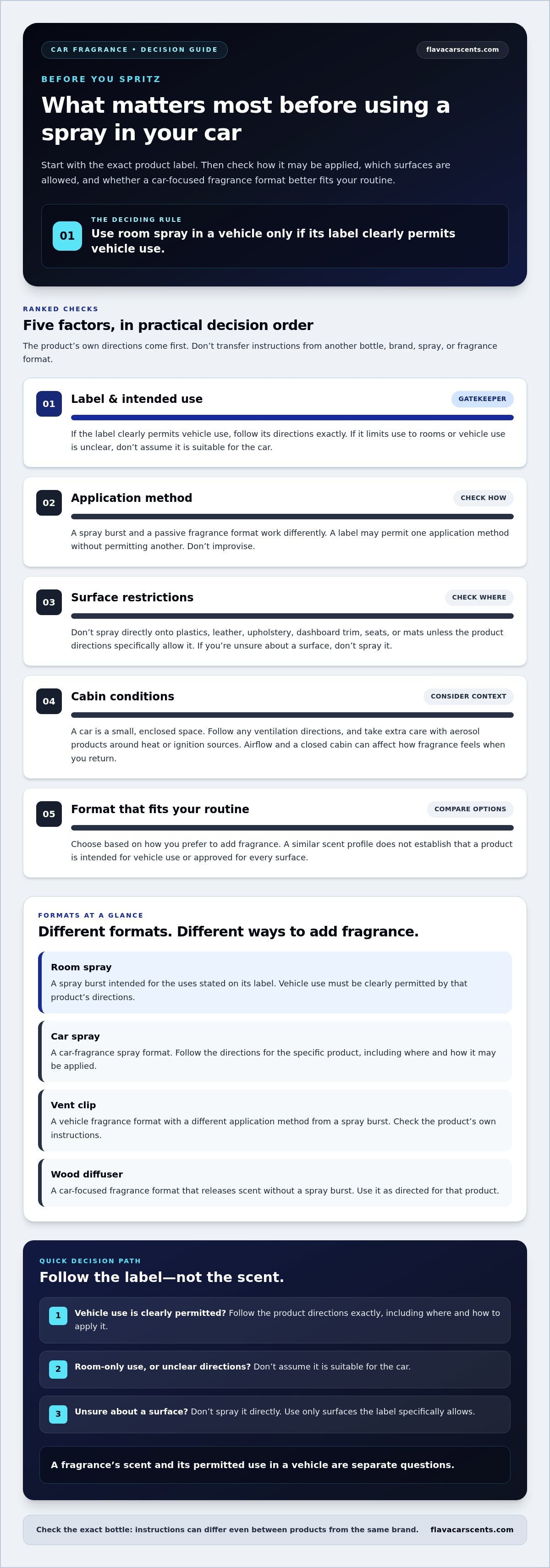
Use this simple decision rule:
- The label clearly permits vehicle use: Follow its directions exactly, including where and how to apply the spray.
- The label limits use to rooms, or doesn’t make vehicle use clear: Don’t assume it’s suitable for the car.
- You’re unsure about a surface: Don’t spray it directly. Apply the product only to surfaces the label specifically allows.
This keeps the decision grounded in the product you have, rather than a general claim or someone else’s experience. Labels can differ even between products from the same brand, so check the exact bottle instead of relying on memory.
Also distinguish between spraying into the air and spraying onto an object. They are different application methods, and a label that permits one may not permit the other. Avoid improvising with seats, mats or trim. For a broader look at how car fragrance formats differ, Flava’s ultimate guide to car air fresheners can help you compare options intended for a vehicle.
Room Spray vs Car Spray: Why the Formula and Format Matter
The key difference isn’t simply the scent. It’s where and how the product is intended to be used. A room spray is applied as directed on its label. Car fragrance products come in formats intended for use in a vehicle, with instructions specific to each product. That distinction matters even when two products have a similar scent profile.
Intended use, not scent profile, determines whether a fragrance product is meant for your car.
Comparison
Intended setting: Room spray, the setting and uses stated on its label. Car fragrance, use in a vehicle as directed for that specific product.
Application method: Room spray, released in a spray burst. Car fragrance, the method depends on the format, such as a vent clip or wood diffuser.
Label directions: For either type, follow that product’s own directions. Don’t assume instructions for one spray or fragrance format apply to another.
How home fragrance sprays differ from car fragrance products
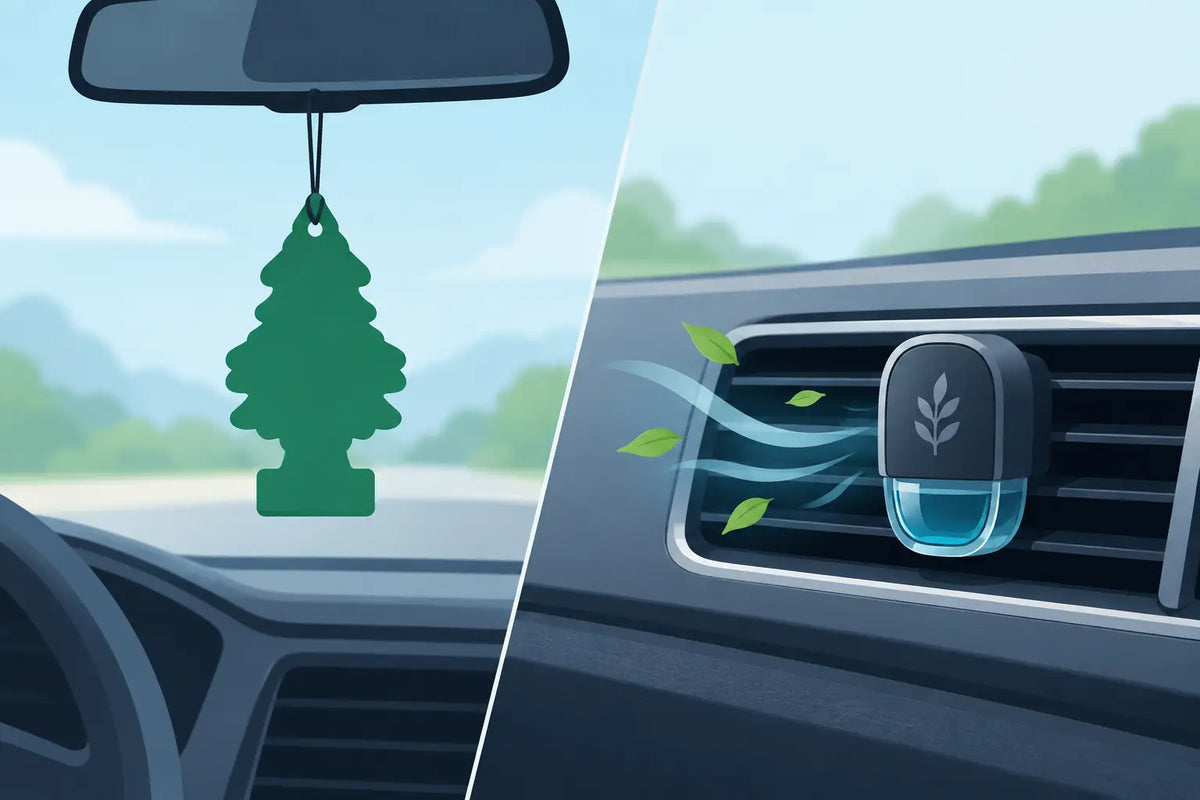
A room spray is intended for the uses its label describes. Because it disperses fragrance in a spray, where and how it’s applied matters. Car-focused options include sprays and formats such as vent clips and wood diffusers. These work in different ways: a spray is applied directly, while a passive format releases fragrance without a spray burst. Neither the format nor the scent alone proves that a product is suitable for every vehicle or surface.
Avoid generalising about ingredients, concentration or performance. Formulas and instructions vary, and a claim about one product applies to that product. Check the individual label rather than assuming all room sprays share the same composition or all car fragrances behave alike.
Why a car cabin changes the practical question
A vehicle is a compact interior with upholstery, trim and airflow to consider. A spray can land on a surface if directed there, while ventilation affects how fragrance moves through the cabin. Parking conditions matter too: a closed car and one with airflow through it may feel different when you return. That’s why application method matters as much as the scent you choose.
If you’re asking, “can I use room spray in my car?”, consider two things: whether the label permits vehicle use and whether a spray format suits your routine. If you’d rather avoid applying fragrance in a burst, compare car-specific formats such as vent clips and wood diffusers. Flava’s car diffuser guide explains the format in more detail. You can also explore car fragrance formats and choose a style that suits your cabin.
Room Spray or Car Air Freshener: Which Format Fits Your Need?
The right format depends on how you want to add fragrance and what the product is intended for. A room spray is designed for the uses on its label. Car sprays, vent clips and wood diffusers are car-fragrance options, but they apply or release scent in different ways. No format is automatically right for every driver.
If you’re weighing up “can I use room spray in my car?”, start with the product’s stated intended setting. Then consider whether you prefer a direct spray application or a car fragrance format you can place in the cabin. Don’t use a room spray in a vehicle unless its directions permit it, and don’t infer application instructions from the scent or product name alone.
When a car-specific spray may suit your routine
A spray format may suit you if you prefer to apply fragrance directly rather than choose a vent clip or diffuser. It’s an active application, so you decide when to use it, while the product’s directions determine how and where it should be applied. Flava Turbo Can Sprays are one car-fragrance category to consider. Follow the instructions for the specific product, and don’t assume they apply to a room spray.
When a passive car fragrance format may suit your routine
If you’d rather not use a spray, compare vent clips and wood diffusers. These are distinct formats, so consider where each would sit in your cabin and which style fits your routine. Check the product directions for placement and use. For more ideas on choosing a car fragrance format, how to add a nice smell to the car offers further context.
Use these practical questions to narrow down your options:
- Where is the product intended to be used? Choose a car-focused fragrance for the vehicle, and follow its own directions.
- How do you want to apply or place it? A car spray involves a spray action. A vent clip or wood diffuser gives you a different format to position in the cabin.
- What feels right for your routine? Decide whether you prefer to apply fragrance as needed or choose a format that sits in the car. Don’t assume one option lasts longer or performs better without product-specific information.
There’s no need to choose based on scent alone. A fragrance profile you like doesn’t tell you whether a product is suitable for car use; its intended setting and directions do. Flava’s range includes Turbo Can Sprays, vent clip car air fresheners and wood diffuser car air fresheners, giving you car-focused formats to explore. Explore car fragrance options and choose the format that fits your drive.
How to Use Room Spray in a Car More Cautiously
If you’re asking, “can I use room spray in my car?”, start with the bottle, not a general tip or someone else’s experience. Check whether the manufacturer’s directions permit use in a vehicle and whether they specify where the spray can be applied. If the label doesn’t cover car use or your intended application, don’t treat it as approved. A scent you enjoy is no substitute for clear instructions.
Let the label lead: its directions take priority over generic advice about using sprays in cars.
A label-first check before you spray
Read all directions and precautions before opening the bottle. Look for the intended setting, approved application method and any ventilation instructions. If the label gives an amount or other use limits, stick to them. Don’t adapt directions for a room to a car cabin, and don’t assume instructions for a different product apply.
- Check vehicle use. Confirm that the label permits use in a car. If it doesn’t address vehicle use, don’t assume permission.
- Check the application. See whether the directions allow spraying into the air, onto a surface, or both. These are different uses.
- Follow the precautions. Use the product only as directed, including any stated amount, warnings and ventilation instructions.
- Stop if something seems wrong. If you notice an unexpected reaction or damage, stop using the product and follow any relevant label guidance.
Avoiding unwanted residue and over-application
Keep the spray away from dashboards, screens, leather, fabric and other trim unless the label specifically permits application to that material. Don’t assume a surface is suitable because it looks smooth or easy to wipe. Marks or residue can depend on both the formula and the material, so a method that seems harmless on one surface may not be appropriate for another.
More isn’t automatically better. If the directions allow car use, follow the application amount and frequency stated on the label instead of adding extra sprays to chase a stronger scent. If the product lands somewhere it shouldn’t, don’t try an improvised cleaning method. Check the relevant product and vehicle-care instructions for that surface.
Keep the decision simple: clear label permission, exact directions and no unapproved surfaces. If the directions don’t cover your intended use, choose a fragrance format intended for cars instead. Flava’s car-focused options include Turbo Can Sprays, vent clip car air fresheners and wood diffuser car air fresheners. Explore car fragrance options to find a format that fits your drive.
Choose a Car-Specific Fragrance for a More Tailored Drive
A car-focused fragrance is a straightforward alternative if your room spray’s label doesn’t permit vehicle use, or if you’d rather choose a format intended for a car. Start by picking the application style you prefer, then follow that product’s directions. No single format is right for every driver or vehicle.
Match the format to the way you like to fragrance your car
A spray is an active format: you apply it according to its instructions. Vent clips and wood diffusers give you other car fragrance formats to consider if you prefer something different. Think about what you’re comfortable placing or using in your cabin, and check the directions for the specific product. Don’t choose based on assumptions about how long a fragrance lasts or how strongly it performs.
Flava Car Scents offers Turbo Can Sprays, vent clip car air fresheners and wood diffuser car air fresheners. These are car-focused categories, not room sprays relabelled for the same use. Your choice can come down to whether you prefer a direct spray application, a vent clip or a wood diffuser. Check the product’s own instructions for its intended use and placement.
- Prefer a spray? Consider a car spray format and use it only as directed.
- Prefer a vent clip? Compare vent clip car air fresheners and follow the product’s placement instructions.
- Prefer a wood diffuser? Explore that format and use it according to its directions.
A simple next step for a fresher-feeling drive
The label-first rule still applies, even with a car-specific fragrance. Read the directions before use, follow any precautions and don’t apply a product to an unapproved surface. If the room spray you own doesn’t clearly permit car use, don’t guess. Choose a format intended for car fragrance instead.
That’s the practical answer to “can I use room spray in my car?” It depends on the exact product and what its label allows. A car-focused option gives you a clear format to compare, without relying on advice meant for a different spray or formula.
For a considered alternative, explore the car fragrance options from Flava Car Scents and choose the format that feels right for your drive.
Make Your Next Drive Feel More Your Own
Choosing a fragrance for your car is a chance to make the cabin feel more like your space. If you’re still wondering, “can I use room spray in my car?”, let the specific product label guide your decision. When its directions don’t clearly allow car use, choose a car-focused format instead of guessing.
Think about how you’d like to introduce fragrance into your routine. A spray, vent clip and wood diffuser each offer a different format to consider. Flava Car Scents brings those options together with Turbo Can Sprays, vent clip car air fresheners and wood diffuser car air fresheners, so you can explore what feels right for your drive.
Ready to find a car fragrance format that fits your style? Explore car fragrance options from Flava Car Scents and give your next drive a fresh new feel.
Frequently Asked Questions
Is room spray safe to breathe in inside a car?
Whether a room spray is suitable to breathe in inside a car depends on its label and directions; there’s no blanket answer for every formula. A cabin is enclosed, so follow any ventilation guidance before entering or driving. If the scent causes discomfort, stop using it and follow the product label. Don’t use more to cover the discomfort or assume a familiar home fragrance behaves the same way in a vehicle.
Can I use room spray in a car with children or pets?
Don’t assume a room spray is suitable around children or pets in a car. Check the label for relevant warnings, and store the bottle securely where children and animals can’t reach it. Suitability depends on the formula and individual circumstances, so a general guide can’t establish that every product is appropriate. Follow the manufacturer’s directions and choose a fragrance whose label fits the intended setting.
Can I leave a room spray bottle in a hot car?
Leave it in the car only if the container’s storage instructions allow those conditions. Storage advice varies by product and packaging, so don’t guess from the bottle type or assume all sprays respond to heat in the same way. Check the label’s storage directions and warnings. If it advises keeping the product away from heat, remove it from the vehicle and store it as directed.
Can I spray room fragrance into my car’s air vents?
Direct room spray into a car’s air vents only if the label specifically permits that application. Vents aren’t automatically approved spray targets, and directions for use in a room don’t establish permission to spray into vehicle components. Check the bottle rather than improvising. If you prefer fragrance in a vent-area format, choose a car fragrance product intended for that use and follow its own instructions.
Will room spray stain my car’s upholstery?
It might, depending on the spray formula and upholstery material, so a universal no-stain promise wouldn’t be reliable. Don’t spray seats or fabric unless the label specifically allows it. An unapproved spot test doesn’t replace the manufacturer’s directions. If marks appear, stop applying the product and consult the relevant product-label and vehicle-care instructions before attempting to treat the material.
Does room spray remove odours from a car or just add fragrance?
Room spray may add fragrance, but that doesn’t mean it removes the source of a car odour. Describe it as an odour remover only if the product label supports that use. If an unwanted smell returns after the fragrance fades, consider what may be causing it rather than layering on more scent. Adding fragrance and treating an odour are different functions, so check which one the product claims to provide.

Leave a comment
This site is protected by hCaptcha and the hCaptcha Privacy Policy and Terms of Service apply.