
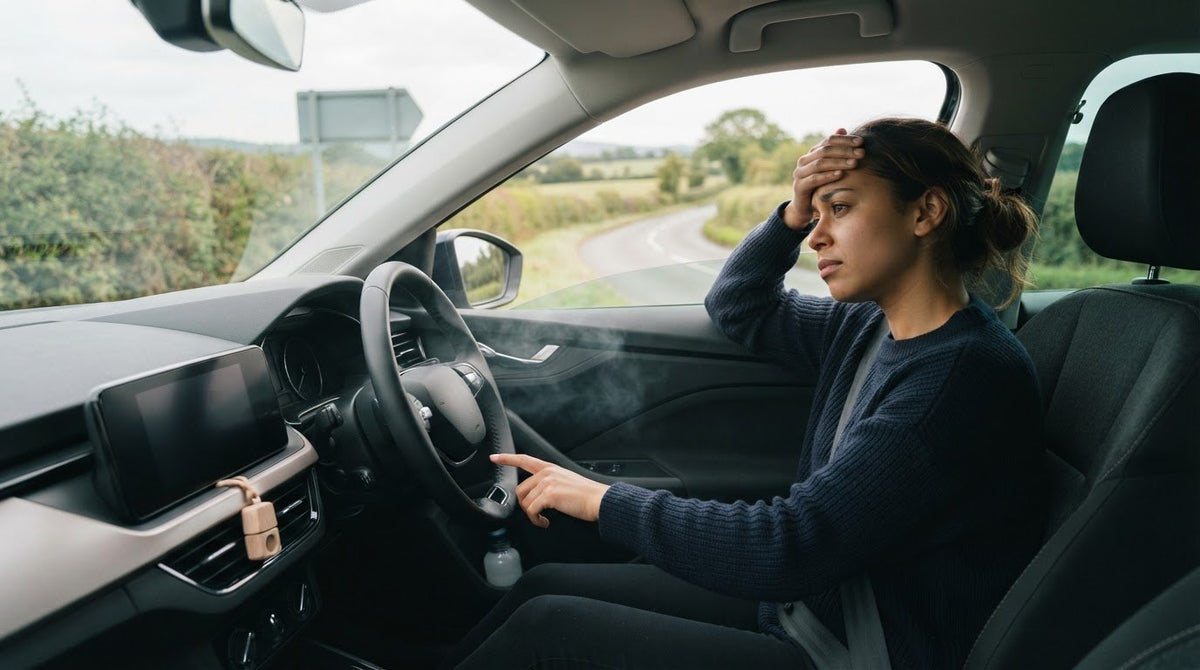
Could a familiar car fragrance turn a comfortable drive into a queasy one? If you’re searching for “Yankee Candle sickness in car,” you’re not alone in wondering whether the scent is to blame. In a small cabin, fragrance can feel intense, but nausea or a headache may also relate to motion, heat, limited fresh air or another trigger. One uncomfortable journey doesn’t prove a product caused your symptoms.
That discomfort is real, though, and you don’t have to push through it. A scent that feels subtle at home can seem much stronger in a confined car, especially if you’re sensitive to fragrance. The key is to ease the immediate discomfort and notice what changes, without jumping to conclusions.
This guide explores why a car fragrance may feel overwhelming, what to do if you start feeling unwell, and when to seek medical advice. You’ll also find practical ways to make future drives more comfortable and consider different fragrance formats, from vent clips and sprays to tins and wood diffusers, based on your own preferences.
Key Takeaways
- “Yankee Candle sickness in car” describes a concern, not proof that a particular brand caused symptoms.
- Notice when discomfort starts and whether changing the fragrance exposure affects how you feel.
- If you feel unwell while driving, pull over safely before adjusting the fragrance or taking a break.
- For future journeys, choose a fragrance format and placement based on your own comfort, not brand loyalty or trends.
- Fragrance preference is personal; a format that suits one person may not suit another.
Yankee Candle sickness in car: what might the discomfort feel like?
If a car fragrance leaves you feeling queasy, headachy or simply overwhelmed by the smell, it makes sense to wonder what’s going on. But a search for “Yankee Candle sickness in car” or a bad experience during one journey can’t, on its own, prove that a particular brand caused the symptoms. Your discomfort is real; the reason may not be obvious.
People can react differently to the same scent. One person may barely notice it, while another finds it intense or unpleasant. Nausea, a headache, dizziness or irritation can have more than one possible explanation, including motion, heat, poor ventilation, an existing sensitivity or a combination of factors. This section isn’t a diagnosis, and it can’t establish the cause of anyone’s symptoms.
What does fragrance-related discomfort in a car mean?
It’s a plain-language way to describe symptoms someone notices while exposed to a fragrance, such as feeling nauseous or headachy, or wanting to get away from a strong smell. It doesn’t name a medical condition or confirm that the scent caused the symptoms. The timing may be a useful clue, but it’s not proof: other parts of the journey or a separate cause could also be involved.
Fragrance-related discomfort is an unpleasant experience around a scent, not a diagnosis or proof of what caused it.
Why can a car journey make smells feel more noticeable?
A car is a relatively enclosed space, so there may be less fresh-air exchange than outdoors. A fragrance can feel more prominent depending on its strength, where it’s placed, how long you’re exposed and your personal sensitivity. Those factors vary from person to person and journey to journey. They don’t mean that every car fragrance will produce the same response.
Movement can add another layer. If nausea or dizziness builds as the car travels, motion sickness could be one possibility, whether or not a fragrance is present. The NHS and other health resources describe motion sickness as involving symptoms such as nausea and dizziness; Motion sickness symptoms and causes offers a broader overview. A smell may feel more difficult to tolerate when you’re already uncomfortable, but that doesn’t establish that it triggered the reaction.
Pay attention to the pattern without treating it as a verdict. Did the feeling start before the car moved, after a longer time in the cabin, or alongside other symptoms? Does it happen with different fragrances, or on journeys without one? These observations can help you think through possible influences, but they can’t confirm a cause by themselves. People’s scent tolerance differs, and the same person may find a fragrance comfortable on one day and overwhelming on another.
If symptoms are severe, keep returning, or concern you, seek advice from a healthcare professional rather than relying on a search result to identify the cause. The useful takeaway is simple: acknowledge how you feel, keep fragrance and motion as possible factors, and avoid assuming that one experience proves a product affects everyone.
Why a car fragrance may feel overwhelming to some people
A fragrance that feels like a subtle finishing touch to one person may seem overpowering to someone else. Scent perception and comfort vary, so there isn’t one universal level that will suit every passenger. If you’re trying to understand “Yankee Candle sickness in car,” keep the question open: scent could be one factor, but a journey can involve several overlapping influences.
The cabin matters. Compared with being outdoors, a car is an enclosed space with less fresh-air exchange, so a noticeable smell can stay present around you. How prominent it feels may depend on its strength, how close you are to it, how long the journey lasts and how much air is moving through the cabin. None of these factors guarantees discomfort, and different fragrances won’t necessarily feel the same.
How scent strength and exposure can affect comfort
Think about the difference between briefly noticing a fragrance and sitting near it throughout a long drive. More time around a smell may make it harder to ignore, particularly if you already find that scent intense. Placement can matter to perception too: a fragrance close to you may be more noticeable than one farther away. These are possibilities, not proof of a reaction or a claim about any specific product.
Ventilation can also change how much a scent stands out. With windows closed and little fresh air entering, the cabin may feel stuffier, while airflow can alter how fragrance moves through the space. Your comfort may also be affected by other smells already in the car. Avoid assuming that a particular ingredient or formulation is responsible unless reliable evidence supports that specific claim.
Could it be motion sickness rather than the fragrance?
Yes, movement itself can contribute to nausea during a car journey. Motion sickness may involve nausea, dizziness or feeling unwell, and those sensations can overlap with discomfort around a strong smell. If both are present, it may be difficult to tell what came first or what contributed most. This section can’t diagnose the cause, and timing alone doesn’t establish it.
Look for patterns without treating them as a test. For example, consider whether discomfort arises only while the car is moving, whether it changes when the fragrance is absent, or whether it happens on journeys with different smells. These observations may help you describe the experience, but they can’t prove a fragrance caused it. Don’t deliberately continue exposure if you’re feeling unwell just to check.
If symptoms are severe, keep recurring or worry you, speak with a healthcare professional. A careful description of when they occur can be more useful than assuming a brand, scent or single trigger is to blame.
Fragrance formats and placement are personal choices, not guarantees of comfort. If you’re considering a different setup for future drives, you can explore car fragrance formats and choose according to your own preferences.
Does Yankee Candle itself cause sickness in a car?
A person can feel unwell during a journey with a Yankee Candle car fragrance present, but that timing alone can’t prove the fragrance caused it. The search phrase “Yankee Candle sickness in car” captures a concern, not a medical finding or evidence that the brand affects everyone. It’s reasonable to take someone’s discomfort seriously while staying careful about what it tells us.
Symptoms may coincide with a fragrance without being caused by it. Motion, cabin conditions, other smells or an unrelated issue could also play a part. Equally, not being able to establish a cause doesn’t mean the person’s experience should be dismissed. It means the explanation remains uncertain unless there’s reliable evidence connecting the specific product and symptoms.
What personal experiences can and can’t tell you
A first-hand account can describe what one person noticed: perhaps a headache began during a drive, or a smell felt hard to tolerate. That’s useful as a record of an individual experience, but it can’t show that the same product will cause symptoms for other people. Without reliable supporting evidence, one account also can’t identify a particular ingredient or explain the mechanism behind the symptoms.
Online posts can raise questions, but unverified or inaccessible comments shouldn’t be treated as proof. A collection of personal stories still may not account for differences in people, journeys or exposure. Be wary of sweeping claims that a product always causes sickness, or that it can never contribute to someone’s discomfort.
How to think about possible triggers without guessing
A symptom occurring alongside a fragrance is an association, not proof that the fragrance caused it. To assess a possible link responsibly, observations need to account for other conditions too: whether the car was moving, how long the journey lasted, how well the cabin was ventilated, and whether other noticeable smells were present.
You don’t need to deliberately use the fragrance again to test your reaction. If it’s absent on a future journey and you feel different, that may be worth noting, but a single comparison still can’t establish the reason. Journeys vary, and symptoms can change for reasons unrelated to scent. Avoid changing several factors at once if you’re simply keeping a personal record, since that can make patterns harder to interpret.
A formal product-specific conclusion would need appropriate evidence that examines the product and plausible alternative explanations, rather than relying only on search queries or anecdotes. Readers can’t establish that conclusion from an individual experience. If discomfort is severe, recurring or worrying, seek advice from a healthcare professional. The balanced answer is straightforward: one person may report feeling unwell around a fragrance, but that doesn’t prove Yankee Candle caused it or that everyone will respond in the same way.
What to do if a car fragrance makes you feel unwell
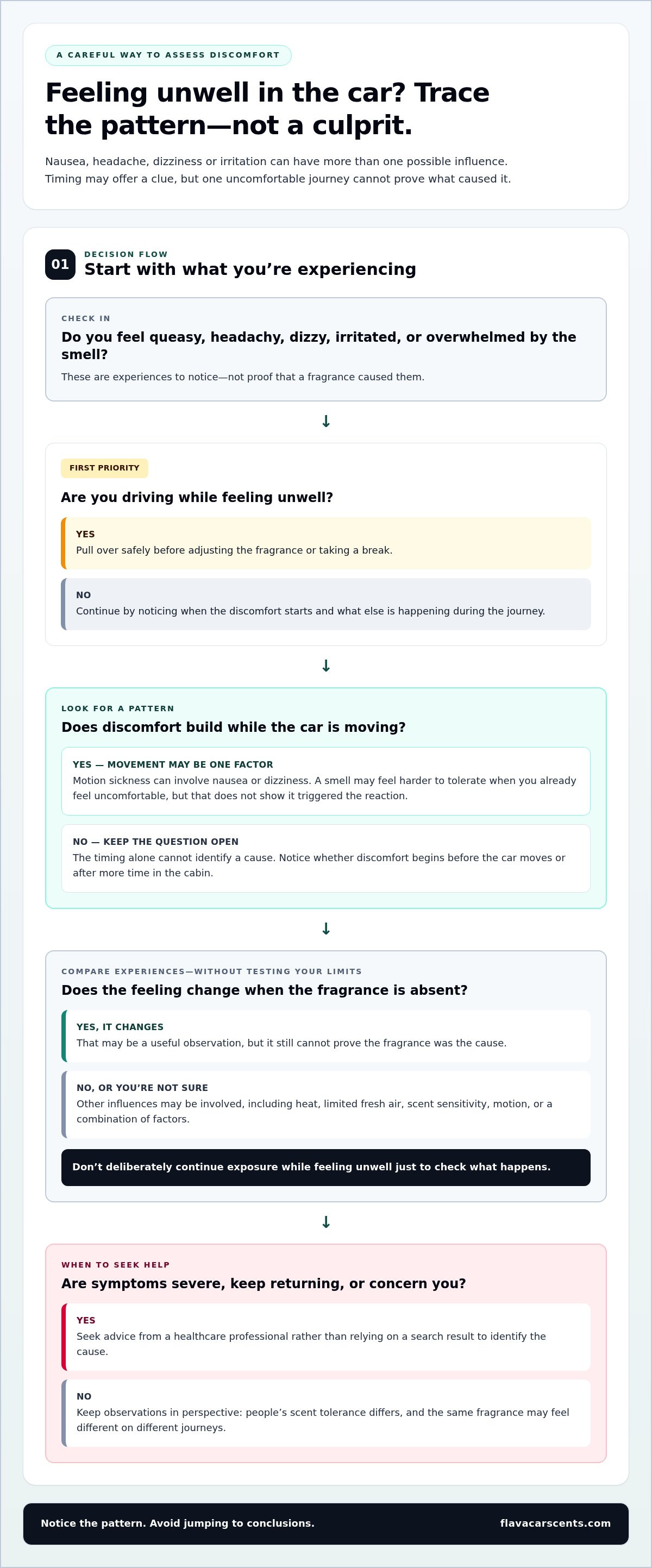
Focus first on safety, not on identifying the exact cause. If you’re driving and feel nauseous, dizzy or unable to concentrate, don’t reach for the fragrance or try to change the car settings while moving. A driver’s first move is to pull over somewhere safe. Passengers should also avoid distracting the driver; wait until the car is parked before adjusting anything.
Immediate steps during a journey
- Stop safely. If the driver feels unwell, pull over when it’s safe and legal to do so. Don’t continue driving if symptoms affect concentration or control.
- Reduce exposure while parked. Once safely stopped, switch off or remove the fragrance if you can do so without spilling or touching its contents. Follow any instructions on its packaging.
- Let in fresh air if practical. Open a window or adjust ventilation while parked, if the conditions make this comfortable and safe. Airflow may help change how noticeable the scent feels, but it can’t guarantee relief.
- Pause before deciding what’s next. Give yourself time to assess how you feel. If symptoms continue or you’re unsure whether it’s safe to drive, don’t rush back onto the road. Arrange another way to continue if needed.
If you’re a passenger, let the driver know calmly and ask them to stop somewhere safe. Don’t remove a hanging or attached fragrance while the vehicle is moving, and don’t distract the driver by reaching across the cabin. Small, sensible steps matter more than guessing whether the “Yankee Candle sickness in car” search phrase points to the cause.
When to seek advice about recurring symptoms
If discomfort keeps returning, disrupts journeys or worries you, speak with a qualified healthcare professional. Note what happened, when symptoms began, whether the car was moving, and what fragrances or other noticeable smells were present. This information may help explain the pattern, but avoid diagnosing yourself or deliberately using a fragrance again to test a theory.
Seek urgent help if symptoms are severe or rapidly worsening. In the UK, call 999 for a medical emergency; if you need urgent medical advice that isn’t an emergency, NHS 111 can direct you to appropriate support. Don’t rely on changing the fragrance as a substitute for medical care when symptoms are concerning.
Once you’re feeling well and considering fragrance for a future drive, make the choice on your own terms. You can explore car fragrance formats without treating any format as a remedy or a guarantee of comfort.
How to approach car fragrance more thoughtfully next time
Make comfort the deciding factor. A popular scent or familiar brand isn’t automatically the right fit for every person or every drive. If a fragrance seemed to coincide with recurring discomfort, set it aside rather than feeling obliged to keep using it. The phrase “Yankee Candle sickness in car” may help describe your concern, but it doesn’t establish what caused your symptoms or predict how you’ll respond to another product.
A different fragrance or format might suit your preferences, but switching products can’t guarantee that symptoms won’t return. Other parts of a journey may affect how you feel, and individual responses vary. There’s no need to prove anything by reintroducing a scent that you associate with discomfort.
Choosing a format around your preferences
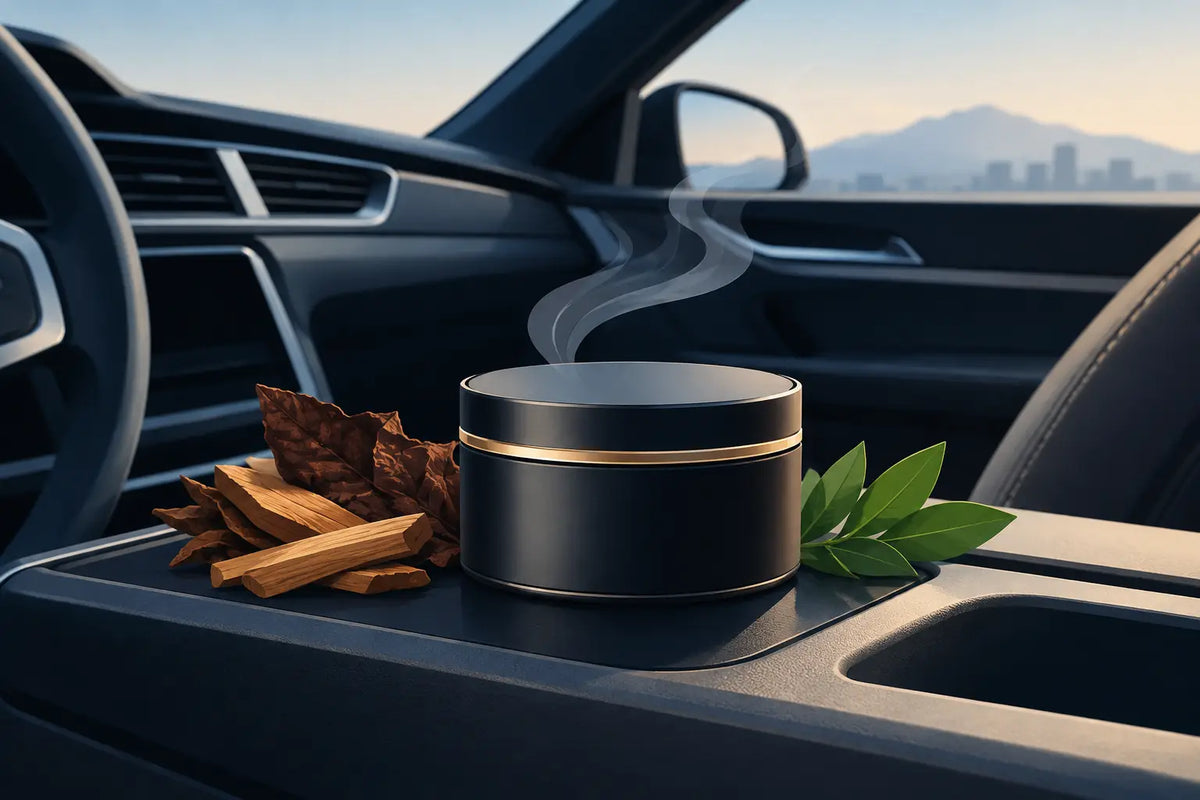
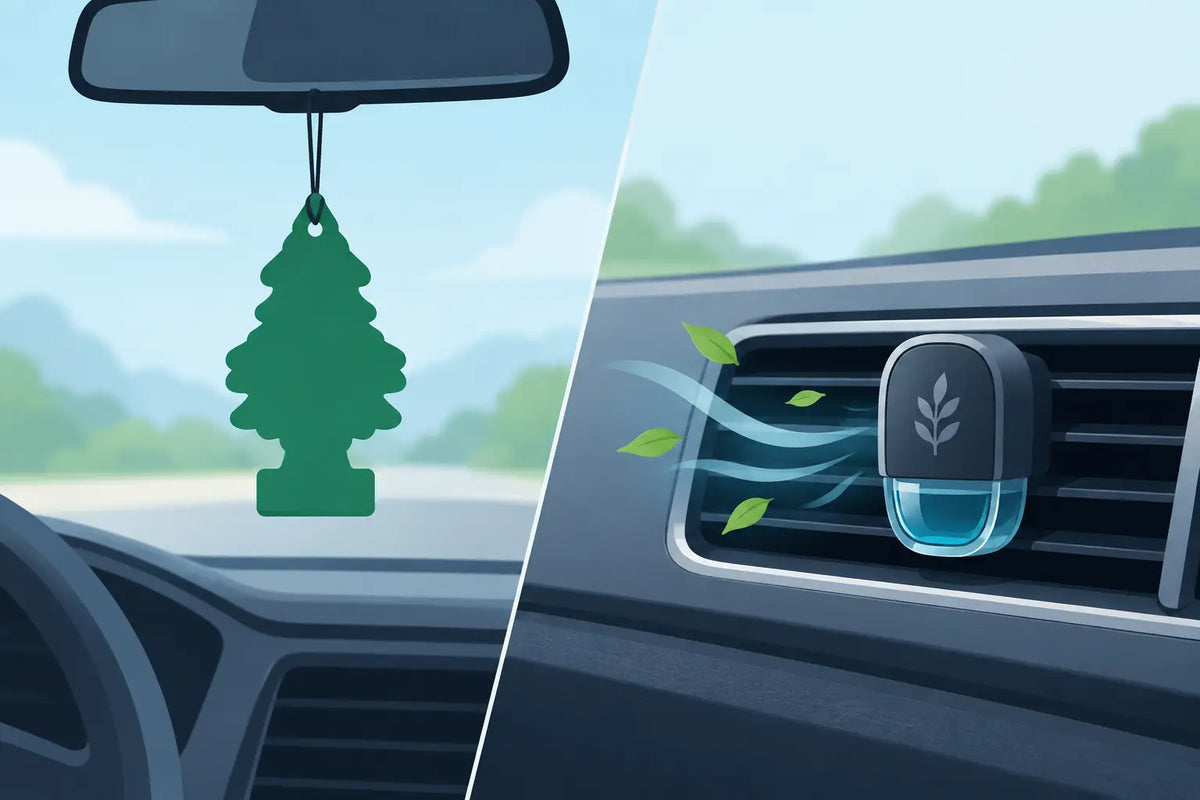
Car fragrance comes in different formats, including vent clips, sprays, tins and wood diffusers. They offer different ways to bring fragrance into a vehicle, but the format alone doesn’t show how comfortable it will feel to you. Think about what you prefer, where you’d want it placed, and whether you want a fragrance in the car at all. There’s no universally right choice.
- Vent clips: A format designed to attach to a car vent.
- Sprays: A spray format for introducing fragrance into the car.
- Tins: A compact, container-based format.
- Wood diffusers: A wood-based fragrance format.
These categories describe format, not a promise about scent strength or how your body will respond. Choose based on your own preference, and follow the product’s instructions for use. If you’d rather keep the cabin fragrance-free, that’s a valid personal choice too.
A considered next step for future drives
If you notice recurring discomfort around a particular fragrance, stop using it and consider discussing the symptoms with a healthcare professional, especially if they’re disruptive or worrying. Keep your observations simple: note what you used, when discomfort began and whether anything else about the journey might have contributed. This can help you explain the pattern without assuming a diagnosis or cause.
For future journeys, change your approach at your own pace. You might choose not to use fragrance, or explore another format because it better matches your personal preferences. Neither choice guarantees a particular result. Prioritise how you feel over brand loyalty, trends or pressure to keep a scent in your car.
If you’re ready to browse, Explore Flava Car Scents, including vent clips, sprays, tins and wood diffusers. Consider the formats, choose only what feels right for you, and remember that no car fragrance is a health solution or a guarantee against discomfort.
Make your next drive feel like your choice
Let comfort set the mood for your next journey. If you’re still wondering about “Yankee Candle sickness in car,” try not to force a definite answer from one experience. You can take your reaction seriously while keeping your options open: go fragrance-free for a while, or choose a scent only if it feels right to you. There’s no trend, brand or routine you need to follow.
Think of fragrance as a personal detail, not a must-have. If you decide to bring a new atmosphere into your car, choose at your own pace and pay attention to what you enjoy. Flava Car Scents offers several car fragrance formats, available to explore directly through its online shop. No format can promise how you’ll feel, so let your preferences lead.
Ready to find a style that suits your drive? Explore Flava Car Scents and choose your next journey’s vibe with confidence. Your comfort comes first, and the right choice is the one that feels right for you.
Frequently Asked Questions
Can a Yankee Candle car air freshener make you feel sick?
It’s possible for someone to feel unwell around a fragrance, but that doesn’t prove Yankee Candle caused it or that the product affects everyone. The phrase “Yankee Candle sickness in car” describes a concern, not a confirmed condition. Consider the timing as one clue, alongside the journey and other surroundings. If symptoms happen repeatedly or are worrying, discuss them with a healthcare professional rather than relying on online accounts to identify the cause.
Why does car air freshener make me feel nauseous?
A fragrance might feel unpleasant or overwhelming, but nausea can have several possible causes. For example, it may arise during a winding journey, in a warm cabin, or when you’re already feeling unwell. Think about what else was happening rather than assuming the air freshener is solely responsible. If you notice a recurring pattern, record the circumstances and symptoms to discuss with a healthcare professional.
What should I do if a car fragrance makes me feel unwell?
If you’re driving, pull over somewhere safe before touching the fragrance, opening a window or changing the ventilation. Once parked, reduce exposure if practical and take time to assess how you feel. Don’t continue driving if symptoms affect your concentration or ability to control the vehicle. If you’re a passenger, tell the driver calmly and avoid reaching across or distracting them while the car is moving.
Is fragrance sensitivity the same as an allergy?
No, the phrase “fragrance sensitivity” doesn’t by itself confirm an allergy. Feeling uncomfortable around a smell and having a diagnosed allergic response are not interchangeable conclusions. Symptoms alone can’t reliably identify which explanation applies, and this FAQ can’t assess an individual reaction. If you suspect an allergy, or symptoms are recurring or disruptive, speak with a qualified healthcare professional for advice rather than self-diagnosing.
Can a strong car scent contribute to a headache?
A strong smell may coincide with a headache for some people, but a headache during a drive doesn’t establish that fragrance caused it. Other influences, including travel conditions or feeling unwell for another reason, may be relevant. Note when the headache begins and what else is happening, without deliberately repeating an exposure to test it. Get medical advice if headaches are severe, persistent or concerning.
How can I tell whether nausea is from the scent or motion sickness?
There isn’t a simple way to distinguish the causes from one episode. Notice whether nausea appears during movement, whether it also happens on journeys without fragrance, and whether it eases after the journey. These details can help you describe a pattern, but they can’t confirm the cause. Don’t deliberately reintroduce a fragrance that you associate with feeling unwell. Seek medical advice if nausea recurs or disrupts daily life.
Will switching to another car fragrance prevent symptoms?
No switch can guarantee that symptoms won’t happen again. You might prefer a different scent or format, such as a vent clip, spray, tin or wood diffuser, but format alone doesn’t predict your personal response. If a fragrance seems linked with recurring discomfort, stop using it rather than trying another as a remedy. You can also choose to keep the car fragrance-free; your comfort matters more than a particular product.

Leave a comment
This site is protected by hCaptcha and the hCaptcha Privacy Policy and Terms of Service apply.