
Table of Contents
- Why Car-Specific Fragrance Sprays Deliver Superior Results
- Car Spray vs Diffuser: Which Format Works Best for Your Vehicle
- How to Use Car Fragrance Spray for Maximum Freshness
- How Long Does Car Fragrance Spray Last
- Are Car Perfume Sprays Safe to Inhale During Daily Commutes
- Choosing the Right Scent for Your Vehicle Cabin
- Odour Control vs Odour Masking: What Actually Works
- Frequently Asked Questions
Last Updated: October 10, 2026
Why Car-Specific Fragrance Sprays Deliver Superior Results
Understanding why use car specific fragrance sprays has a precise answer: car-specific formulations solve problems that generic perfume and home fragrances create in vehicles.
Formulation Differences That Matter
Car-specific sprays differ from household and personal fragrance products in three critical ways:
Aerosol propellant and dry-mist technology. Standard perfume uses liquid-based aerosols that settle on upholstery, dashboards, and trim, leaving oily residue. Car-specific dry-mist formulations disperse as fine particles that evaporate quickly without sticky deposits, preventing staining and buildup.
Fragrance concentration and volatility profile. Home fragrances use high concentrations for large rooms. In a 10-15 cubic metre car cabin, this becomes overwhelming and causes headaches or nausea. Car-specific sprays use calibrated concentrations for enclosed spaces, delivering freshness without sensory fatigue.
Temperature and motion stability. Vehicle cabins experience extreme temperature swings (50-60°C in summer, near freezing in winter). Generic sprays break down under these conditions. Car-specific formulations are tested across temperature ranges and remain stable during driving, dispersing evenly regardless of conditions.
Material Compatibility and Surface Protection
Generic sprays risk vehicle interiors. Perfume and household fragrances contain solvents and oils that degrade car materials:
- Leather and suede: Perfume oils darken leather, cause permanent staining, and break down protective finishes.
- Plastic trim and dashboards: Solvent-based sprays soften or discolour plastic.
- Fabric upholstery: Oily residue attracts dust and dirt, creating permanent stains.
- Electronics and screens: Liquid mist can seep into air vents and infotainment systems, causing electrical damage.
Car-specific dry-mist sprays are tested safe on all surfaces. Minimal liquid contact and automotive-compatible fragrance oils protect your vehicle's interior.
Why Longevity Matters in a Moving Vehicle
This is why use car specific fragrance sprays matters: generic sprays fade quickly in cars. Air circulation from windows and climate control disperses fragrance rapidly, and engine heat accelerates evaporation.
Car-specific sprays use compounds with higher boiling points and better adhesion, lasting longer than generic perfume.
Car Spray vs Diffuser: Which Format Works Best for Your Vehicle
Car sprays and diffusers serve different purposes.
Sprays deliver immediate, on-demand fragrance with full control over intensity and timing. Diffusers release fragrance passively over weeks without intervention.
Diffusers fade gradually and lose effectiveness within weeks. Sprays maintain consistent performance because you apply fresh product on your schedule.
For professional drivers, sprays are superior: refresh between passengers and adjust intensity on demand.
Dry-mist technology eliminates sticky residue, delivering fragrance without mess.
How to Use Car Fragrance Spray for Maximum Freshness
Application Technique and Location
Application technique determines scent distribution and longevity. Crack windows slightly to allow natural dispersal.
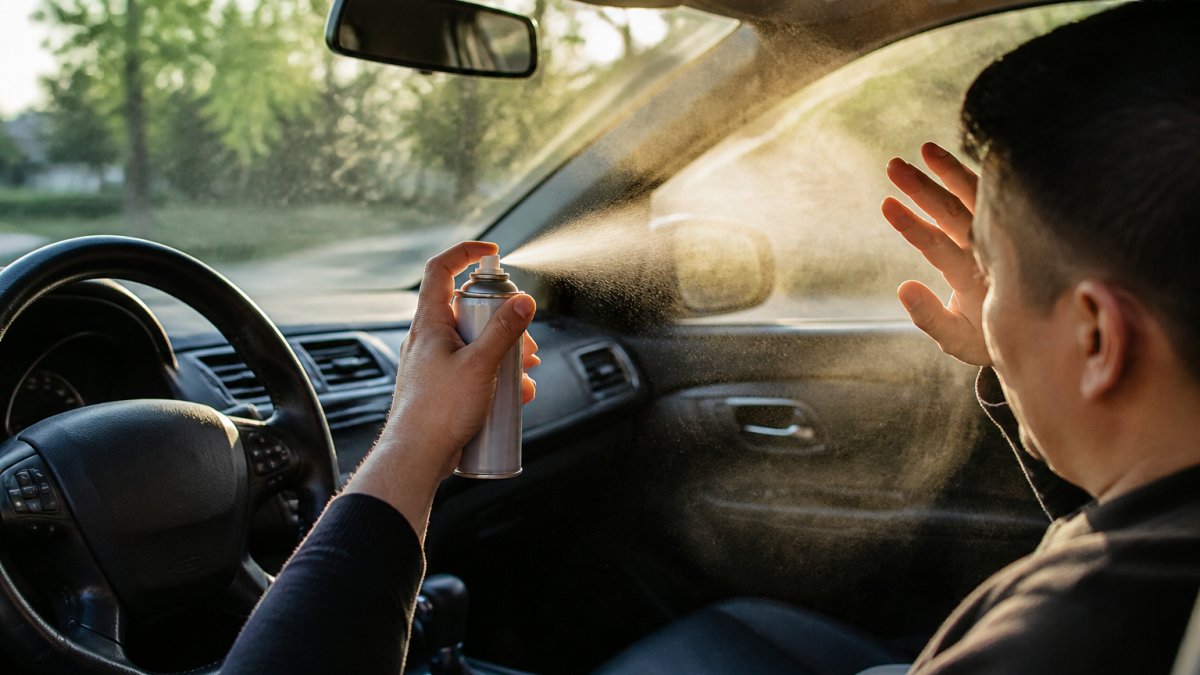
Hold the can upright, point away from your face, and use short bursts (2-3 seconds) to prevent oversaturation.
Best locations: centre of cabin between front seats, toward air vents (not directly into them), or above headrests. Avoid upholstery, leather, and electronics.
Test on an inconspicuous area first. Dry-mist formulas leave no wet residue and are safe for all surfaces after testing.
Spray Quantity and Reapplication Schedule
For small vehicles, use 2-3 bursts; larger SUVs need 4-5. Start with less and add more as needed.
Reapply every 3-5 days for daily drivers, weekly for light drivers. Professional drivers should spray before each passenger.
Summer heat accelerates dispersal; winter cold extends longevity.
How Long Does Car Fragrance Spray Last
A single application typically lasts 3-7 days, depending on spray amount, driving patterns, and ventilation.
Good air circulation disperses fragrance faster. Closed windows extend longevity. Heat accelerates evaporation.
Premium formulations with higher fragrance concentration last longer. A 400ml can provides multiple applications with consistent use.
Apply when the cabin is cool (early morning or evening). Avoid direct sunlight. Let fragrance settle before driving.
Are Car Perfume Sprays Safe to Inhale During Daily Commutes
Car-specific sprays are formulated and tested for safe daily use when applied correctly. Safety includes protecting your vehicle's interior and considering all occupants.
Flava Turbo Can Spray - Classic Car →
Inhalation Safety and Fragrance Sensitivity
Car-specific sprays are safer to inhale regularly than generic perfume for several reasons:
Concentration is calibrated for cabin volume. Car-specific sprays use concentrations for 10-15 cubic metre spaces. Generic perfumes, formulated for rooms 20-50 times larger, create overwhelming concentrations causing headaches, dizziness, or nausea.
Dry-mist dispersal reduces inhalation of concentrated droplets. Liquid sprays create wet mist you inhale directly. Dry-mist sprays disperse as fine particles, reducing concentrated fragrance inhalation.
Aerosol propellants are automotive-grade. Car-specific products use propellants tested for confined spaces; generic sprays may accumulate to problematic levels in sealed cabins.
For most drivers, inhalation poses no health risk. However, individual sensitivity varies:
- Fragrance sensitivity or migraines: Use 1-2 second bursts, allow 5-10 minutes to settle, crack a window, and reduce frequency if symptoms develop.
- Asthma or respiratory conditions: Consult your healthcare provider. Use minimal applications with adequate ventilation.
- Pregnant individuals: Use sparingly with good ventilation. Discontinue if nausea or headaches occur.
- Young children in vehicle: Use lighter applications, ensure window ventilation, and avoid spraying when children are present.
Material Safety and Surface Protection
Beyond inhalation, safe use means protecting your vehicle's interior from damage. Car-specific dry-mist sprays are formulated to be safe on automotive materials, but application technique matters:
Avoid direct spray on sensitive surfaces:
- Do not spray directly onto leather seats, steering wheels, or trim, the concentrated mist can cause staining or discolouration.
- Never spray into air vents, climate control intakes, or towards the windscreen and infotainment display, liquid can seep into electronics and cause malfunction.
- Avoid spraying on suede or nubuck upholstery, which is more porous and prone to staining than standard fabric.
Safe application zones:
- Spray in the centre of the cabin, between front seats, allowing the mist to disperse naturally.
- Direct spray towards the headrests or upper cabin space, allowing fragrance to drift downward and settle.
- Spray with windows cracked slightly to encourage air circulation and prevent fragrance from concentrating in one area.
Test before regular use: Even car-specific products should be tested on an inconspicuous area of your upholstery first. Apply a single short burst to a hidden section of fabric or trim, wait 24 hours, and inspect for any discolouration or damage. This simple step prevents surprises and confirms compatibility with your specific interior materials.
Ventilation Protocol for Safe, Comfortable Use
Proper ventilation transforms fragrance use from potentially overwhelming to genuinely pleasant:
- Before spraying: Crack windows or sunroof slightly to establish air circulation. This prevents fragrance from accumulating to uncomfortable levels.
- During spraying: Hold the can upright, point it away from your face and body, and use short bursts (1-3 seconds) rather than continuous spray. This gives the mist time to disperse naturally.
- After spraying: Keep windows cracked for 5-10 minutes to allow excess fragrance to escape and the scent to settle evenly throughout the cabin. This also prevents the "too strong" sensation that occurs when fragrance is trapped in still air.
- During drives: If you notice the fragrance becoming overwhelming, increase ventilation by opening windows further or adjusting climate control to draw in fresh air.
Professional and High-Use Scenarios
Rideshare drivers, taxi operators, and car valeters who use fragrance sprays multiple times daily should follow stricter protocols:
- Spray between passengers or clients, not whilst anyone is in the vehicle.
- Use lighter applications (one to two bursts) rather than full doses, since the cabin will receive multiple applications throughout the day.
- Ensure thorough ventilation between uses, open all windows and doors for at least 5 minutes after spraying.
- Monitor your own comfort and respiratory response; if you experience fatigue, headaches, or breathing difficulty by day's end, reduce frequency or switch to a lighter scent.
- Consider rotating between two or three different fragrances to prevent olfactory fatigue (your nose becoming desensitised to a single scent) and to give passengers variety.
Choosing the Right Scent for Your Vehicle Cabin
Selecting a fragrance for your car is personal, but a few guidelines help you find what works best for your space and preferences.
Consider your driving environment. If you spend long hours commuting, choose a scent that won't become tiresome. Fresh citrus and aquatic notes tend to feel energising without becoming cloying. Warm amber and spice fragrances create a luxurious atmosphere for shorter drives or weekend trips.
Think about the season. Lighter, fresher scents suit spring and summer. The Flava Couture Turbo Can Spray - Billion delivers warm amber and spice notes perfect for cooler months, whilst the Savage variant offers fresh citrus and wood, ideal for warmer seasons.


Test scents before committing. If possible, experience a fragrance in a similar space to your car. A scent that smells wonderful in a large room might feel overwhelming in a small cabin.
Designer-inspired fragrances from Flava Car Scents offer sophisticated options that elevate your driving experience. Whether you prefer bold, masculine oud notes or delicate floral profiles like the Flava Couture Turbo Can Spray - Adore with its jasmine and rose composition, quality formulations ensure consistent, pleasant performance.

Odour Control vs Odour Masking: What Actually Works
Understanding the difference between odour control and odour masking changes how you approach cabin freshness.
Odour masking simply covers bad smells with a stronger fragrance. It's a temporary fix. The underlying odour, food, pet, damp, or smoke, remains. Once the fragrance fades, the unpleasant smell returns.
Odour control actually neutralises or removes the source of bad smells. This approach delivers longer-lasting results because you're addressing the root problem, not just layering fragrance on top.
Car-specific sprays work best when combined with odour control practices. First, identify and remove the odour source if possible.
Premium formulations like those from Flava Car Scents provide fragrance whilst the dry-mist technology ensures even distribution.
Your vehicle's interior deserves the same attention you give to your personal grooming and style. Car-specific fragrance sprays from Flava Car Scents transform your driving experience by delivering consistent, luxurious scent that lasts.
Frequently Asked Questions
Why should I use a car fragrance spray instead of ordinary home fragrance or perfume?
Car-specific fragrance sprays are formulated to work in confined spaces and handle vehicle-specific challenges like heat, humidity, and odour absorption into fabrics. Home fragrances and personal perfumes are designed for larger, well-ventilated spaces and can become overwhelming in a small cabin. Car fragrance sprays use dry mist technology that distributes evenly without leaving sticky residue on dashboards or upholstery, and they're engineered to complement vehicle interiors rather than conflict with them.
Are car perfume sprays safe to inhale every day during my commute?
Yes, when used correctly. Car-specific fragrance sprays like those from Flava Car Scents are designed for safe daily use in vehicles. The key is moderation: use short bursts rather than continuous spraying, ensure your cabin ventilation is functioning, and avoid spraying directly into your face. If you're sensitive to strong scents, start with a single spray and adjust frequency based on your comfort. Always test on an inconspicuous fabric area first if spraying onto upholstery.
How long does car fragrance spray actually last compared to hanging air fresheners?
Car fragrance sprays provide multiple applications. A 400ml spray can like the Flava Turbo Can provides multiple applications. Reapplication frequency depends on your preferences and how quickly odours return, but most drivers find one or two sprays per week maintains freshness without overwhelming the cabin.
Can I use a car fragrance spray on fabrics like seat covers or floor mats?
Yes, many car fragrance sprays including Flava's Turbo Cans can be sprayed onto fabrics for extra staying power. Always test the spray on a hidden area of your upholstery first to ensure no discolouration or staining occurs. The dry mist formula means minimal wetness, reducing the risk of damage. This technique is especially useful for targeting lingering odours trapped in seat fabric or carpeting, where a direct spray to the air may not be sufficient.


Leave a comment
This site is protected by hCaptcha and the hCaptcha Privacy Policy and Terms of Service apply.