

That stale smell that hits when you open the door is more than a small annoyance. It can make a clean, well-kept vehicle feel neglected, affect passengers' first impression, and take the enjoyment out of every drive. If you are asking, “why does my car smell bad,” the answer is usually hiding in one of a few places: moisture, the HVAC system, fabric, forgotten food, or a mechanical issue that needs attention.
A premium car scent can transform the atmosphere once the source is handled. But fragrance works best as the finishing touch, not a cover-up for a problem that is still sitting under the seat or growing inside the air vents.
Why Does My Car Smell Bad Even After Cleaning?
A quick vacuum and a spray on the seats may make your cabin look better, but odors cling to places you cannot always see. Carpet padding, seat foam, floor mats, the headliner, and the cabin air filter can all hold moisture and odor particles long after the visible mess is gone.
The key is to match the smell to the likely cause. A damp, musty odor points to moisture. A sour smell often comes from food, spilled drinks, or bacteria in the HVAC system. A sweet smell can signal a coolant leak, while a gasoline or burning smell deserves immediate attention. Your nose is giving you useful information, so do not simply drown it out with stronger fragrance.
Musty or Damp Smells
That wet-towel smell is one of the most common car odor complaints. It usually happens when moisture gets trapped in the cabin. Wet shoes, umbrellas, gym bags, a leaking door seal, or damp floor mats can be enough to create a mildew problem, especially in humid weather.
Start by removing the mats and checking the carpet beneath them. Press a dry towel into the carpet around the front and rear footwells. If it comes away damp, the cabin needs to dry out before it can smell fresh again. Leave doors open in a dry, secure location, use fans if possible, and address any leak that is allowing water inside.
Do not overlook the trunk. A small leak around the trunk seal, tail light housing, or spare tire well can create a musty smell that drifts through the whole vehicle.
Sour, Rotten, or Stale Food Smells
Takeout bags, spilled coffee, protein shakes, milk, and forgotten snacks can create an odor that seems far bigger than the original spill. Liquids often seep through seat seams or into carpet padding, where surface cleaning does not reach.
Check beneath every seat, in door pockets, the center console, cup holders, and the trunk. If you find a spill, blot it rather than rubbing it deeper into the material. Use an upholstery-safe cleaner, then allow the area to dry fully. For tougher organic smells, an enzyme-based cleaner can help break down the source instead of only masking it.
If the odor returns on warm days, that is a clue that residue is still in the fabric or padding. Heat brings old odors back to life.
Pet and Smoke Odors
Pet hair carries natural oils and dander, which settle into carpeting and cloth seats. Smoke is even more persistent because its residue can coat the headliner, windows, trim, and ventilation system. Both usually require more than a quick interior detail.
Vacuum thoroughly with attention to seat rails, carpet edges, and under-seat areas. Clean hard surfaces, shampoo fabric where appropriate, and replace the cabin air filter. If smoking has occurred in the vehicle regularly, professional odor treatment may be worth considering. There is a difference between a car that has been scented and a car that has actually been restored.
The HVAC System May Be the Problem
If the smell becomes noticeable the moment you turn on the air conditioning or heat, look to the HVAC system first. Condensation naturally forms when the air conditioner runs. Usually it drains outside the vehicle, but moisture can remain around the evaporator and create the right conditions for bacteria and mildew.
A clogged or old cabin air filter can make the situation worse. It collects dust, pollen, debris, and moisture over time, then recirculates stale air through the cabin. Replacing it is often one of the simplest ways to improve how your car smells.
After running the air conditioning, try switching off the A/C while leaving the fan on for the last few minutes of your drive. This can help dry the system before you park. It will not solve every HVAC odor, but it is a smart habit for keeping moisture from lingering.
If you notice weak airflow alongside a strong moldy smell, have the system inspected. A blocked drain line or deeper HVAC issue may need professional service.
Smells You Should Never Ignore
Some car smells are not about presentation. They can signal a safety or mechanical problem, and they should be checked before you focus on freshening the cabin.
- Gasoline: A fuel smell inside or around the car may indicate a leak in the fuel system. Avoid driving unnecessarily and have it inspected promptly.
- Burning rubber or plastic: This can come from an overheating belt, electrical fault, dragging brake component, or plastic contacting a hot engine part.
- Sweet, syrup-like odor: Coolant often has a sweet smell. A leak can lead to overheating and should not be ignored.
- Rotten eggs: This may point to a catalytic converter issue, battery problem, or fuel-system fault.
- Exhaust fumes: Carbon monoxide has no smell, but noticeable exhaust odor in the cabin can mean exhaust gases are entering the vehicle. Treat this as urgent.
How to Remove the Source Before Adding Fragrance
The best odor routine is simple: remove, clean, dry, then scent. First, empty the car completely. That means old water bottles, food packaging, gym gear, spare clothing, and anything living in the trunk longer than it should.
Next, vacuum seats, carpet, mats, and crevices. Wipe down hard surfaces, including cup holders, door panels, and the inside of the windows. Window glass matters more than many drivers realize, particularly if smoke or vapor residue has built up.
Then focus on drying. Moisture is the reason many odors return. If you shampoo carpets or clean upholstery, give the cabin enough ventilation to dry completely before closing it up overnight. Replace or inspect the cabin air filter if airflow smells stale.
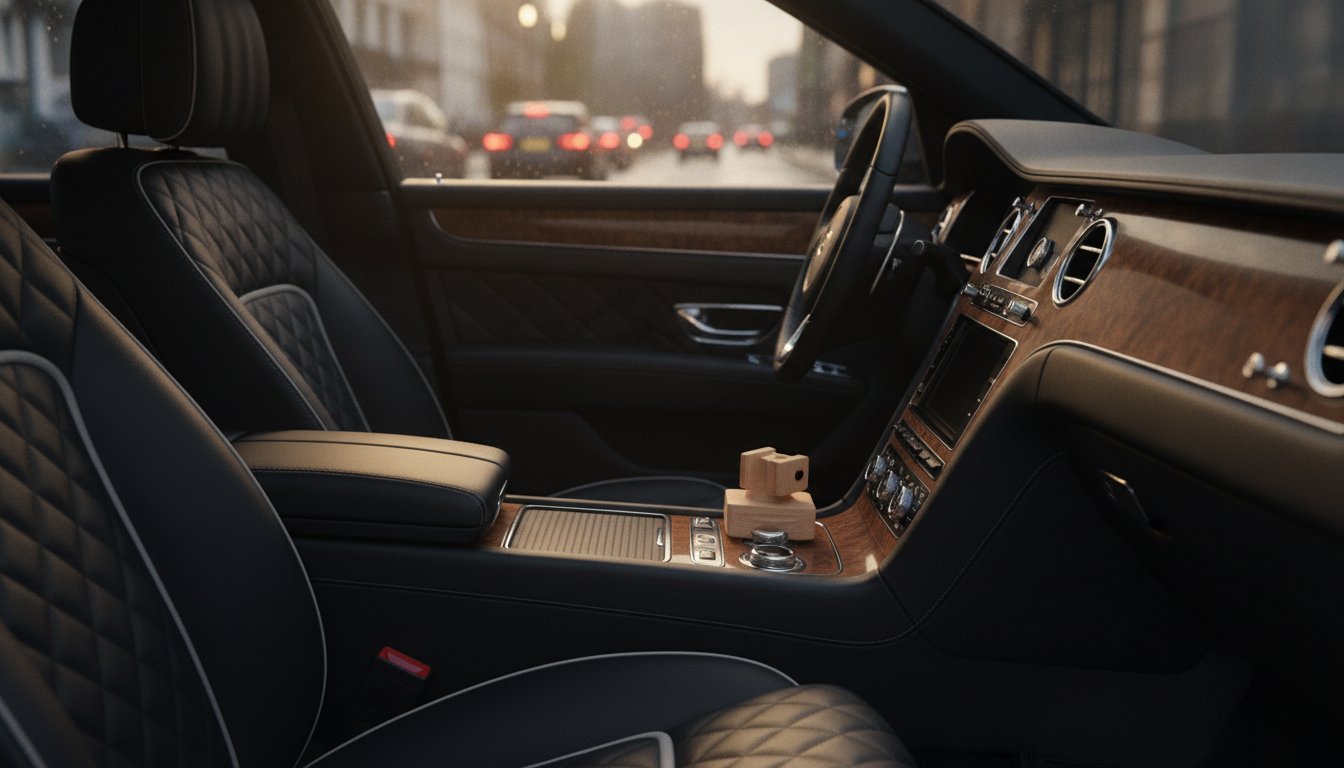
Only after the cabin is clean should you choose your fragrance format. A vent clip is ideal when you want a controlled scent release during your commute. A wood diffuser adds a refined visual touch while gently scenting the space. Scent tins work well in smaller areas or for drivers who prefer a subtle background fragrance, while a spray can give the interior a quick reset before passengers get in.
The format depends on your routine, your vehicle size, and how noticeable you want the scent to be. A compact coupe may need less fragrance than a large SUV, and rideshare drivers may prefer a clean, balanced scent that feels welcoming without becoming overpowering.
Keep Your Car Smelling Premium Between Cleans
Once the source is gone, small habits make a major difference. Do not leave damp towels or sports gear in the car. Empty food and drink trash at the end of the day. Shake out floor mats regularly, and deal with spills as soon as they happen instead of waiting for detail day.
It also helps to rotate your scent with the season or your mood. Fresh, crisp profiles can make a daily commute feel lighter, while warmer designer perfume-inspired notes bring a more polished feel to evening drives and weekend plans. Flava Car Scents is designed for that final layer of your cabin experience: a premium scent that reflects your taste rather than a generic fragrance trying to hide a problem.
Your car does not need to smell like a cleaning aisle to feel fresh. Find the cause, clear it properly, and choose a scent that makes every time you reach for the keys feel like an upgrade.


Leave a comment
This site is protected by hCaptcha and the hCaptcha Privacy Policy and Terms of Service apply.