
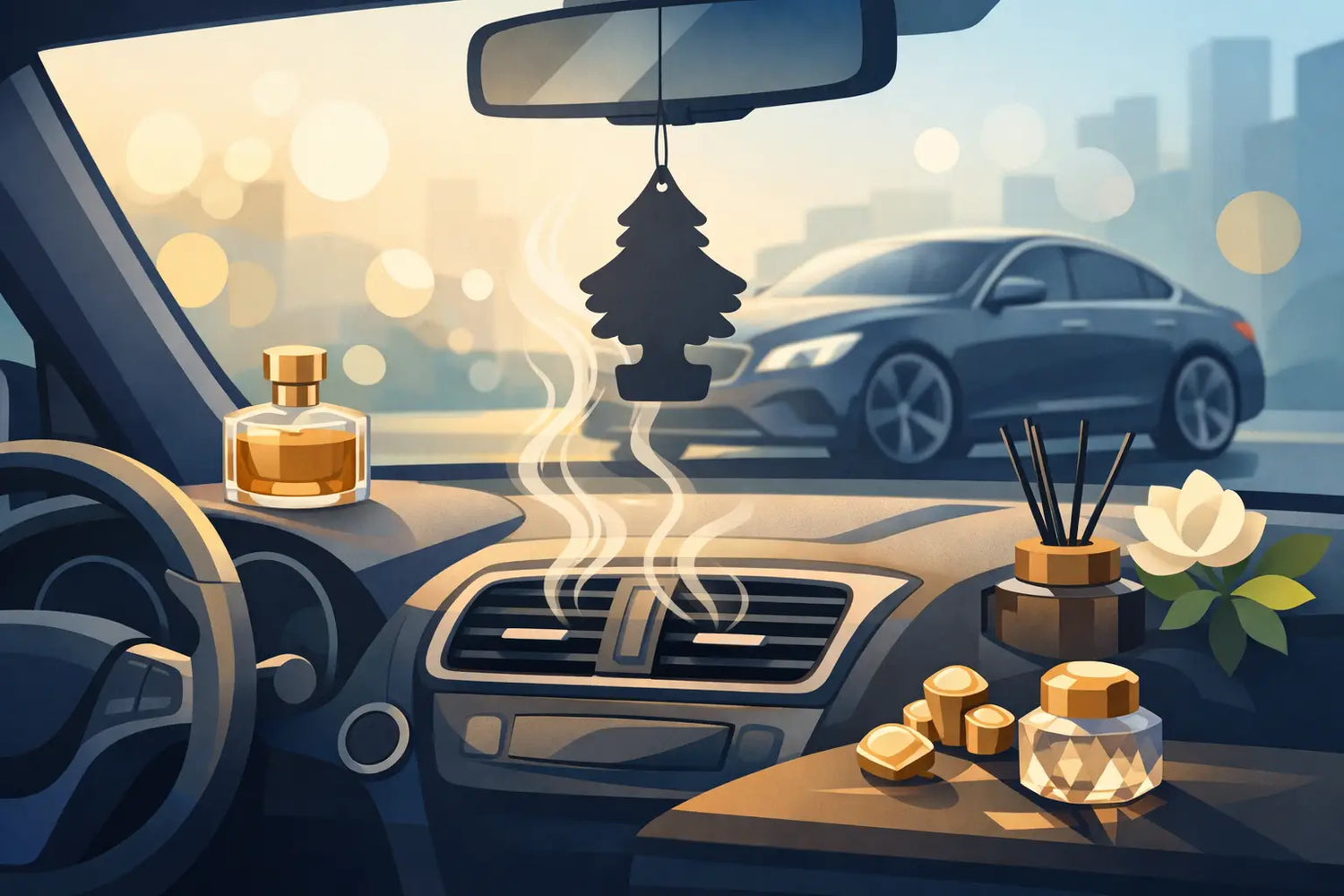
The difference between a cheap car freshener and one that feels premium usually hits in the first five seconds. One smells loud, overly sweet, and gone by next week. The other feels clean, layered, and intentional. If you have ever wondered what makes car scents smell expensive, it comes down to more than strength. The real difference is in the fragrance profile, the materials, and how the scent behaves inside the car.
A premium-smelling car scent does not try to fill the cabin with raw intensity. It creates atmosphere. It feels polished when you open the door, balanced while you drive, and refined enough that passengers notice it without being hit over the head by it. That is what separates a luxury scent from a basic air freshener.
What makes car scents smell expensive in the first place?
Expensive-smelling fragrance usually starts with composition. The best scents are built in layers, much like personal fragrance. Instead of one flat note like fake cherry or sugary vanilla, they move through top, middle, and base notes. You might notice a fresh citrus opening, a smooth floral or aromatic heart, and a deeper dry-down of musk, woods, amber, or leather.
That structure matters because our brains read complexity as quality. A scent that changes slightly over time feels more sophisticated than one that smells exactly the same from start to finish. Designer-inspired blends often follow this pattern, which is why they tend to feel more elevated in a car setting.
There is also a question of restraint. Premium fragrance is usually edited, not overloaded. If every note is fighting for attention, the result feels cheap fast. A luxury car scent leaves space between the notes so the cabin smells finished rather than crowded.
The notes that create a luxury feel
Some fragrance families naturally read more upscale in a vehicle. Woods, soft musk, suede, amber, marine notes, iris, bergamot, and subtle spice tend to give that cleaner, more expensive impression. They smell closer to fine fragrance, upscale interiors, and high-end grooming products.
Sweet scents are not automatically cheap, but they are easier to get wrong. A rich tonka or smooth vanilla can smell premium when balanced with woods or musk. A candy-like blast of sugar usually does the opposite. The same goes for fruit. Crisp fig, blackcurrant, or citrus can feel sharp and modern. Artificial bubblegum fruit notes tend to feel juvenile inside a cabin.
Leather is another big one, but only when done well. A refined leather accord can make a car feel tailored and expensive. An overly smoky or synthetic leather note can feel harsh. The same trade-off applies to fresh scents. Clean and airy works. Aggressively "blue" and chemical does not.
Why quality ingredients matter more than people think
One reason expensive scents smell expensive is that the raw materials feel smoother. Even when a fragrance uses aroma compounds rather than all-natural materials, better blending creates a softer, more believable finish. Harsh edges are usually what make lower-end air fresheners feel generic.
In a small enclosed space like a car, there is nowhere for rough notes to hide. If a fragrance opens with an alcohol-heavy blast or leaves a plasticky after-smell, you will notice it immediately. Premium blends are designed to perform in tighter spaces, where balance matters more than brute force.
This is also why inspired-by-designer fragrance styles work so well in cars. They borrow the structure and polish people already associate with luxury fragrance. Instead of smelling like a utility product, the car scent feels like part of your personal style.
Diffusion changes everything
A great fragrance can still smell cheap if the delivery format throws too much scent too fast. Diffusion is a big part of what makes car scents smell expensive. The goal is a steady release, not a burst that peaks on day one and disappears by day four.
Vent clips, wood diffusers, refillable systems, tins, and sprays all throw scent differently. Vent-based formats can give strong, immediate performance because airflow pushes fragrance through the cabin. That can be a plus if the formula is balanced. If it is too concentrated or too sweet, heat and air can make it feel overwhelming.
Wood diffusers and other absorbent formats often feel more refined because they release scent gradually. They do not scream for attention. They sit in the background and keep the car smelling clean and premium over time. Refillable options also help because you can keep the scent level consistent instead of replacing a dead product with something totally different every few weeks.
Sprays have their place too, especially if you want instant impact before passengers get in. But a spray smells most expensive when it is used lightly. A couple of well-placed sprays on mats or fabric can freshen the interior. Drenching every surface usually creates that heavy, artificial cloud people associate with cheap air fresheners.
The car itself affects the scent
Even the best fragrance has to work with the environment. A luxury scent will smell different in a spotless, well-kept interior than it will in a car holding onto fast food, gym gear, smoke, or damp fabric. If the base environment is off, the fragrance ends up masking instead of enhancing.
That is why premium scent is partly about cleanliness. Wipe down hard surfaces, vacuum fabric, and deal with odor at the source first. Then add fragrance. When the cabin is already neutral, the scent reads as intentional and polished rather than defensive.
Heat is another factor. Cars get hot, and heat amplifies fragrance. Some notes bloom beautifully in warmth, especially woods, amber, and citrus. Others become syrupy or sharp. If you live in a hotter climate, a scent that feels balanced indoors may smell much heavier in your car by midday. In that case, fresher or woodier profiles usually hold up better than dense gourmands.
Longevity is part of the premium impression
People often assume expensive means stronger. Not exactly. In car fragrance, expensive usually means better controlled. It lasts, but it does not flatten the cabin with constant intensity.
Long-lasting scent creates a sense of consistency, which reads as premium. You open the door on a Monday and then again on Friday, and the car still smells put together. Cheap air fresheners often swing between extremes. They are too strong at first, then vanish almost overnight. That roller coaster makes the whole experience feel disposable.
A premium scent should have presence without fatigue. You want enough performance to notice it, but not so much that every commute feels like sitting inside a bottle of cologne. For daily drivers, that balance matters more than sheer power.
Packaging and presentation still count
Smell is the main event, but presentation affects perception. If the product looks flimsy, neon, or novelty-driven, it is harder to create a luxury mood inside the car. Premium scent products usually come in formats that feel clean, minimal, and intentional. They look like accessories, not afterthoughts.
That matters because your car is part of your overall presentation. Drivers who care about details do not want a fragrance product that cheapens the cabin visually. A refined vent clip, wood diffuser, or understated tin supports the experience. It tells passengers the scent was chosen, not grabbed from a gas station shelf.
How to choose a scent that smells more expensive
If you want your next car fragrance to feel premium, shop the same way you would shop for a personal fragrance. Look past the loudest name and focus on the profile. Designer-inspired blends, clean woods, soft musk, bergamot, amber, suede, and balanced fresh notes are usually safer bets than candy-sweet or novelty scents.
Think about your car and how you use it. A rideshare driver may want something universally appealing and fresh. An enthusiast with a well-detailed interior may prefer a richer leather or woody scent. A daily commuter may want refillable vent sticks or a diffuser format that keeps the cabin consistent without needing constant attention.
It also helps to rotate by season. Lighter citrus, marine, and airy musk scents tend to feel better in warmer months. Amber, spice, suede, and deeper woods often work better in cooler weather. That small switch keeps your car smelling current rather than stale.
For drivers who want that polished, luxury feel without trial and error, brands like Flava Car Scents make the choice easier by focusing on premium, designer-inspired fragrance profiles across multiple formats. That gives you more control over both scent style and performance, which is really the whole game.
At the end of the day, expensive-smelling car fragrance is not about making the cabin smell like more. It is about making it smell better - cleaner, smoother, more layered, and more intentional every time the door opens.

Leave a comment
This site is protected by hCaptcha and the hCaptcha Privacy Policy and Terms of Service apply.