Table of Contents
- Step 1: Strip and Vacuum the Interior
- Step 2: Deep Clean Upholstery and Porous Surfaces
- Step 3: How to Clean Car Air Vents and Ventilation Ducts
- Step 4: Replace the Cabin Air Filter
- Step 5: Using an Ozone Generator for Car Smoke
- Step 6: Choose the Best Car Odour Eliminator Spray
- Step 7: Long-Term Prevention and Maintenance
- Frequently Asked Questions
Last Updated: September 23, 2026
Step 1: Strip and Vacuum the Interior
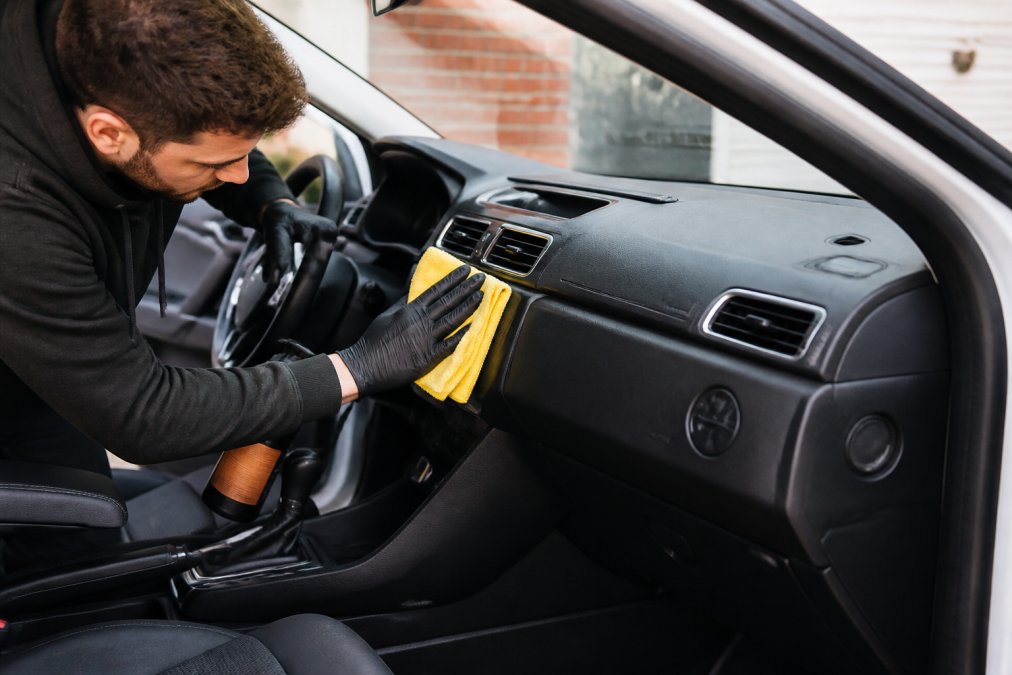
Smoke smell clings to every surface it touches, so learning how to remove smoke smell from car interiors starts with removing everything that holds residue. Strip out floor mats, seat covers, and anything loose. Then vacuum every surface with a crevice tool, paying close attention to seat seams, the headliner, and the gap between seats and the console.
- Remove mats, covers, and loose items
- Vacuum seats, carpets, and the headliner
- Get into seams, vents, and under the seats
- Empty the vacuum bin outside the car
Step 2: Deep Clean Upholstery and Porous Surfaces
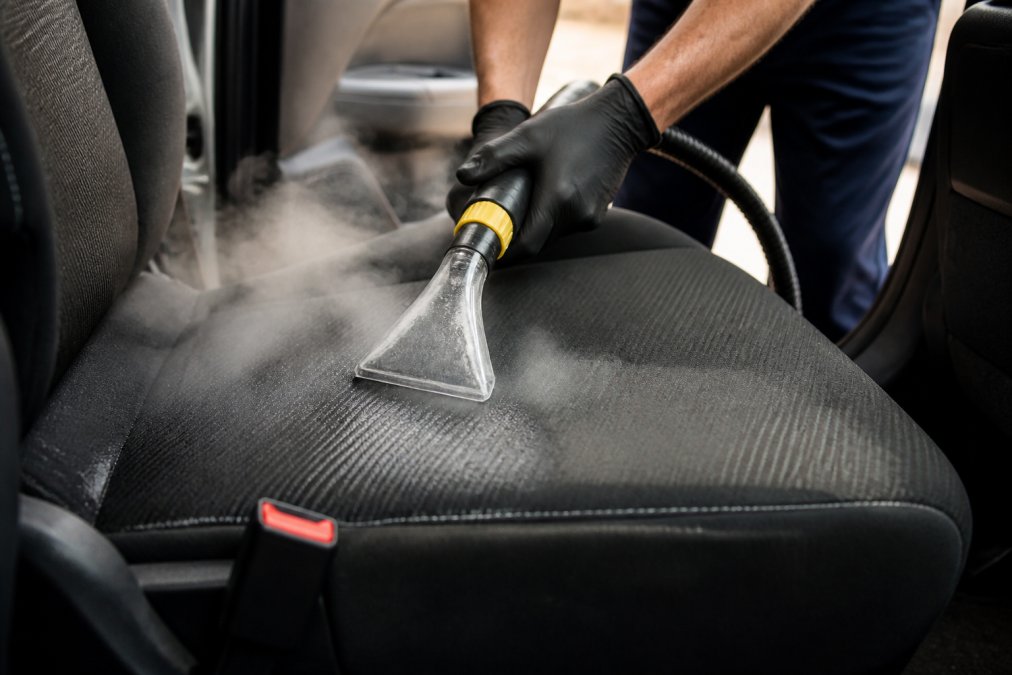
Upholstery cleaning is where most of the smoke smell actually lives, because fabric traps odor molecules deep in the fibres. Treat seats and carpets with a fabric shampoo or a mild soap solution, working it in with a soft brush. For stubborn patches, sprinkle baking soda over the fabric, leave it for several hours, then vacuum it up.
Step 3: How to Clean Car Air Vents and Ventilation Ducts
Smoke travels through the ventilation system every time you drive, coating the ducts and vents with residue. Learning how to clean car air vents properly makes a real difference to air quality. Spray a diluted cleaning solution onto a microfibre cloth wrapped around a thin brush, then wipe inside each vent. For the ducts themselves, use an aerosol vent cleaner with the fan running on low and the air set to recirculate.
- Wipe every vent slat by hand
- Use a vent cleaner for the deeper ducts
- Run the fan to push out loosened residue
- Repeat until the cloth comes away clean
Step 4: Replace the Cabin Air Filter
The cabin air filter traps airborne particles before they reach the cabin, and a smoke-affected filter keeps releasing odor back into the air every time the blower runs. This is the step most guides skip, and it's often the reason a car still smells after a full clean. Replacing it is the single highest-return mechanical fix for a lingering smoke smell, so it's worth doing properly rather than just noting it.
How to locate the filter
On the majority of models sold in the UK, the cabin filter sits in one of three places:
- Behind the glovebox, the most common layout. Squeeze the sides of the glovebox inward, let it drop past its stops, and the filter housing is usually behind a rectangular cover held by clips or a single screw.
- Under the bonnet, near the base of the windscreen, common on many older hatchbacks and some vans. Look for a plastic scuttle panel with a removable lid.
- Under the passenger-side dash, found on some models where the glovebox does not drop far enough. The housing is usually a slide-out tray.
The replacement job, step by step
- Order the right filter first. Filters are sold as particulate-only or as combined particulate and activated carbon. For smoke, always choose the activated carbon version, the carbon layer adsorbs odour molecules that a plain paper filter lets straight through.
- Note the airflow arrow. Every filter has a directional arrow printed on the frame. Photograph the old one before removal so you refit the new one the same way round.
- Remove the old filter slowly. It will be grey, matted, and may hold ash and tar residue. Slide it out flat so debris doesn't fall into the housing.
- Vacuum the housing. Use a crevice tool to clear leaf litter, ash, and grit from inside the empty housing before fitting the new filter.
- Fit the new filter and refit the cover. Clips should click; screws should be snug, not overtightened into plastic.
- Run the blower on full for a minute with the windows open to clear any loose fibres from the new element.
How often to change it
Most manufacturers suggest a cabin filter change roughly every 12,000 to 15,000 miles, or annually, whichever comes first. A smoke-affected car needs it done immediately, and then again after about a month if the smell was heavy, because the first new filter will load up with residue still being released from the ducts and upholstery. The part typically costs between £8 and £25 depending on model and whether you choose carbon.
- Choose an activated carbon filter, not a plain particulate one
- Photograph the airflow arrow before removal
- Vacuum the empty housing before fitting the new element
- Recheck after a month on heavily smoked cars
Step 5: Using an Ozone Generator for Car Smoke
Using an ozone generator for car smoke is the most effective deep treatment available, but it carries real safety rules. Ozone reacts with odor molecules and breaks them down at the source. Run the machine inside the closed car with the air on recirculate, following the unit's instructions for timing.
- Run the unit with the car sealed
- Keep people and pets out
- Air the car out completely afterwards
- Repeat only if the smell lingers
Step 6: Choose the Best Car Odour Eliminator Spray
The best car odour eliminator spray neutralises odor rather than covering it, and that distinction matters more than the fragrance on the label. Many supermarket sprays simply mask the smell with a stronger scent, which fades within hours and leaves the original odor behind. Understanding how each type actually works lets you pick the right product for the surface and the stage of the job.
How the main types actually work
- Masking sprays coat the air with fragrance. They do nothing to the residue in your upholstery, so the smoke returns as soon as the scent fades. Useful only as a stopgap before a proper clean.
- Odour neutralisers use one of two mechanisms. Chemical neutralisers (often based on cyclodextrin or zinc ricinoleate) bind to odor molecules and stop them reaching your nose. Enzymatic neutralisers break down the organic residue itself. Enzymatic products tend to work better on smoke because the problem is physical residue, not just airborne molecules.
- Adsorbents such as activated charcoal and zeolite don't spray, they sit in the cabin and pull odour molecules out of the air over days and weeks. Slow, silent, and effective as ongoing upkeep rather than a one-off fix.
- Ozone is covered in Step 5 and is a treatment, not a spray. Don't confuse the two.
Matching the product to the surface
This is where most guides stop short, and it's the part that decides whether the smell actually goes.
- Cloth and velour seats, an enzymatic neutraliser worked in with a soft brush, then extracted, reaches residue that a surface spray cannot. Follow with an adsorbent bag.
- Leather, avoid alcohol-heavy sprays and anything alkaline, which dry and crack the finish. Use a pH-neutral leather cleaner first, then a light mist of neutraliser on a cloth rather than directly on the hide.
- Alcantara and suede-like fabrics, these are the most easily damaged. Never soak them. Mist a neutraliser onto a microfibre cloth and blot, then brush the nap back up once dry. Steam is usually too aggressive here.
- Headliners, the adhesive holding the fabric to the board weakens with moisture. Spray lightly, never saturate, and work in sections.
What to look for on the label
- The word enzymatic or enzyme-based if the smell is from smoke, pets, or spilled milk.
- Fragrance-free if anyone in the car has asthma or sensitivity, a strong perfume on top of smoke is worse than the smoke for some people.
- A pH-neutral claim if you're using it near leather or Alcantara.
- A clear statement of what the product does, not just what it smells like. If the label only describes the scent, it's a masking spray.
Where a finishing fragrance fits
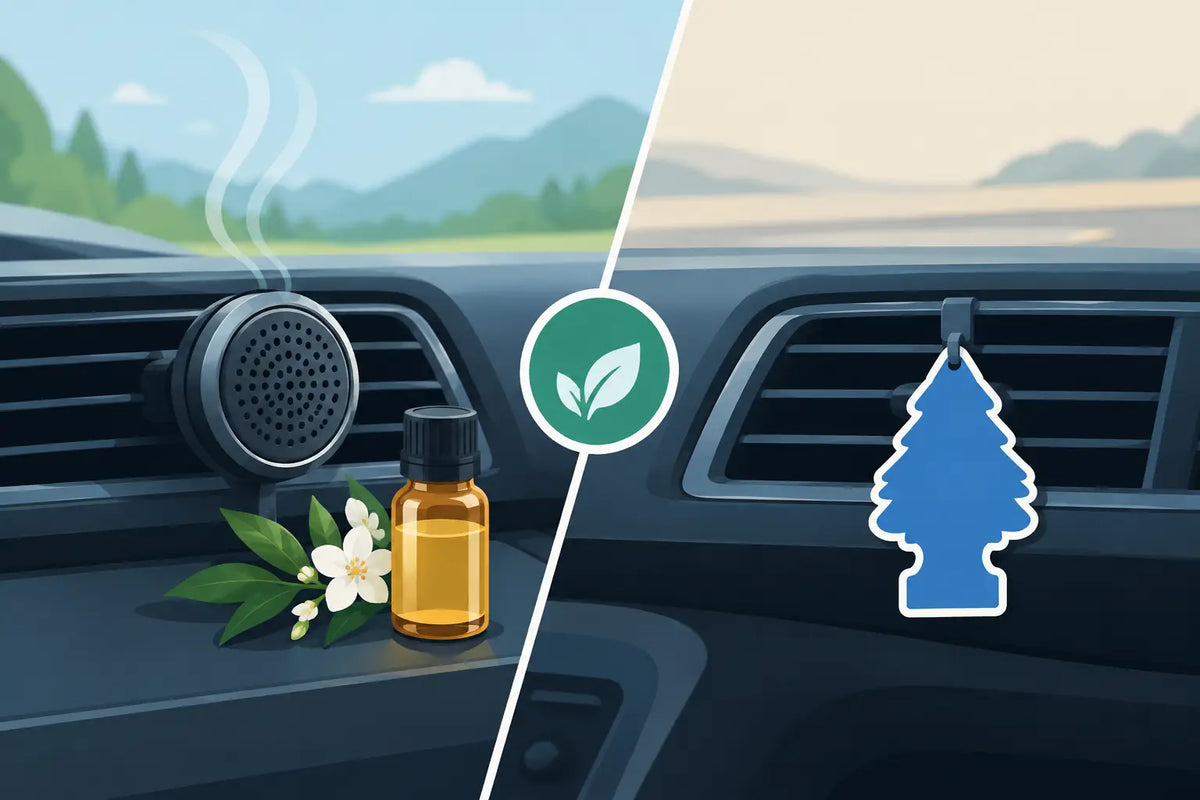
Once the residue is gone and the neutraliser has done its work, a long-lasting fragrance is the final layer, not the fix. Choose something that complements a clean cabin rather than trying to overpower a smell that's still there, because a fragrance over live smoke residue just creates a heavier, sweeter version of the same problem. Bold oud, fresh citrus, and soft floral notes all work well as a finishing touch on a properly cleaned interior.
| Product Type | How It Works | Best For |
|---|---|---|
| Masking spray | Covers odor with fragrance | Quick, short-term freshening |
| Enzymatic neutraliser | Breaks down organic residue | Smoke, pets, spills on cloth |
| Chemical neutraliser | Binds odor molecules | Light, airborne odors |
| Charcoal or zeolite bag | Adsorbs odors over time | Ongoing, low-effort upkeep |
| Finishing fragrance | Adds a lasting scent layer | After the smell is gone |
- Match the product to the material, not just the smell
- Choose enzymatic for smoke residue on cloth
- Go fragrance-free where sensitivity is a concern
- Treat fragrance as the last step, never the first
Step 7: Long-Term Prevention and Maintenance
Keeping smoke smell away for good comes down to a few simple habits. Activated charcoal bags absorb lingering odors between deep cleans, and they're cheap to replace. Keep the air circulation healthy by running the fan regularly and changing the cabin filter on schedule. If you smoke, crack a window and avoid smoking right before you drive.
- Keep a charcoal bag under a seat
- Vacuum every couple of weeks
- Replace the cabin filter on time
- Air the car out often
Frequently Asked Questions
Can you ever get smoke smell out of a car?
Yes, but it takes more than airing out the vehicle. Smoke odour molecules settle into porous materials like upholstery, headliner, and ventilation ducts. A full removal process involves vacuuming, deep cleaning fabrics, replacing the cabin air filter, and treating the ventilation system. For severe nicotine buildup, an ozone generator may be needed. If the smoke smell car problem persists after these steps, a professional interior detailer can help.
Does baking soda actually remove smoke smell from car upholstery?
Baking soda helps absorb surface odours but does not neutralise deep-set smoke residue. Sprinkle it on carpets and seats, leave for several hours, then vacuum thoroughly. It works best as a supplementary step after shampooing. For stronger smoke smell car issues, combine baking soda with white vinegar or a dedicated fabric shampoo to break down nicotine buildup in the fibres.
Is it possible to remove smoke smell from car air conditioning vents?
Yes. Start by removing the cabin air filter and vacuuming visible debris from the vent openings. Spray a ventilation duct cleaner into the air intake while the fan runs on high. For persistent odours, use an ozone generator for car smoke treatment, following safety protocols. Replacing the cabin air filter after cleaning prevents airborne particles from recirculating.
What products do professional car detailers use to neutralise smoke odours?
Detailers typically use a combination of steam cleaners, fabric shampoo, and enzyme-based odour neutralisers. They also replace cabin air filters and may use ozone generators for severe cases. For ongoing freshness, a high-quality car odour eliminator spray that breaks down odour molecules rather than masking them is recommended. Always check product instructions for safe use in enclosed spaces.
A lingering smoke smell can make even a well-kept car feel tired, and masking it with a cheap spray never lasts. At Flava Car Scents, we build long-lasting, designer-inspired fragrances that finish the job properly, with a range covering oud, citrus, and floral notes. Our scents are rigorously tested for performance and backed by a satisfaction guarantee. Get started with Flava Car Scents and turn your car back into a space you enjoy spending time in.

Leave a comment
This site is protected by hCaptcha and the hCaptcha Privacy Policy and Terms of Service apply.