
Table of Contents
- Why Spring Is the Season for Floral Car Scents
- Top Floral Scent Profiles for Spring
- How to Choose the Right Floral Car Scent for Your Cabin
- Long-Lasting Car Air Freshener UK: What Affects Scent Throw and Longevity
- How to Keep Your Car Smelling Fresh All Spring
- Designer-Inspired Car Perfumes: Why They Beat Standard Floral Fresheners
- Safety, Sensitivity and Enclosed Cabin Considerations
- Conclusion
- Frequently Asked Questions
Last Updated: September 23, 2026
Why Spring Is the Season for Floral Car Scents
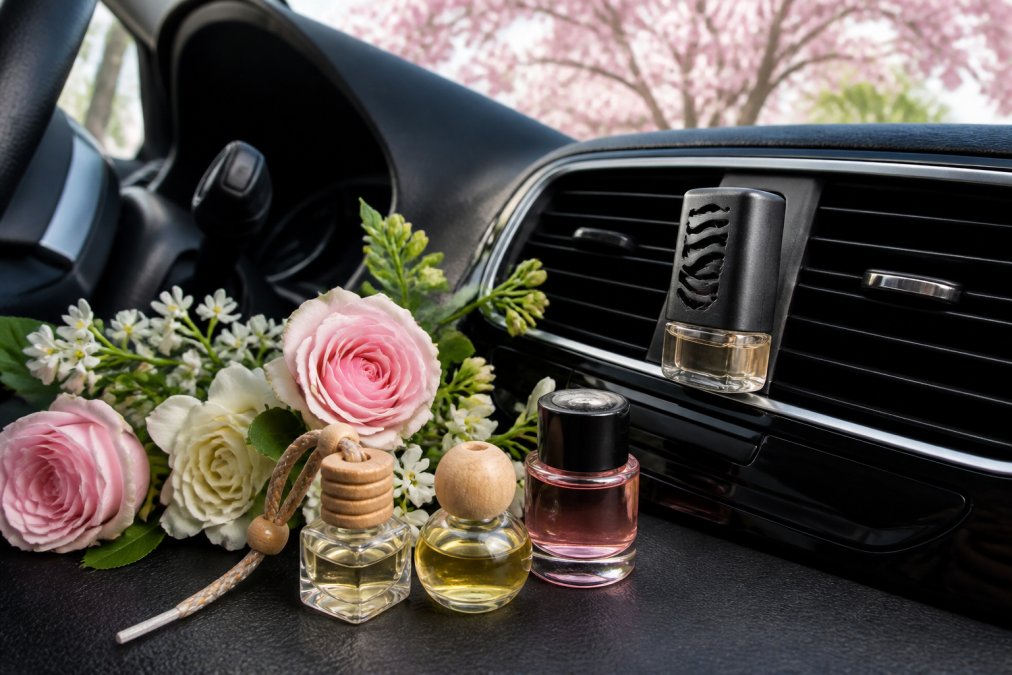
Spring changes what smells right in a car. After months of heavy oud, amber and spice, the cabin calls for something lighter, which is why best floral car scents for spring searches climb every year.
Top Floral Scent Profiles for Spring
Most spring floral car scents fall into two groups: the classic bouquet and brighter citrus-floral blends. Knowing which suits you narrows the choice fast.
Jasmine, Peony and Rose: The Classic Spring Bouquet
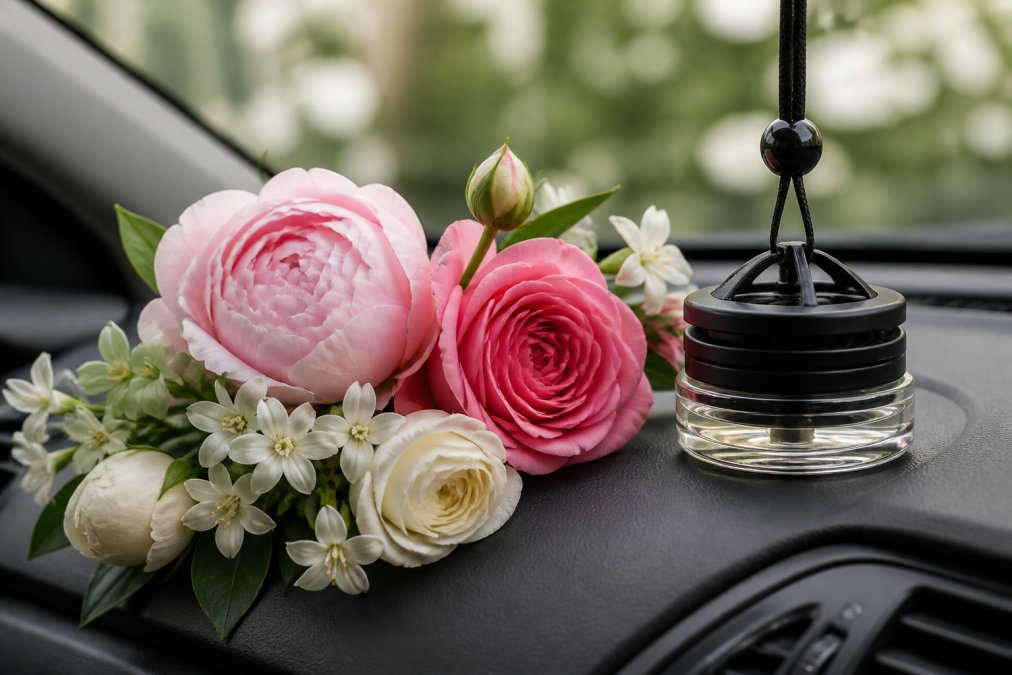
This is the traditional spring floral profile most drivers picture. Jasmine brings rich, creamy depth; peony adds soft, powdery freshness; rose anchors both with something warm and recognisable.
Orange Blossom and Gardenia: Brighter, Sun-Kissed Options
Orange blossom and gardenia sit at the brighter end of the floral spectrum. Orange blossom is crisp and slightly sweet, with a citrus edge that reads clean rather than sugary; gardenia is creamier and headier.
How to Choose the Right Floral Car Scent for Your Cabin
Cabin size decides more than personal taste. A compact hatchback concentrates fragrance far more than an estate or SUV, so the same product can feel elegant in one car and overpowering in another.
Work through these questions before you buy:
- How big is the cabin? Smaller cars need lighter concentrations or fewer delivery points.
- How sensitive are you to strong smells? If you get headaches from perfume, choose a fresh floral over a rich one.
- How many passengers? A rideshare car needs a scent that pleases broadly, not a divisive heavy floral.
- How long is your commute? Longer drives suit subtler scents; short trips suit something with more immediate presence.
- Do you smoke or carry pets? You need odour neutralising, not just fragrance on top.
Long-Lasting Car Air Freshener UK: What Affects Scent Throw and Longevity
Two technical terms explain why some florals fade in days and others hold for weeks: scent throw and evaporation rate.
Why Heat Is the Real Enemy of a Floral Car Scent
A parked car in spring sun is a greenhouse. Interior surfaces such as the dashboard, parcel shelf and steering wheel reach temperatures far above the outside air, and cabin air can climb well past 40°C on a mild 20°C day. That heat does three things to a floral at once:
- It accelerates evaporation. Warmer liquid vaporises faster, so the top notes that give a floral its fresh opening burn off within hours rather than days, a scent bright on a cool morning can smell flat by the afternoon.
- It destabilises the lighter molecules first. Floral top notes, citrus, green, aldehydic, are small, volatile molecules. Heat drives them off before the heavier heart and base notes develop, so the fragrance loses its shape and you're left with the residue of the base.
- It can distort the blend. Some aroma compounds oxidise or degrade faster under repeated heat cycling, which is why a cheap floral can turn sharp, sour or plasticky after a fortnight on a hot dashboard while a well-built one merely fades.
The Practical Numbers Behind Longevity
You don't need a laboratory to predict how long a car scent will last. Four variables do most of the work:
- Temperature. Heat accelerates evaporation. A car parked in the sun burns through any fragrance faster than a shaded one, often several times faster across a full day.
- Airflow. Open windows and strong ventilation carry scent away quickly; a recirculating air-conditioning setting keeps it in the cabin longer.
- Fragrance concentration. More concentrated formulations last longer per application, but only if the carrier liquid is stable. A high concentration in a poor carrier still fades fast.
- Delivery method. Sprays give instant impact and a short life; hanging and vent products release slowly; refillable diffusers sit in between.
- Cabin volume. A smaller space reaches saturation faster, which can cause olfactory fatigue rather than genuine fade.
How to Get More Weeks Out of a Spring Floral
A few habits measurably extend the life of any floral car scent:
- Park in shade where you can. Even partial shade cuts peak cabin temperature and slows evaporation.
- Use a sunshade on the windscreen. It reduces dashboard surface temperature, where most heat-driven degradation happens.
- Vent before you scent. Opening the doors for a minute clears the hot, stale air that would otherwise carry your scent away.
- Match the delivery method to the season. A spray for a quick reset, a diffuser or vent product for steady background presence.
- Store refills out of the car. Spare bottles kept in a hot glovebox degrade faster than ones kept indoors.
How to Keep Your Car Smelling Fresh All Spring
Keeping a car smelling fresh is a routine, not a single product. Drivers with a pleasant cabin do four things consistently.
- Remove the source of odours first. Clear out food wrappers, vacuum the seats and mats, and air the car properly.
- Clean the surfaces that hold smell. Fabric seats, carpet and headlining trap odours far longer than hard surfaces.
- Choose one signature floral and stay with it. Layering too many scents creates a muddled result.
- Refresh on a schedule. A quick spray after cleaning, rather than a constant heavy dose, keeps the scent crisp.
Designer-Inspired Car Perfumes: Why They Beat Standard Floral Fresheners
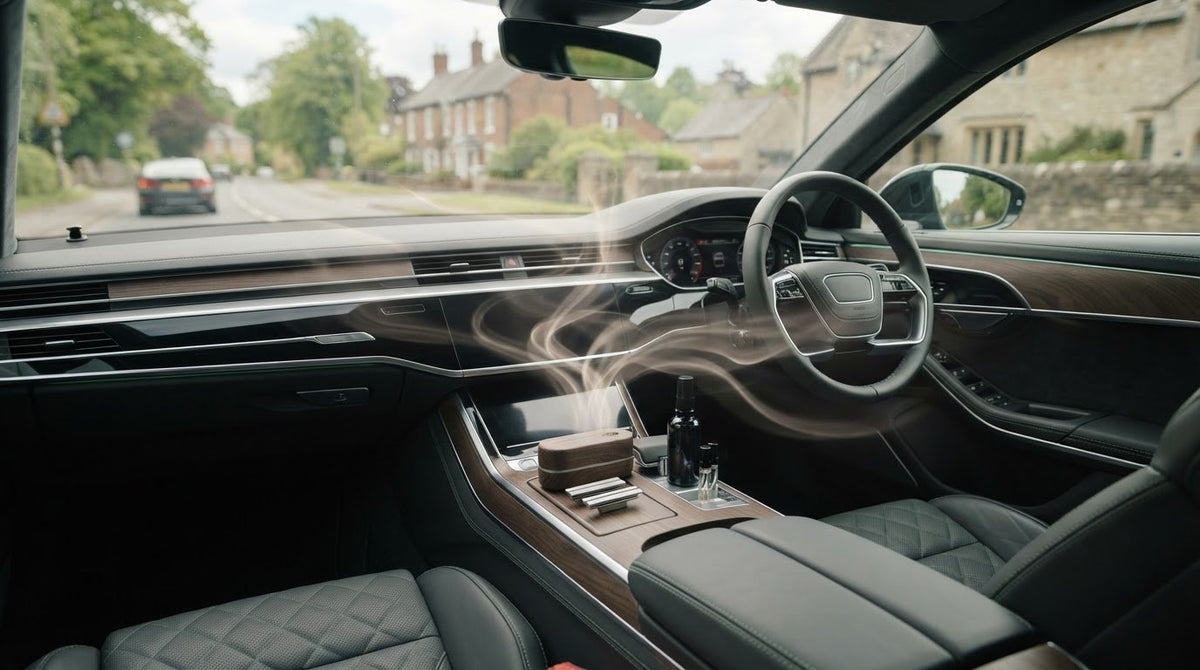
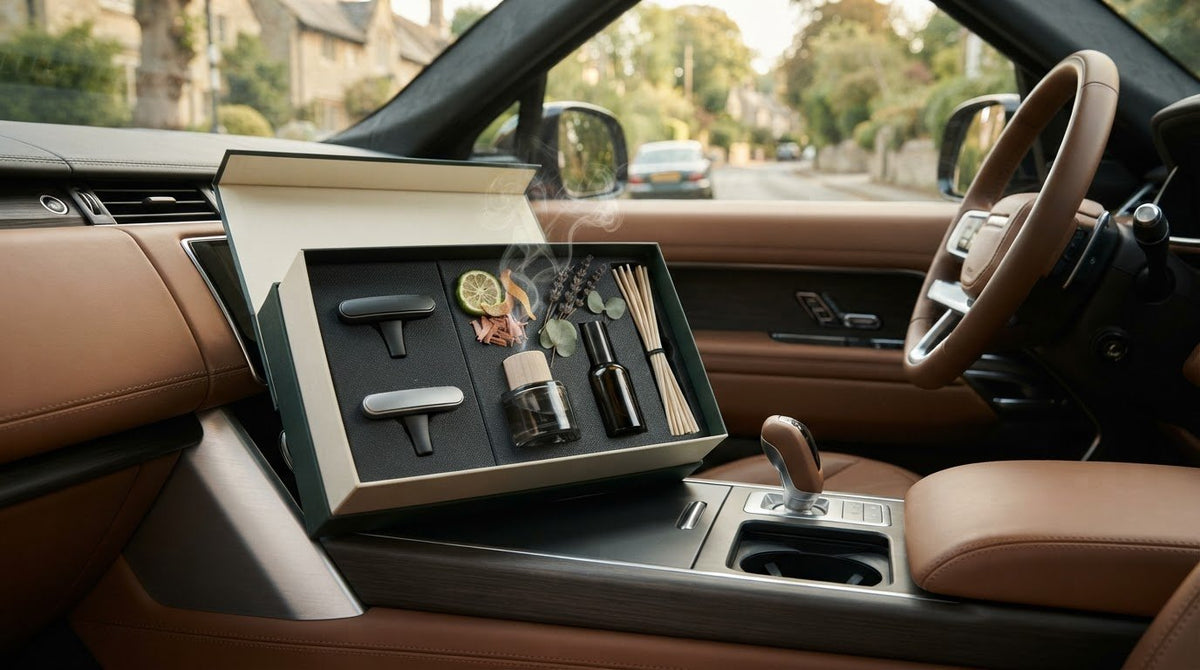
Designer-inspired car perfumes borrow the structure of high-end fragrance rather than the flat single-note approach of a supermarket air freshener. That difference shows up in complexity, longevity and how the scent develops.
Flava Turbo Can Spray - Floral Mist →
Safety, Sensitivity and Enclosed Cabin Considerations
A car cabin is one of the smallest, most enclosed spaces you'll ever fragrance, which makes safety and sensitivity worth more than a passing mention. Most guides on floral car scents skip this entirely, and for the drivers who need it, it's the most useful section on the page.
Who Should Be Careful With Floral Car Scents
Floral fragrances aren't inherently risky, but some people react to them more than others. Take a cautious approach if you:
- Have asthma or another diagnosed respiratory condition.
- Suffer from allergic rhinitis (hay fever) or are sensitive to pollen-type scents.
- Get migraines or headaches from strong perfume.
- Have fragrance contact allergy, a diagnosed reaction to specific aroma chemicals.
- Share the car with children, who breathe faster and are more affected by airborne irritants (the WHO).
- Carry pets, which have a far more sensitive sense of smell than humans.
What Actually Causes Reactions
The main concern in an enclosed cabin is volatile organic compounds (VOCs), chemicals that vaporise at room temperature. They're found in many air fresheners, cleaning products and scented sprays, and in a sealed cabin on a hot day their concentration can build up.
Two further factors matter for florals specifically:
- Synthetic aroma chemicals. Many mass-market floral fresheners rely on synthetic compounds to recreate notes like jasmine or lily. A small proportion of people react to specific chemicals rather than to "fragrance" as a whole.
- Phthalates and carrier solvents. These are sometimes used to hold a scent and slow its release. Some consumers prefer to avoid them, and formulations vary widely.
A Practical Sensitivity Checklist
If you're scent-sensitive, work through this before committing to a daily floral:
- Ventilate first. Open the windows or run the fan on fresh air for a minute before and after applying any scent.
- Never spray towards your face or directly into the breathing zone of a passenger.
- Start with the lightest option. A fresh, citrus-forward floral is usually gentler than a heavy white floral or a rich bouquet.
- Test in small doses. Apply once, leave the car, and see how you feel over the next hour before making it a habit.
- Reduce the number of delivery points. One diffuser is easier to control than a diffuser plus a hanging card plus a spray.
- Keep products away from children and pets, and never leave a spray can within reach of a child in a parked car.
- Stop if you react. If a scent causes headaches, coughing, sneezing or irritation, remove it and air the car out thoroughly.
Choosing a Gentler Floral
Not all florals are equal when it comes to sensitivity. As a rule:
- Lighter, fresher profiles, orange blossom, neroli, light peony, tend to overwhelm less than dense, creamy white florals.
- Lower application volume matters more than the scent itself. A single short spray in a ventilated cabin is very different from a continuous diffuser running all day.
- Simple formulations with fewer aroma chemicals are often easier to tolerate than complex blends.
- Refillable and well-sealed formats reduce the chance of accidental over-application.
Conclusion
Getting spring florals right in a car comes down to matching the right profile to your cabin, understanding how heat and airflow affect longevity, and building a routine around one good scent. Do that, and your car smells fresh all season rather than a fortnight.
Frequently Asked Questions
What floral scents are best for a car in spring?
Jasmine, peony, rose, orange blossom and gardenia are the standout floral car scents for spring. Jasmine and rose give a rich, luxurious aroma that suits larger cabins, while orange blossom and peony offer a lighter, refreshing profile ideal for smaller cars. If you want a single spray that covers both, a floral mist formula works well for quick refreshes between deeper scent sessions.
How do I choose a long-lasting floral car scent?
Look at fragrance concentration and delivery method. Sprays with a dry mist formula tend to leave a lingering scent without wet residue, and 400ml cans last considerably longer than small hanging fresheners. Check the fragrance notes too: top notes such as citrus fade fastest. A long-lasting car air freshener UK buyers trust usually combines both.
Are floral car scents safe to breathe in every day?
Anyone sensitive to strong smells should ventilate the cabin regularly and avoid spraying directly onto skin or into the face. If you have asthma or known fragrance allergies, test a small amount first and keep the windows cracked for a few minutes after application. Choosing a lighter floral profile also reduces the risk of headaches in a small cabin.
How often should I refresh a floral car scent in spring?
It depends on the format. A 400ml turbo can spray typically gives hours of fragrance per application, so a quick burst every few days keeps the cabin fresh. In spring, pollen and damp weather can mask scent faster, so you may need to refresh more often than in winter.

Leave a comment
This site is protected by hCaptcha and the hCaptcha Privacy Policy and Terms of Service apply.